

Advanced Chinese Textured Vegetable Protein Production Line for High-Quality Meat Alternatives
2026-08-08
As plant-based diets gain momentum, the race for superior meat alternatives has never been fiercer. The difference between bland, rubbery substitutes and a truly satisfying bite often comes down to texture. That’s where the advanced TVP production line from MINGDE shines—transforming raw proteins into fibrous, meat-like structures with remarkable precision. If you’re ready to elevate your product beyond the ordinary, you’ll want to see what this innovation can do.
How This Production Line Mimics the Texture of Real Meat
The key to replicating meat's texture lies in the precise layering of plant proteins and fats. This production line uses a high-pressure extrusion system that aligns plant fibers in a way that mimics the natural muscle grain found in animal meat. By carefully controlling temperature and flow rate, the machine creates long, chewy strands that tear apart just like a piece of slow-cooked beef or pulled pork. It’s not just about the look—the mouthfeel is surprisingly close, thanks to a combination of wheat gluten and pea protein that firms up when cooked but retains moisture.
Fat plays an equally important role, and here the line incorporates a clever marbling technique. Small, encapsulated pockets of coconut oil are dispersed throughout the protein matrix. When heated, these melt and release a juiciness that mirrors the way animal fat renders. The size and distribution of these pockets can be adjusted depending on whether the final product is meant to resemble a lean cut or a heavily marbled one. This level of control gives the plant-based meat a satisfying richness without relying on real fat.
Finally, the post-processing stage adds the irregular, hand-made quality that sets this product apart. Instead of uniform sheets, the formed blocks are torn by a set of rotating pins, creating natural-looking shreds and chunks. These are then flash-frozen to lock in the texture, ensuring that when the consumer reheats them, they behave like traditional meat—crisping on the outside while staying tender inside. Every step, from extrusion to freezing, is tuned to fool the senses into believing this is the real thing.
Inside the Precision Engineering of TVP Manufacturing
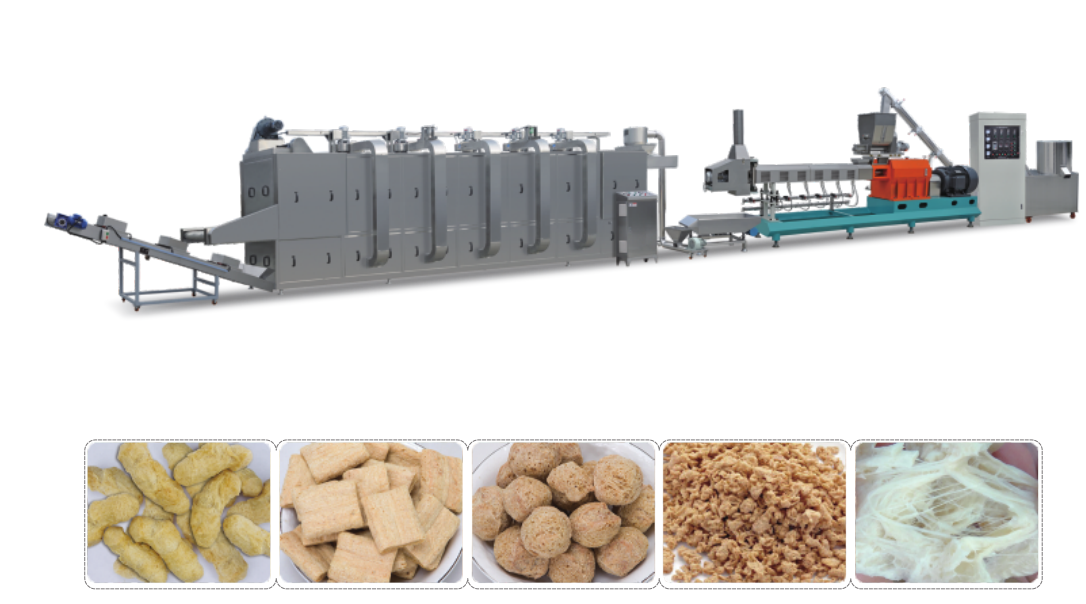
In TVP manufacturing, precision defines every stage of the process, from raw material selection to final extrusion. The transformation of plant proteins into structured fibers hinges on exact control over moisture, temperature, and mechanical shear. Even a minor deviation can compromise texture or nutritional integrity, so each parameter is monitored and adjusted in real time. This relentless attention to detail ensures that every batch delivers the consistent bite and mouthfeel expected by food producers worldwide.
Behind the scenes, custom-built machinery plays a pivotal role. Extruders are engineered with tight tolerances to handle high-protein formulations without clogging or uneven expansion. Cooling dies are precisely machined to shape the protein strands, while cutting systems operate at synchronized speeds to maintain uniform piece size. These specialized tools aren’t just assembled—they’re continuously fine-tuned, often with laser-guided calibration, to keep the line running smoothly and minimize waste.
What truly sets TVP production apart is the integration of quality checks into every step. Inline sensors capture data on density, color, and hydration levels, feeding it back to automated controllers that make micro-corrections on the fly. Offline, samples undergo stress tests—simulating cooking, freezing, and rehydration—to validate end-use performance. This blend of real-time analytics and practical testing creates a feedback loop where every batch informs the next, pushing the boundaries of what plant-based protein can achieve.
Why High-Quality Ingredients Matter in Meat Alternatives
The texture, taste, and nutritional value of a meat alternative hinge almost entirely on the raw materials used. When brands opt for cheap fillers or highly processed protein isolates, the result often falls flat—lacking the satisfying chew or savory depth that makes a meal memorable. In contrast, sourcing whole-food ingredients like heirloom legumes, cold-pressed oils, and minimally refined grains creates a product that not only cooks more like meat but also carries a cleaner, more nuanced flavor profile.
Beyond the sensory experience, ingredient quality directly impacts how your body responds. Many conventional meat substitutes rely on artificial binders and synthetic additives to mimic meat’s structure, which can lead to digestive discomfort or a spike in sodium intake. By using recognizable, nutrient-dense bases—such as sprouted mung beans or fermented soy—manufacturers naturally boost protein bioavailability and fiber content without leaning on lab-made enhancers. This shift turns a simple swap into a genuinely wholesome choice.
There’s also an ethical dimension to ingredient sourcing that discerning home cooks increasingly value. High-grade components often come from supply chains that prioritize regenerative farming, reduced water usage, and fair labor practices. When you see ingredients like organic chickpeas or sustainably grown quinoa on a label, it signals that the brand has invested in more than just a passing trend. Ultimately, the integrity of a meat alternative is built from the ground up—starting with what goes in before anything is shaped into a patty or strip.
The Step-by-Step Process: From Soy to Savory Bites
It all starts with those humble, dried soybeans. After a thorough rinse, they soak overnight, swelling up and softening, ready to give up their milky essence. The next morning, they’re ground with water into a pale, thick slurry that smells faintly of fresh legumes. This gets strained to separate the liquid—soy milk—from the fibrous pulp, known as okara. A quick boil eliminates any bitter, raw notes, leaving behind a creamy, neutral base that’s deceptively simple yet brimming with potential.
Now comes the transformation. While the soy milk is still warm, a coagulant—often nigari (magnesium chloride) or gypsum—is gently stirred in. Almost instantly, delicate white curds begin to form, swirling like clouds in a white sky. The timing and temperature here are everything: too fast and the curds turn grainy; too slow and you’re left with a soupy mess. Once the curds have separated, they’re ladled into a cloth-lined mold and pressed. The weight and duration of the press decide whether you get silken, soft, or firm tofu. Freshly made, it has a subtle sweetness that commercial blocks rarely capture.
But soy’s journey doesn’t end with tofu. That pressed block can be sliced, marinated, and pan-fried until golden and crisp-edged, then tossed into a stir-fry or served simply with a drizzle of soy sauce and scallions. The whey leftover from curdling? It’s a nutrient-rich liquid often used in soups or fermented into health drinks. Even the okara, once considered mere byproduct, gets a second life—baked into crackers, mixed into veggie patties, or used to thicken stews. Every bit of the soybean is coaxed, shaped, and seasoned into savory bites that are at once ancient and endlessly adaptable.
Customizing Texture and Flavor for Diverse Culinary Needs
Texture and flavor are the soul of any dish, but what works for a cozy family dinner might fall flat at a large banquet. The key lies in understanding how slight adjustments can reshape a recipe to fit the occasion. For a weekday meal, you might prioritize quick-cooking methods that lock in moisture and retain a slight bite, like steaming or a fast sauté, while a festive spread calls for slow braising to develop deeper, layered tastes and a tender, melt-away feel. Even within the same ingredient, the cut and cook time dramatically alter the final mouthfeel — think of a carrot, crisp in a stir-fry versus velvety in a purée.
Flavor customization goes beyond adding more spice; it’s about building a profile that suits the diner’s palate. A touch of acid can brighten a heavy sauce, while toasting nuts or blooming aromatics in oil unlocks a richer, rounder essence. Consider texture contrasts too — pairing creamy elements with a crunchy topping can elevate a simple salad or stew. For health-conscious eaters, swapping cream for puréed roasted vegetables maintains viscosity while adding natural sweetness. The trick is to taste and tweak in layers, adjusting salt, fat, and umami elements until the balance feels just right for the moment.
Cooking for diverse needs often means playing with the physics of food itself. A simple roux can range from pale and light to deep mahogany, each stage offering a different flavor and thickening power for soups or gumbos. Poaching in infused liquids lends subtle fragrances without overwhelming, while charring over an open flame gives a bold, smoky edge that can transform a dish. Understanding these techniques lets you seamlessly shift a recipe from a light, refreshing version ideal for summer to a hearty, comforting variant for winter, all without losing its identity.
Sustainability and Efficiency in Modern TVP Production
Modern TVP production has shifted toward methods that drastically reduce environmental impact without compromising output. By integrating closed-loop water systems and energy recovery units, facilities now reuse process water and capture waste heat, cutting freshwater consumption by up to 40% and lowering overall energy demand.
Efficiency gains are also driven by advanced extrusion technologies that optimize raw material usage. High-moisture extrusion, for example, allows producers to create fibrous textures directly from plant proteins, reducing the need for multiple processing steps and minimizing off-spec waste. This lean approach conserves resources and shortens production cycles.
Beyond equipment, many operations are adopting circular sourcing models—using locally grown legumes or byproducts from other food industries as feedstock. This not only slashes transportation emissions but also supports regional agricultural economies, making the entire supply chain more resilient and less carbon-intensive.
FAQ
It incorporates twin-screw extrusion with precise multi-zone temperature control and a modular barrel design. The screw configuration can be easily adjusted to optimize shear, pressure, and residence time distribution, allowing for superior control over protein alignment and fiber formation. Real-time monitoring of moisture, torque, and melt pressure, combined with automated feedback loops, ensures consistent product quality and reduces manual intervention.
Yes, it's built for flexibility. By fine-tuning parameters such as barrel temperature profiles, screw speed, and water injection, the same line can process soy, pea, wheat gluten, fava bean, or blends. Quick-change die and cutter assemblies further simplify the switch between raw materials and final product shapes.
The process aligns and cross-links protein molecules under controlled heat and shear, creating a fibrous, layered structure that mimics muscle tissue. The expansion at the die exit and subsequent cooling sets the texture. By adjusting extrusion variables, we can produce textures ranging from tender flakes to dense, chewy chunks, closely resembling chicken, beef, or pork.
In-line sensors continuously track critical parameters—moisture content, temperature at each barrel zone, die pressure, and motor load. Product samples are automatically checked for density, water absorption, and texture profile analysis. Any deviation triggers an alert, enabling real-time adjustments to keep every batch within specification.
Absolutely. Capacity can be scaled from pilot-scale 100 kg/h up to full production 1,000 kg/h by selecting appropriate extruder size and drive power. Die plates are interchangeable to produce strips, chunks, granules, or custom shapes, and cutting speed can be modulated for different piece sizes. Auxiliary equipment like seasoning tumblers or drying ovens can be added to suit downstream needs.
It features high-efficiency motors with variable frequency drives, insulated heating zones to minimize heat loss, and a heat recovery system that preheats incoming feed water using waste heat. Water and steam usage is optimized through precise injection control, reducing overall consumption. The design emphasizes long service life and easy maintenance, cutting resource use over the equipment's lifetime.
We offer comprehensive on-site installation supervision, process commissioning, and operator training. Training covers machine operation, recipe management, troubleshooting, and hygiene procedures. Remote diagnostic support is available 24/7, and we maintain a local spare parts inventory for rapid delivery. Optional extended service contracts include periodic preventive maintenance visits.
The dry texturized protein exiting the line is shelf-stable and can be directly packaged for sale as a raw ingredient. However, for ready-to-eat applications, it typically needs hydration, flavoring, and often a cooking step like frying or retorting—this can be integrated downstream. We also offer an optional in-line hydration and marination module that delivers a pre-seasoned, ready-to-use product for frozen or refrigerated meals.
Conclusion
The quest for plant-based meats that truly satisfy has driven remarkable innovation in Chinese manufacturing. At the heart of these advances lies a sophisticated textured vegetable protein (TVP) production line that rethinks every stage of the process. Instead of relying on simple extrusion, the system employs twin-screw technology with precisely controlled temperature zones and shear forces, allowing manufacturers to replicate the fibrous, chewy structure of animal muscle with uncanny accuracy. The choice of raw materials—carefully sourced non-GMO soy isolates and concentrates—plays an equally critical role, as their purity and functional properties determine how well the final product holds together during cooking and absorbs marinades. By finely adjusting parameters, producers can now deliver a spectrum of textures, from shreddable "chicken" to marbled "beef," each tailored to specific culinary traditions across global markets.
The transformation from humble soybean to savory bites follows a meticulously orchestrated sequence. After careful conditioning, the protein blend passes through a cooling die that sets the aligned fibers, which are then cut and dried with minimal energy waste. Water and heat are recycled within closed-loop systems, and the modular design of the machinery allows rapid changeovers between product types without cross-contamination. Smart sensors continuously monitor moisture and density, feeding data back to a central control panel that makes real-time adjustments. This integration of engineering and food science not only slashes production time but also dramatically reduces the carbon footprint compared to traditional meat processing. The result is a versatile ingredient that chefs can season, sear, or stew—delivering the mouthfeel of meat while upholding the principles of resource efficiency that modern consumers demand.
Contact Us
Contact Person: LILY SUN
Email: [email protected]
Tel/WhatsApp: 0086-13969103791
Website: https://www.snackfoodmachinery.com/