

Bespoke Large Industrial Ceiling Fans – Custom Airflow Solutions for Vast Commercial Spaces
2026-07-03
When it comes to cooling vast commercial spaces, standard fans simply can’t deliver. Introducing VINDUSFAN—bespoke large industrial ceiling fans engineered to move massive volumes of air with precision. From warehouses to hangars, our custom airflow solutions combine sleek design with uncompromising performance, cutting energy costs while keeping your environment comfortable year-round. Ready to rethink industrial cooling? Let’s dive in.
Tailored Airflow Design for Unique Industrial Layouts
Every industrial space carries its own set of challenges—ceiling heights that vary unpredictably, machinery clustered in odd corners, or workflows that defy standard layouts. Off-the-shelf ventilation solutions rarely account for these quirks, leaving pockets of stale air or turbulent zones that compromise both comfort and efficiency. A tailored airflow design begins by mapping the actual use of the space, identifying heat sources, occupancy patterns, and architectural constraints that standard calculations overlook. It’s not about moving more air, but about moving the right air exactly where it’s needed.
Custom ductwork, adjustable diffusers, and strategically placed returns become the language through which a building breathes properly. For instance, a facility with tall racks on one side and open assembly areas on the other demands a zoned approach that treats each microclimate independently. Computational modeling helps visualize how temperature and contaminants travel, enabling engineers to sculpt airflow patterns that wrap around obstacles instead of fighting them. The result is a system that feels almost invisible—quiet, unobtrusive, yet remarkably effective at maintaining consistent conditions.
Beyond comfort, this precision directly impacts operational costs and equipment longevity. Over-ventilating wastes energy, while under-ventilating accelerates wear on sensitive machinery and creates compliance risks. By understanding the unique thermal footprint of a layout, designers can right-size equipment and leverage natural convection where possible. It’s a philosophy that values observation over assumption, turning idiosyncratic industrial spaces into assets rather than liabilities.
Precision Engineering That Matches Your Space’s Ceiling Height and Beam Structure
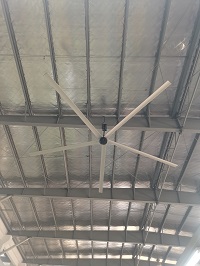
Every space tells its own story through ceiling heights and beam layouts, so we start by carefully measuring those structural details instead of forcing a one-size-fits-all approach. Our engineering process captures the exact contours of your room, turning potential obstacles like low soffits or irregular steel beams into design anchors that guide the equipment layout. The result is an installation that naturally integrates with the architecture, maintaining generous overhead clearance without sacrificing performance or visual openness.
Behind each installation, our team runs precise load analyses and custom bracket simulations to align the system with your building's specific framing geometry. Whether the ceiling features exposed timber trusses, stepped bulkheads, or minimal concealment cavities, we adapt the mounting points and angular adjustments so every unit sits flush and secure. This tailored fit not only preserves the room's intended proportions but also enhances the overall aesthetic—technology that genuinely feels like it belongs there from day one.
Energy-Efficient Motors Crafted for Continuous, Silent Operation
Built to run around the clock without breaking a sweat, these motors sip power while delivering steady performance. The precision engineering cuts out the hums and rattles you’d expect from all-day use, so your space stays calm. Whether it’s for a quiet home setup or a demanding workspace, the design keeps things running smoothly in the background.
Inside, advanced materials and smart winding techniques keep energy loss to a minimum, even when the motor is pushed hard. Thermal management is built right into the core, allowing extended operation without efficiency drops. You won’t have to worry about sudden spikes in your electricity bill — just consistent output that respects both your work and your wallet.
The silence isn’t just a bonus; it’s engineered. From fluid-dynamic bearings to vibration-dampening mounts, every component is tuned to eliminate noise at its source. The result is a motor that you can place inches from your desk and forget it’s even there, hour after hour.
Advanced Blade Geometries to Maximize Air Movement Without Disruption
The evolution of fan blade design has moved far beyond simple curved surfaces. By incorporating biomimetic principles—such as the serrated leading edges found on owl wings—engineers can significantly reduce turbulence and noise. These geometries allow air to flow more smoothly over the blade surface, minimizing the formation of disruptive vortices. The result is a fan that moves large volumes of air quietly and efficiently, making it ideal for environments where both performance and peace are paramount.
One standout approach involves blades with a variable pitch and twisted profile, which adjust the angle of attack along their length to maintain optimal lift at every point. This twist compensates for the differing rotational speeds from hub to tip, preventing stall and ensuring a uniform, laminar airflow. Coupled with a swept-back tip design that cuts through pressure differentials, these blades effectively delay flow separation. The outcome is a consistent, powerful breeze without the pulsing or buffeting often felt with standard fans.
Materials also play a role in enabling these advanced geometries. The use of reinforced polymers and lightweight alloys allows for thinner, more aerodynamic blade profiles that were once impossible to manufacture without sacrificing durability. These materials flex slightly under load, further smoothing the airflow dynamics. Together, these design choices create a fan that not only maximizes air movement but does so in near silence, setting a new benchmark for airflow technology.
Durable Finishes That Withstand Harsh Environments and Daily Wear
A finish that truly lasts doesn't just sit on the surface—it becomes part of the material. Our coatings are engineered to bond deeply, resisting chipping, peeling, and fading even when faced with salt spray, chemical exposure, or constant abrasion. Unlike conventional options that degrade under stress, this solution maintains its integrity, so you're not constantly reapplying or repairing.
What sets this apart is how it handles the unexpected: sudden temperature swings, heavy impacts, or outdoor elements that would typically break down weaker layers. It's not just tough; it's adaptable, flexing with the substrate rather than cracking under pressure. That means fewer worries about hidden corrosion or wear spots that often start small and quickly spread.
Whether it's for high-traffic industrial equipment, marine components, or everyday tools that take a beating, the finish holds its own without needing constant care. It keeps surfaces looking clean and professional long after others would show their age, quietly doing its job so you can focus on yours.
Seamless Integration with Existing Ventilation and Climate Control Systems
Modern building management rarely calls for a complete system overhaul when upgrading climate control. The real advantage lies in technology that slots neatly into the ventilation architecture you already have, without requiring costly rewiring, ductwork modifications, or disruptive downtime. This harmony is achieved through protocol-agnostic communication modules that can interpret and translate signals between your existing sensors, VAV boxes, and the new central intelligence, ensuring that even decades-old hardware can participate in a smarter, more responsive network.
What sets a truly adaptable solution apart is its ability to map legacy control sequences onto optimized, real-time strategies. Instead of forcing a building to conform to rigid new rules, the integration layer observes the current operational patterns—analyzing damper positions, fan speeds, and temperature loops—then gently nudges the system toward energy savings and better comfort. For instance, demand-controlled ventilation can be layered onto a fixed-speed AHU by modulating setpoints based on occupancy data pulled from an existing BMS, all without ever cutting a single wire.
FAQ
Unlike off-the-shelf options, these fans are built to order, allowing precise tailoring of blade size, finish, and motor power to match the exact scale and airflow demands of oversized spaces like warehouses, arenas, and production floors.
They deliver a gentle, columnar air movement that displaces stratified heat and evenly distributes conditioned air from ceiling to floor, eliminating hot and cold spots without causing disruptive drafts.
Absolutely. From blade shape and color to mounting options and control integration, every element is configurable to blend with structural features or ventilation systems, ensuring functionality without compromising the original layout.
Airports, exhibition halls, gymnasiums, distribution centers, and any large-volume interior where consistent air circulation is critical. They’re also ideal for spaces with high ceilings or obstacles that demand non-standard sizes.
Yes. By destratifying air and augmenting HVAC output, they can trim heating and cooling costs by up to 30%, often allowing de-rating of primary equipment and delivering a rapid return on investment without sacrificing performance.
Advanced variable-speed drives, smart sensors, and integration with building automation systems mean facility managers can set precise speeds, schedules, and even zone-based adjustments from a central interface or mobile device.
Engineered mounting kits and full structural assessments come standard; most units can be retrofitted without major modifications. Professional teams handle everything from engineering to final commissioning, minimizing downtime.
Built with sealed bearings and durable, corrosion-resistant components, these fans need only periodic inspections and basic cleaning. The modular design makes part swaps quick, reducing long-term service disruptions.
Conclusion
In vast commercial settings, standard airflow solutions often fall short, struggling to address the idiosyncrasies of complex layouts, towering ceilings, and structural beams. That’s where bespoke large industrial ceiling fans redefine performance. Each unit is engineered from the ground up to align precisely with a facility’s spatial dynamics—factoring in everything from ceiling height and beam placement to workflow patterns. This tailored approach ensures that air movement is not just a uniform blast but a carefully directed stream that reaches every corner, eliminating dead zones and improving comfort without disturbing operations. The result is a seamless fusion of function and structure, where the fan becomes an integral part of the building’s design rather than an afterthought.
Beyond geometry, the fans’ internal systems are equally considered. Energy-efficient motors deliver powerful, continuous circulation while keeping noise levels so low that they practically disappear into the background—critical in environments where communication or concentration is key. Advanced blade profiles are shaped to maximize airflow, moving large volumes of air gently and consistently, avoiding the disruptive gusts common with conventional high-speed fans. Durability is also built in from the start; coatings and materials are selected to resist corrosion, humidity, and daily wear, ensuring years of reliable service in harsh settings like warehouses or manufacturing plants. Moreover, these fans are designed to integrate effortlessly with existing ventilation and HVAC infrastructure, enhancing overall climate control without costly retrofits. Altogether, this makes for an investment in tailored comfort that pays dividends in energy savings and occupant well-being.
Contact Us
Contact Person: Michael Danielsson
Email: [email protected]
Tel/WhatsApp: +1 951 565 7769
Website: https://www.vindusfans.com