

Best Plank Grating for Durable Industrial Walkways and Platforms
2026-08-27
Industrial walkways and platforms face relentless abuse—heavy loads, constant foot traffic, and exposure to corrosive elements. Choosing the right plank grating can mean the difference between a structure that lasts decades and one that fails prematurely. Yet with so many options on the market, identifying truly durable grating isn't always straightforward. Here's a closer look at what makes certain plank grating outperform the rest, and why Sino Grating has earned a reputation for reliability in the toughest environments.
The Case for Fiberglass Over Steel in Wet or Corrosive Environments
Steel's weakness in wet or corrosive settings isn't limited to visible rust. Chlorides, acids, and even constant moisture trigger electrochemical reactions that eat away at the metal from the inside out, often where inspections can't reach. Fiberglass, by contrast, is inherently non-conductive and inert to most chemicals, so there's no galvanic corrosion or pitting to manage. This eliminates the need for sacrificial anodes, cathodic protection, or expensive coatings that eventually wear thin.
Maintenance schedules tell the real story. A steel structure in a coastal plant might need recoating every few years and replacement of corroded members within a decade. Fiberglass handrails, platforms, and enclosures routinely outlast multiple steel replacements without any surface treatment. The upfront price difference narrows quickly once you factor in scaffolding, downtime, and the labor hours spent chasing rust.
Weight also plays a quiet role in corrosion-heavy environments. Fiberglass weighs roughly a quarter of steel, so support structures and foundations can be lighter and simpler. When you're building over water or in a chemical processing area, that reduced mass means fewer joints, fewer penetrations, and fewer places for corrosive attack to begin. Engineers who make the switch often find the real savings are in the details they no longer have to design around.
Designing Walkways That Stay Safe Under Oil, Grease, and Rain
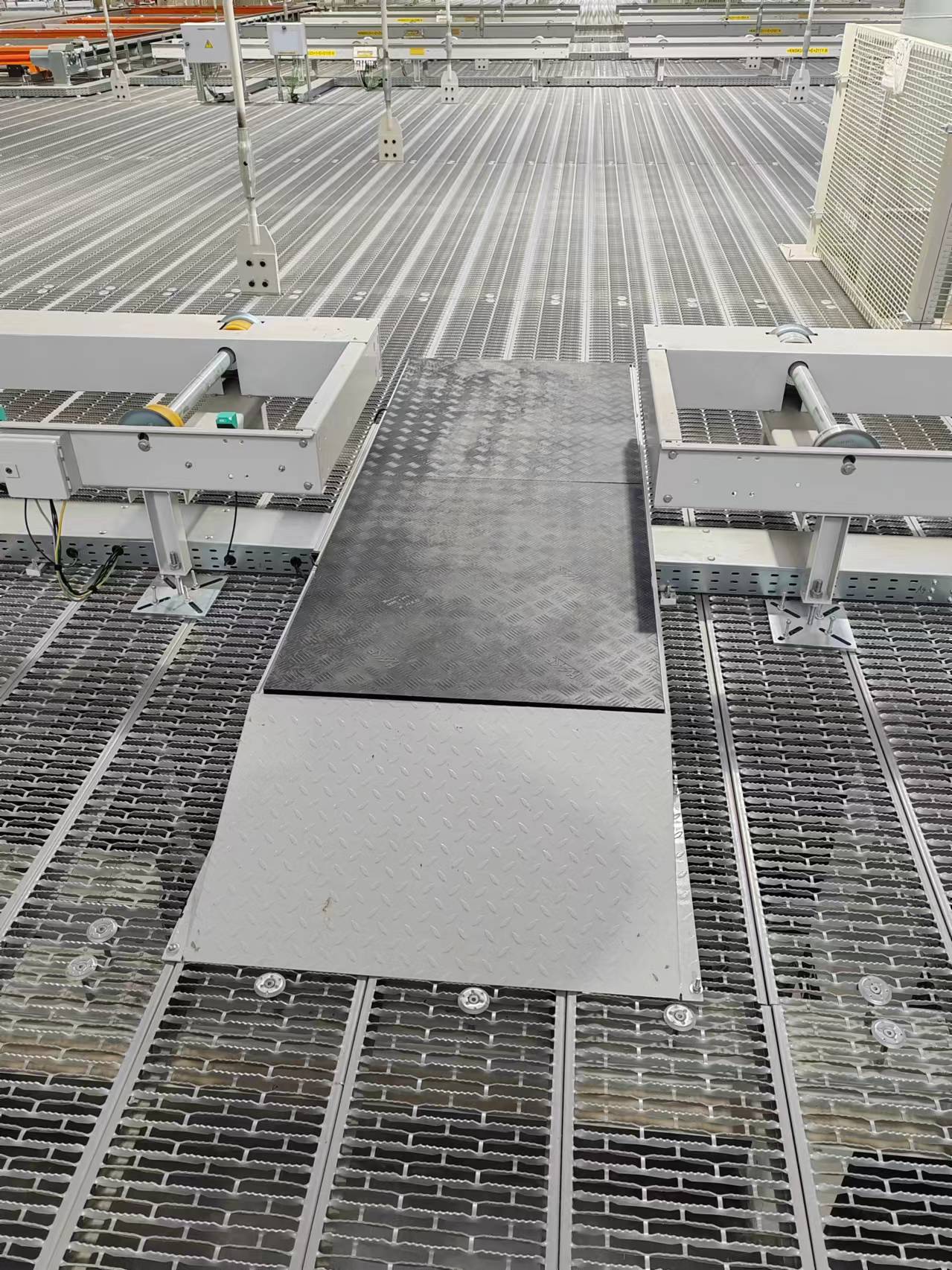
Choosing the right surface material is the first line of defense against slips in areas where oil and grease are common. Rather than relying on standard smooth concrete, opt for textured finishes like broom-finished concrete, exposed aggregate, or specialized non-slip coatings that create micro-grooves for better traction. These surfaces hold up under repeated exposure to petroleum products without becoming slick, and they retain their grip even when a thin film of rain mixes with residual oil.
Drainage plays an equally critical role. Flat walkways allow oily water to pool, turning every step into a hazard. A slight cross-slope—typically between 1.5% and 2%—paired with strategically placed trench drains or slot drains keeps liquids moving away from foot traffic. For industrial settings, consider installing oil-water separators within the drainage system so that collected runoff doesn't simply redistribute the problem elsewhere.
Finally, routine maintenance can't be overlooked. Even the best-designed walkway loses its effectiveness if grime builds up in the texture. Schedule regular pressure washing with degreasing agents, and immediately address any cracks or spalling that could trap liquids. In high-risk zones, adding removable absorbent mats near doorways or workstations provides an extra layer of protection during peak grease exposure.
How to Specify Plank Grating That Won't Flex Under Heavy Loads
Start by looking beyond the generic span tables. Most failures come from specifying plank grating for a total walkway width rather than calculating the clear span between actual bearing points. If the supporting structure has irregular spacing, base your selection on the maximum unsupported distance. Also, think about how the load moves: a loaded pallet jack turns sharply, concentrating force on a single plank edge. That twisting moment can cause visible flex even when the uniform load rating looks safe.
Bearing bar depth is the single biggest lever you have. Increasing depth from 1 inch to 1-1/2 inches can cut deflection by more than half for the same span. But don't just chase depth; check the cross bar spacing too. Closer cross bars, say at 4 inches instead of 6, lock the bearing bars together and resist the lateral splaying that feels like flex underfoot. Specify a locking swage or press-locked construction, not loose-fit bars, if you need a rigid surface for heavy carts.
Finally, run the numbers at the service load, not the ultimate strength. A plank rated for 3,000 pounds failure load can still feel like a trampoline at 800 pounds. Ask the manufacturer for the moment of inertia and use a deflection limit of 1/200 of the span for industrial foot traffic with occasional wheel loads. If the walking surface feels bouncy to workers, they will distrust it and slow down, even if it never breaks. Specifying a stiffer plank costs a little more upfront but prevents lost productivity and retrofits later.
Molded vs. Pultruded Grating: A Difference You Can Feel Underfoot
Step onto a molded grating panel and you'll notice the surface has a slightly textured, almost organic feel. The open mesh is formed in a single piece, with intersecting bars that are rounded at the joints. That smoothness isn't just cosmetic—it comes from the manufacturing process, where resin and glass fibers are set in a mold under heat and pressure. The result is a panel that distributes weight more evenly across both directions, making it forgiving underfoot, especially when you're walking with tools or pushing a cart.
Pultruded grating, by contrast, feels more directional. The load-bearing bars run in one continuous line, and the cross rods are inserted separately. When you walk across it, you can sense a subtle difference in stiffness depending on which way you're facing. That's because pultrusion pulls fibers through a resin bath and then through a heated die, aligning the strength along a single axis. Underfoot, it can feel firmer in the span direction but slightly springier if you step perpendicular to the bars. It's the kind of detail you don't think about until you've spent an hour on a walkway and your knees start to tell you which panel you're standing on.
For those who spend long shifts on industrial platforms, that tactile difference matters more than a spec sheet might suggest. Molded grating tends to offer a more uniform, non-slip surface with its slightly concave top, which can feel safer when wet or oily. Pultruded grating often has a flatter profile and a sharper grit top, giving your boots a more aggressive bite but less forgiveness if you shift your weight suddenly. Neither is better across the board—it's about matching the feel to the task, and your feet will usually let you know if you've chosen wrong.
Installation Details That Cut On-Site Labor Without Compromising Strength
Field crews often lose hours to measuring, aligning, and fastening individual pieces. By shifting those steps into the factory, the system arrives with pre-punched connection slots and captive hardware. Workers simply drop panels into place and tighten from one side, removing the need for a second person to hold a nut.
The connection points use an interlocking profile machined to tight tolerances. Instead of relying on field welding or shimming, the two halves seat together with an audible click and then accept a single torque-limited bolt. That bolt bottoms out at the exact clamp load specified by the structural engineer, so overtightening or stripping is not a concern.
Factory-applied coatings and edge treatments eliminate the usual on-site touch-ups. Corners and cut edges are finished before shipping, and the protective film stays on until after installation. The structural load path is also pre-verified with embedded shear tabs, so no additional brackets or reinforcement plates are needed in the field.
Long-Term Costs: Why the Cheapest Grating Rarely Stays That Way
The lowest bid on grating can look like an easy win until the first inspection a year later. Thin bearing bars flex under foot traffic, and the galvanized coating often fails at the welds or cut edges before the surrounding structure shows any wear. What began as a modest saving turns into a schedule of spot repairs, touch-up coatings, and arguments with the supplier over whether the corrosion falls under warranty.
Replacement is where the real cost hides. Swapping out a section of failed grating in an active facility means permits, barricades, labor, and often a shutdown window that costs more per hour than the original material. A cheaper panel that lasts three years instead of twelve can easily erase its purchase price several times over in downtime alone, not to mention the risk of a slip or dropped tool through a weakened opening.
Life-cycle cost rarely favors the bottom quote. Buyers who compare only the price per square foot miss the ongoing burden of inspections, premature recoating, and the administrative friction of repeat replacements. In practice, a well-made grating with a proper coating and adequate load rating tends to disappear into the background for a decade, while the bargain version keeps demanding attention and money long after the invoice is forgotten.
FAQ
Focus on load rating, slip resistance, and material compatibility with the environment. Steel handles heavy traffic but needs coating in corrosive areas; aluminum offers lighter weight; FRP resists chemicals and moisture without rusting.
Closer spacing prevents small debris from lodging and gives better footing for workers, while wider gaps improve drainage but can catch heels or tools. Match the spacing to both the expected foot traffic and the type of debris present.
Yes, often. FRP won't corrode from acids or salts, and it's much lighter to install. Just verify its load rating for your specific span, since it flexes more than steel under the same load.
Most metal grating can be cut with a standard circular saw and abrasive blade, and FRP cuts even easier with carbide-tipped wood blades. Edges should be sealed or deburred to prevent moisture entry and sharp surfaces.
Regular sweeping to remove grit that can act like sandpaper, periodic checks for loose fasteners, and recoating any scratched areas on galvanized or painted steel. FRP needs little more than washing, though you should inspect for UV wear on exposed sections.
A serrated or grit-top surface is essential because smooth grating becomes slick when wet or icy. Open bar designs also let snow fall through instead of piling up, but keep spacing tight enough for stable footing.
Welded grating offers higher rigidity for long spans and heavy loads, while press-locked has a cleaner look and resists vibration loosening. If the platform sees constant forklift traffic, welded is usually the safer bet.
Not always. Thickness helps with impact and point loads, but durability also depends on the bond between bars and proper support framing. An over-specified thick bar can add weight and cost without solving corrosion or poor drainage issues.
Conclusion
In wet or corrosive settings, fiberglass plank grating consistently outperforms steel. It shrugs off salt spray, chemical splash, and constant moisture without rusting or losing grip. Walkways built with a grit-top surface stay sure underfoot even when oil, grease, or rain slicks the area — a detail that matters more than most checklists admit. The right specification also comes down to molded versus pultruded construction. Molded grating offers multidirectional strength and a comfortable, flat profile that reduces trip hazards from raised bars. Pultruded spans longer distances with less material, but it can feel springy unless you match the panel depth and bearing spacing to the actual load. Before signing off, ask for deflection data, not just load tables. A deck that looks fine on paper can still shudder under a loaded pallet jack, and that movement shortens the life of every fastener and tie-down above it.
Field labor often eats the budget faster than the material itself. Specify plank grating with pre-drilled saddle clips, factory-cut angles, or interlocking seams that let two workers set a long run without grinding or field drilling. Every hour saved on staging and fitting is an hour not paid twice. Then look past the invoice. Cheap steel or low-resin grating may win the bid, but once you add corrosion coatings, replacement panels, slip-related incidents, and shutdowns for repairs, the total cost climbs fast. A durable fiberglass system typically pays for itself within a few maintenance cycles. The walkway that stays flat, drains well, and resists chemical attack is the one that keeps operations moving without constant attention. Choose the plank that performs under your specific spills, traffic patterns, and climate — not the one that simply meets the minimum code and leaves the rest to the maintenance crew.
Contact Us
Contact Person: Nicholas Zhu
Email: [email protected]
Tel/WhatsApp: 18921275456
Website: https://www.sino-grate.com