

Best Power Tool Switch Manufacturer for Durability and Precision
2026-06-29
Every expert knows that a power tool is only as reliable as its switch. When precision and durability are non-negotiable, choosing the right manufacturer makes all the difference. KEJIAN ELECTRONICS has set the benchmark, crafting switches that endure the toughest job sites while delivering flawless control. Whether you're designing professional-grade equipment or upgrading your toolkit, discover why top brands trust their components to keep performance rock-solid under pressure.
Engineering Switches That Outlast the Tool Itself
When you snap the trigger on a demolition hammer or angle grinder day in and day out, the tiny switch behind that action takes a beating most people never see. Rather than treating it as a disposable part, some manufacturers now build these contact mechanisms from self-cleaning silver alloys and seal them against concrete dust and coolant spray. The goal isn't just ruggedness—it's a switch that will still click precisely after the motor bearings have worn smooth and the housing is scarred beyond recognition.
Lifecycle testing for these components borders on absurd: robotic fingers fire a switch millions of times under extreme temperatures while grit is injected into the housing. One testing rig I saw cycled a single paddle switch continuously for eighteen months, equating to roughly thirty years of jobsite use. When the technicians finally cracked it open, the contact surfaces showed less pitting than you'd find on a switch that's sat in a warehouse for a season.
There's also a quiet shift toward hybrid designs that replace pure mechanical contacts with solid-state sensing. Instead of metal slamming into metal, a magnet and Hall effect sensor signals the microprocessor—no arcs, no welding, no mechanical wear. It adds cost, but for tools that chew through a dozen standard switches in their service life, it changes the equation. Suddenly the weak point isn't the switch anymore; you retire the tool because the gearcase finally gives out, not the unit you touch every time.
Precision Where It Counts: Microscopic Tolerances in Switch Design
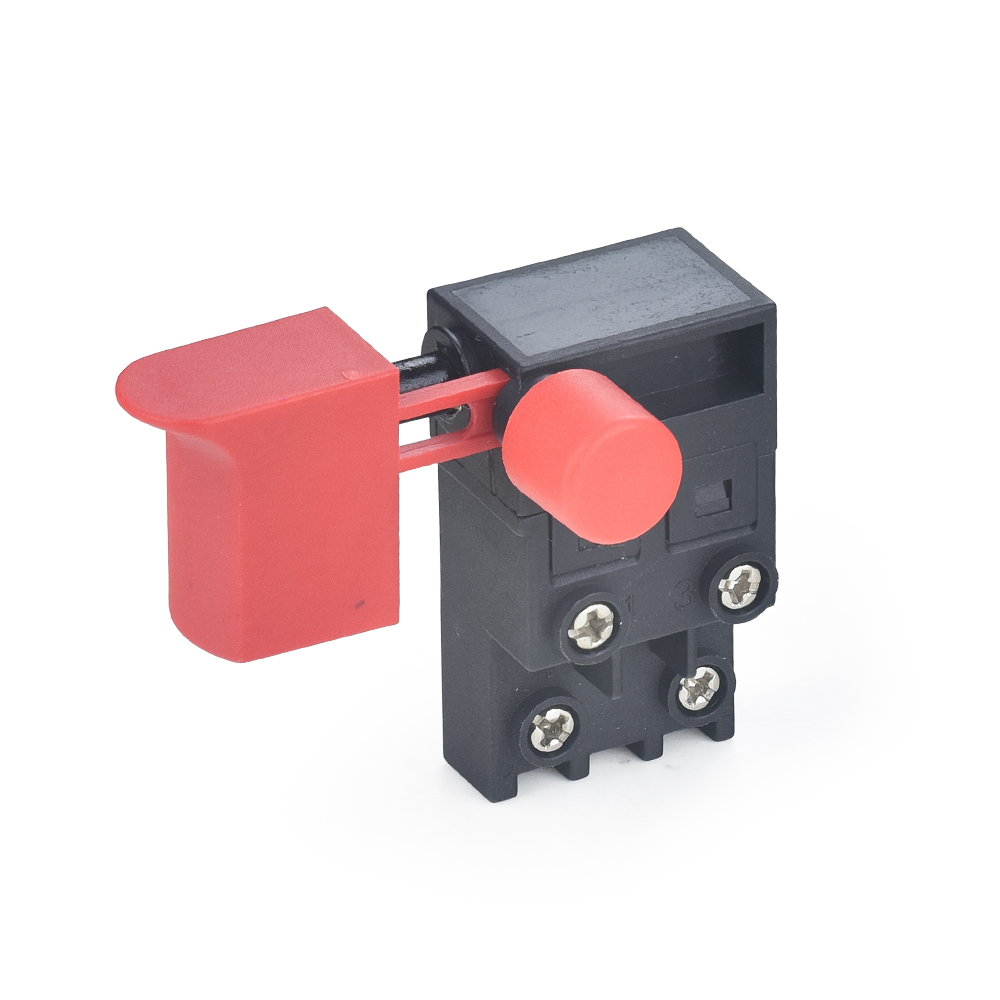
In the realm of switch engineering, the devil truly resides in the details measured in microns. A keypress that feels crisp and consistent isn't a happy accident; it stems from controlling the gap between a contact dome and its underlying pad with fanatical precision. When tolerances drift by even a few micrometers, actuation force can spike or drop, spoiling the uniform tactility that users expect from a premium product. This microscopic dance of materials determines whether a switch feels mushy or magnificently clicky—and it all happens in a space thinner than a human hair.
These tight tolerances aren’t just about feel, though. They govern electrical reliability in ways that are invisible until something fails. A contact gap that’s slightly too narrow might invite unintended bridging, while one that’s too wide can lead to chatter or intermittent signals. Designers walk a razor’s edge, specifying dimensions that must survive millions of cycles without drift, oxidation, or fatigue. Advanced metrology tools like laser profilometers now map switch components down to wavelength-level accuracy, catching deviations that would have been invisible a decade ago.
The pursuit of perfection at this scale ripples into manufacturing and materials science. Molding tools wear with every cycle, and engineers compensate by predicting tool erosion patterns and adjusting master geometries preemptively. Even humidity and thermal expansion become adversaries when your target is a few microns across a production run. It’s a discipline where intuition fails unless backed by data, and where the line between flawless and forgettable is often just a fraction of a hair’s breadth.
Built for the Toughest Job Sites: Our Durability Testing Process
When we say our equipment is built for the toughest job sites, we mean it. Our durability testing process subjects every component to conditions that far exceed what it will face in the field. From relentless vibration simulations to extreme temperature cycling, we push materials and assemblies to their breaking point—then reinforce them. It’s a no-compromise approach that ensures reliability when you’re working in mud, dust, or driving rain, far from the nearest service center.
Real-world feedback drives our testing. We talk to operators who are out there every day, and we replicate the punishing scenarios they describe—sudden impacts, sustained heavy loads, abrasive environments. Prototypes endure thousands of hours of accelerated life testing, where we monitor wear patterns and component interactions. Anything that doesn’t meet our longevity thresholds gets redesigned. The result is machinery that stays productive when others would be sidelined.
But durability isn’t just about surviving the big hits. We also obsess over the small things that add up over time: fastener integrity, seal performance, corrosion resistance. Salt spray chambers, UV exposure racks, and repeated torque tests are standard procedures. Every test is designed to find the weak link before you do. Because on the toughest job sites, downtime isn’t just inconvenient—it’s costly.
From Concept to Contact: The Anatomy of a Perfect Switch
A switch might seem like a trivial component—a simple bridge that completes a circuit—but crafting one that feels right demands an almost obsessive attention to detail. The journey starts long before any solder touches a pad; it begins with a concept shaped by how humans actually interact with devices. Designers study the subtle interplay between finger movement, expected resistance, and the satisfying snap or soft give that reinforces user confidence. This isn't just engineering; it's choreography at a millimeter scale.
Beneath the button lies a carefully tuned mechanism. The core of any switch is its contact system, where physics dictates whether a press results in a clean signal or a flurry of unintended bounces. Materials like gold-plated copper or palladium alloys are chosen not only for conductivity but for their ability to withstand millions of cycles without oxidation. The shape of the contacts, the angle of approach, and the force curve all contribute to a single moment: the exact instant when electrons find their path, generating that crisp, repeatable click you feel through your fingertip.
What truly separates a forgettable switch from an iconic one is how these elements harmonize. The tactile event is calibrated alongside the acoustic signature—a muted thud for a luxury appliance, perhaps, or a pronounced snap for automotive controls. This synergy is refined through rapid prototyping and blind user tests, where feedback often hinges on sensations participants struggle to describe. In the end, a perfect switch vanishes into the experience it enables; you only notice it when it's missing.
Why Our Switches Are the Silent Heroes of Industrial Tools
In the clamor of a busy workshop, it’s easy to overlook the small components that keep everything running smoothly. Our switches may not draw attention like a high-torque motor or a precision blade, but they’re the ones quietly shouldering the responsibility of control. Every press, flip, or toggle translates to immediate action, yet they rarely ask for recognition. They endure dust, vibration, and countless cycles without complaint—truly the unsung champions of industrial tools.
What makes them heroic goes beyond basic functionality. Each switch is engineered to deliver a tactile response that operators can feel, even through heavy gloves. They resist moisture and contaminants that would cripple lesser designs, ensuring tools stay safe and responsive in challenging environments. It’s this blend of reliability and thoughtful design that prevents downtime, letting workers focus on the task rather than the equipment. In a world where every second counts, our switches keep the rhythm without ever missing a beat.
Perhaps their greatest strength is their adaptability. From handheld grinders to massive stamping presses, our switches integrate seamlessly, custom-tailored to match the demands of each application. They don’t just complete a circuit—they provide a sense of certainty. When you grip a tool, the switch tells you it’s ready, and that silent communication fosters confidence. So while they might never claim the spotlight, our switches are the silent force that turns ordinary machines into dependable partners.
Custom Solutions for Extreme Environments
When standard equipment fails under intense heat, corrosive chemicals, or bone-chilling cold, that’s where we step in. Our approach to crafting custom solutions starts with dissecting the exact environmental stressors your operation faces—whether it’s abrasive dust in mining, saltwater spray on offshore rigs, or the vacuum of space. We don’t just slap on protective coatings; we rethink the entire system, from material selection to redundant safety mechanisms, ensuring every component holds firm when pushed to its limit.
What really sets our process apart is the collaborative deep dive with your on-site teams. We’ve learned that the best ideas often come from the people who wrestle with these environments daily. That’s why we build prototypes quickly, test them in simulated extremes that mirror real-world chaos, and iterate relentlessly based on feedback. Whether it’s a sensor that must survive a volcanic fumarole or a camera housing for Arctic expeditions, we obsess over the tiny details—sealing points, thermal expansion mismatches, and materials that resist hydrogen embrittlement—so you get a solution that doesn’t just work once, but keeps working year after year.
FAQ
Durability comes down to contact materials and internal mechanics. Look for switches with silver alloy contacts, robust springs, and sealed housings that keep dust and moisture out. It’s also about testing: the best ones survive millions of cycles under load without degrading.
Precision shows up in consistent actuation force and smooth travel. High-quality switches have a crisp, tactile feel with minimal dead zone. You can often judge it by the ergonomic design—well-shaped triggers that give your finger natural feedback usually indicate better internal build.
Heat buildup and arcing are the main killers. Cheap contacts pit and erode quickly, especially under high current. Poor sealing lets in debris that accelerates wear. A well-engineered switch manages arc suppression and heat dissipation, often through design features like double-break contacts or ceramic insulators.
Focus on current rating and endurance life. For industrial grinders or hammer drills, you need switches rated for at least 15-20 amps and 500,000+ cycles. Also check the IP rating—IP54 or higher means protection against dust and splashing water, which is common on demanding jobsites.
Yes, these switches prioritize linear control and low trigger effort. Variable-speed switches with smooth response curves let you feather the rpm exactly where you need it. Manufacturers often use premium potentiometers and molded trigger shapes that reduce finger fatigue during long joinery sessions.
It’s less about geography and more about process control. Top-tier factories in any region use automated assembly and 100% functional testing. They also invest in contact welding technology and clean rooms for final assembly. Ask for detailed quality reports and failure analysis documentation.
Absolutely. A switch with low contact resistance wastes less energy as heat. Some advanced designs incorporate soft-start electronics that reduce inrush current spikes, which not only extends battery runtime but also protects the motor and controller from stress.
Look beyond basic UL or CE marks. The real differentiators are industry-specific ones like EN 61058-1 for switches, and compliance with RoHS and REACH for materials. Suppliers should also provide full lifecycle testing data and have ISO 9001 or IATF 16949 quality management systems in place.
Conclusion
When a power tool fails on a job site, the culprit is often not the motor or the battery—it’s the humble switch, battered by dust, moisture, and relentless cycling. At our core, we engineer switches that are designed to outlast the tool itself. Every component starts with a concept refined through precise, almost obsessive attention to microscopic tolerances. The anatomy of a perfect switch emerges from seamless collaboration between materials science and ergonomics, ensuring that each actuation feels crisp and reliable even after years of abuse. This commitment turns our switches into silent heroes that professional users rarely think about—because they never have to.
Our durability testing pushes every design to extremes that mimic the world’s toughest job sites: high-vibration, thermal shock, and saline spray are just a start. We don't just validate spec sheets; we simulate decades of wear in accelerated cycles. Beyond off-the-shelf products, we craft custom solutions for extreme environments—whether it's subzero arctic conditions or corrosive offshore platforms. By integrating field feedback with laboratory precision, we deliver switches that maintain consistent performance without compromise. In an industry where downtime costs fortunes, choosing a switch partner that masters both durability and precision isn't a luxury, it’s a necessity.
Contact Us
Contact Person: Anna lin
Email: [email protected]
Tel/WhatsApp: +86 13567768885
Website: https://www.kjele.com/