

Cabinet-Type Static Var Generators: Top OEM Suppliers & Expert Buying Guide
2026-06-24
Power quality issues can silently erode your facility’s efficiency and equipment lifespan. Among the most effective countermeasures, cabinet-type static var generators (SVGs) deliver precise, fast reactive power compensation—but not all solutions are built equal. With countless OEM suppliers claiming top performance, separating substance from marketing fluff becomes a challenge. Whether you’re upgrading aging infrastructure or designing a new system, understanding what truly matters in an SVG partner is the first step toward reliable power conditioning. In this landscape, specialist manufacturers like GEYA are redefining benchmarks for quality and support. Ready to cut through the noise? This guide breaks down the essentials of SVG technology, the leading OEM players, and the smart buying strategies that safeguard your investment.
How Cabinet-Type SVG Systems Stabilize Voltage Fluctuations in Real Time
Cabinet-type SVG systems continuously monitor voltage waveforms through high-speed sampling, detecting even the smallest deviations from the nominal level within microseconds. Once a sag or swell is identified, the control algorithm instantly calculates the precise amount of reactive power required to restore balance, triggering the IGBT-based inverter to inject or absorb current in real time. This closed-loop correction happens before the fluctuation can propagate to sensitive loads, effectively isolating equipment from grid-side disturbances.
The modular construction of these systems allows them to scale seamlessly—multiple power units operate in parallel, sharing the load while maintaining synchronized compensation. Adaptive filtering techniques further refine their response by distinguishing genuine grid events from transient noise, so the SVG does not overcorrect or introduce harmonic distortion. As a result, it maintains a stable voltage envelope even under rapidly changing conditions, like motor starts or arc furnace operations.
Installation within a standard cabinet simplifies deployment in industrial and commercial settings, where space constraints and harsh environments are common. Off-the-shelf connectivity options enable direct integration with existing supervisory networks, so operators can observe compensation activity and historical trends without adding extra hardware. With self-diagnostic capabilities and hot-swappable modules, the system delivers consistent performance and minimizes downtime, making it a practical choice for voltage stabilization in demanding applications.
Core Components That Define Reliability in Enclosed Reactive Power Compensators
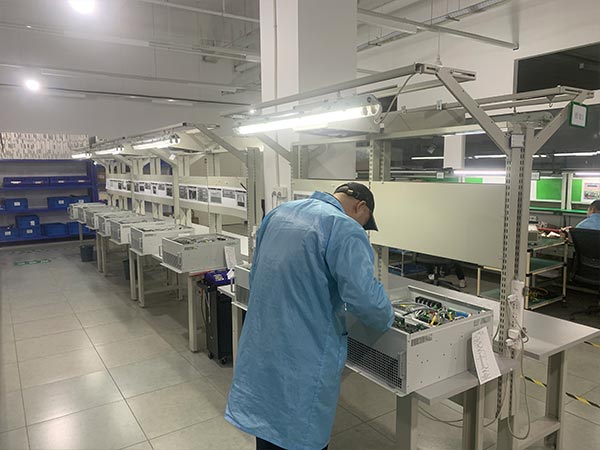
When evaluating enclosed reactive power compensators, the durability of the capacitor elements themselves stands as a fundamental pillar. These are not off-the-shelf parts; the dielectric materials are chosen for prolonged thermal and electrical stress endurance, often incorporating self-healing metalized polypropylene film to manage internal faults without catastrophic failure. The geometric arrangement and internal fusing techniques are engineered to contain individual cell malfunctions, preventing a single point of weakness from cascading through the bank. This granular level of defense is what separates a robust unit from one that merely meets minimal specifications, ensuring that the compensator maintains functional capacity even under less-than-ideal grid conditions.
Beyond the capacitors, the current-limiting reactors and switching mechanics play a decisive role in long-term reliability. The reactors are typically designed with high linearity and low acoustic noise, using vacuum-impregnated windings that resist the mechanical stresses of inrush currents and harmonic peaks. Paired with them, the contactors or thyristor-switched modules must handle frequent operations without degradation—this is where synchronized switching technology becomes critical, as it minimizes transient surges that degrade both the capacitors and the switching elements. A well-designed enclosed unit integrates these components with carefully calibrated inductances that detune the system from certain harmonic orders, preventing resonance that could silently erode component life.
Thermal management and the protection logic form the final shield of reliability. Inside a sealed enclosure, heat is the enemy; passive convection through engineered vent paths or active cooling via thermostatically controlled fans keeps internal temperatures within a narrow safe band, while temperature sensors placed at critical nodes feed real-time data to the controller. The protection suite extends beyond simple overload relays—it includes unbalance detection that monitors phase-to-phase capacitance drift, overpressure disconnectors on each capacitor can, and dry-type fuses sized precisely for the steady-state and transient currents. These multilayered safeguards are not just reactive; they continuously assess operating parameters and can autonomously isolate problematic sections, keeping the rest of the compensator online and ensuring that reliability is not a gamble but a designed certainty.
Industrial Applications Where Compact Static Var Generators Outperform Traditional Solutions
In space-constrained manufacturing plants, compact static var generators (SVGs) slide neatly into crowded electrical rooms where bulky capacitor banks would never fit. Their modular design lets facilities add reactive power compensation without sacrificing valuable floor space, directly tackling voltage sag issues near robotic assembly lines. The fast response—often within half a cycle—prevents those split-second dips that trip sensitive CNC controllers, unthinkable with sluggish mechanical-switched capacitors.
Renewable energy installations, from rooftop solar to small wind farms, heavily favor these units. Traditional solutions struggle with the rapid cloud-induced flicker on photovoltaic systems, but compact SVGs inject reactive current in milliseconds, meeting grid codes without additional passive filtering. On cramped offshore platforms, where every square meter costs a fortune, their lightweight, wall-mountable enclosures deliver power factor correction without the heavy lifting associated with traditional iron-core reactors.
Data centers present a unique challenge: enormous, rapidly shifting loads inside tight server aisles. Compact SVGs mount close to power distribution units, counteracting high-order harmonics from UPS systems that capacitor banks mere steps away would amplify. This localized conditioning prevents resonance issues while keeping cable losses minimal—a benefit that centralized, slower traditional banks simply can't match in these digitally driven environments.
Key Design Features That Separate Premium OEMs from Standard Suppliers
When you look at the build of a premium OEM product, the first thing that strikes you is the attention to material quality and finish. High-end manufacturers don't just select materials for durability—they obsess over texture, weight distribution, and how surfaces interact with light. A standard supplier might meet a spec sheet, but a premium partner will push for anodized aluminum that resists fingerprints while maintaining a silky touch, or a polymer blend that feels substantial yet stays cool during extended use. These choices aren't accidental; they come from iterative prototyping and a culture of refusing to settle for “good enough.”
Beyond materials, the true separator often lies in how a product handles thermal loads and user ergonomics. Premium OEMs invest heavily in computational fluid dynamics and real-world testing to create cooling systems that are nearly silent under load, channeling heat away from where your hands actually rest. Standard designs frequently rely on off-the-shelf fan curves that ramp up abruptly, breaking immersion. Meanwhile, button placement, port accessibility, and even the resistance curve of a hinge are engineered by teams who study hand fatigue and usage patterns over weeks, not hours.
Finally, there's the firmware and software layer—often invisible but immediately felt. Premium OEMs write custom power management routines that optimize for the silicon's actual thermal envelope, not just generic reference designs. This results in longer real-world battery life and smoother performance transitions. Standard suppliers might slap on a default UI and call it a day; premium firms craft boot animations, sound profiles, and even haptic feedback that align with the physical design language, creating a cohesive sensory identity that customers remember.
Evaluating Total Cost of Ownership Beyond the Initial Purchase Price
When businesses focus solely on the sticker price of equipment or software, they often overlook the quieter, long-term drains on their budget. Things like maintenance contracts, energy consumption, and the hours employees spend wrestling with a less intuitive interface can quietly inflate the real expense well beyond what appears on the initial invoice.
A deeper look at total cost of ownership also means factoring in the cost of downtime and the price of integration mismatches. A cheaper solution might save money at the checkout, but if it creates constant friction with your existing tech stack or demands frequent, costly workarounds, the cumulative effect on productivity and morale often dwarfs any upfront savings.
Smart buyers treat the purchase as an ongoing relationship rather than a one-time transaction. By mapping out the expected lifecycle—including eventual decommissioning or migration costs—they can avoid being trapped by a low entry price that slowly gives way to expensive lock-in, ensuring the choice remains economically sound years down the line.
Installation and Integration Pitfalls Even Experienced Engineers Overlook
One of the most subtle traps lies in the assumption that local development mirrors production. Engineers often hardcode environment-specific values like file paths or database strings, only to face cryptic failures when the service lands in staging. Beyond that, library version mismatches tend to slip past even rigorous code reviews—imagine a Docker image pulling a slightly newer package that quietly breaks a critical function. These issues rarely surface in unit tests, precisely because they live at the intersection of the system and its surroundings.
Integration points with third-party APIs introduce another layer of hidden complexity. It's common to overlook rate-limiting until a production spike triggers throttling that never appeared in a sandbox. Similarly, misconfigured SSL certificate chains or overlooked DNS rebinding protections can lead to outages that are remarkably difficult to trace. The most dangerous pitfalls aren't the ones you see coming, but the ones that arise from the quiet assumptions baked into your deployment process.
FAQ
A cabinet-type static var generator (SVG) is a power electronics-based device housed in a standalone enclosure that provides dynamic reactive power compensation. Unlike traditional capacitor banks or passive filters, it uses IGBT technology to generate or absorb reactive power almost instantaneously, correcting both leading and lagging power factors without the risk of resonance. The cabinet design integrates everything—power modules, control system, cooling—into a single, pre-tested unit that simplifies installation and maintenance.
Industries with fluctuating loads or stringent power quality requirements see the biggest gains. Common adopters include steel plants, automotive manufacturing, mining operations, water treatment facilities, and renewable energy installations like wind and solar farms. Any facility where voltage drop, flicker, or utility penalties for poor power factor are a concern can benefit, especially when the load changes rapidly and unpredictably.
Beyond the obvious ease of installation, cabinet units offer better environmental protection—they're typically rated for dusty or humid environments—and they simplify compliance with local electrical safety codes. The manufacturer pre-wires and tests the entire assembly, drastically reducing commissioning time on site. Plus, when you need to expand or relocate, a cabinet unit can be moved as a complete, operational system rather than rebuilding from scratch.
Look beyond glossy spec sheets. Request reference installations similar to your application and, if possible, speak directly with their engineering staff about harmonic performance under partial load. Verify that they offer genuine local support—not just a sales office—and ask about their component sourcing: do they design and manufacture the power stacks themselves, or are they integrating third-party modules? A strong OEM will also provide detailed transient performance data, not just steady-state specs.
Most units are designed for minimal intervention—typically annual inspections of air filters, checking torque on electrical connections, and verifying cooling fan operation. The surprises often come from overlooked environmental factors: a cabinet placed near a production line with airborne conductive dust may need bi-monthly filter changes, and high ambient temperatures can degrade capacitors faster than the datasheet suggests. Budget for a thermal imaging survey during commissioning to catch hot spots early.
They can coexist, but it requires careful coordination. The SVG's ultra-fast response can sometimes lead to hunting if the capacitor bank's contactor stages switch in and out too slowly, causing brief oscillations. The standard approach is to let the SVG handle the fastest fluctuations while the capacitor bank covers the base load, with the SVG's controller programmed to recognize and ignore the capacitor steps. A well-designed control strategy makes the combination very cost-effective.
Response time under 5 ms is table stakes now—pay more attention to the unit's efficiency at partial load, where it will spend most of its life. Also check the harmonic injection spectrum: some designs can introduce high-frequency noise that interferes with sensitive equipment, even if total harmonic distortion looks fine on paper. Finally, verify the communication protocol support if you need to integrate with a plant SCADA or building management system.
Conclusion
Cabinet-type static var generators have reshaped power quality management by combining real-time voltage stabilization with a compact, self-contained design. Unlike traditional capacitor banks or open-frame systems, these enclosed units continuously sample the line conditions and inject leading or lagging reactive current within milliseconds, effectively flattening voltage sags and swells before they can disrupt sensitive processes. Their reliability hinges on a few core elements: robust IGBT stacks with precise gate driving, oversized LC filtering to handle harmonic stresses, and an intelligent controller that coordinates internal cooling with external grid demands. When the thermal management and component derating are executed thoughtfully, the system can run for years in harsh industrial settings with minimal degradation.
Beyond technical specs, the decision to invest in a particular OEM requires looking at what gets missed on a typical datasheet. Compact static var generators excel in applications like automotive welding lines or mid-sized data centers, where floor space is tight and load profiles change abruptly, outperforming traditional SVCs that struggle with transient response. However, genuine differentiation among manufacturers shows up in modularity (allowing later expansion without full reengineering), filter design that avoids resonance with existing capacitor banks, and diagnostics that flag pre-failure conditions. The total cost of ownership calculation should extend well beyond the purchase price to include part-load efficiency curves, the ease of capacitor bank replacement, and how seamlessly the unit integrates with step-down transformers and existing busbar layouts. On site, even seasoned engineers often underestimate the inrush coordination with upstream breakers or the nuisance trips caused by incorrect CT polarity—small details that turn a premium cabinet SVG into a long-term asset rather than a recurring headache.
Contact Us
Contact Person: Leo
Email: [email protected]
Tel/WhatsApp: +86-13567770207
Website: https://www.geyapower.com/