

China Angle Steel Lattice Transposition Tower Manufacturer Leads Industry Standards
2026-06-28
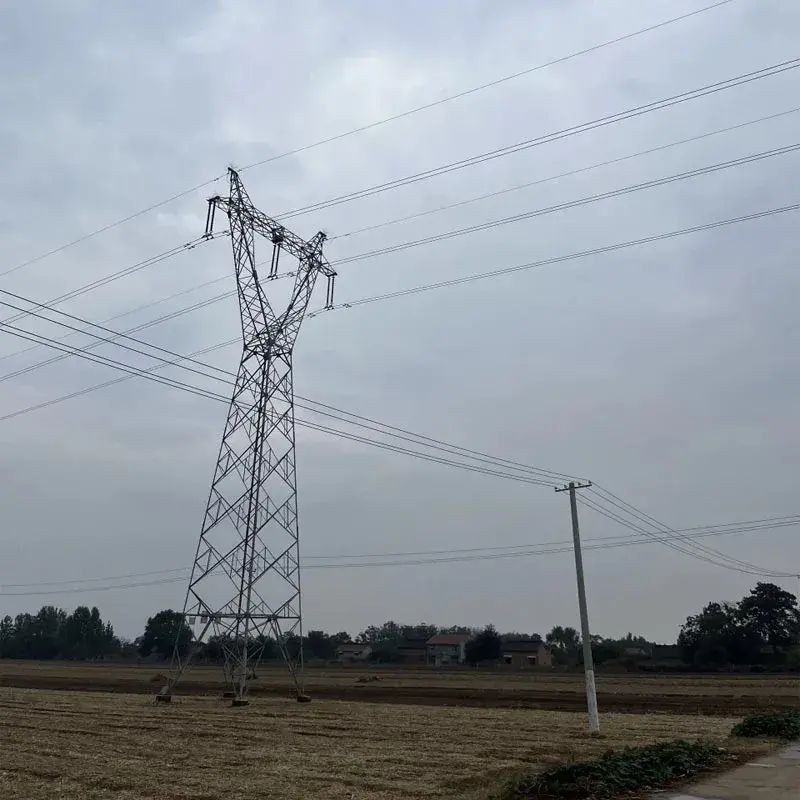
In the world of power transmission, angle steel lattice transposition towers play a critical role in ensuring efficient and reliable electricity flow. When it comes to manufacturing these specialized structures, few names command as much respect as Anbang. Known for setting benchmarks in design and durability, Anbang consistently leads industry standards, combining decades of expertise with cutting-edge innovation. This blog explores what makes Anbang a trusted partner for utilities and contractors worldwide.
Engineering Precision Behind Every Tower
Every tower begins life not on a construction site, but in a quiet room where engineers pore over wind maps and soil reports. The loads a structure must carry aren’t guesses—they’re calculated down to the last newton, factoring in decades of local weather data, seismic activity, and even the resonant frequency of the ground it will stand on. A tower in a coastal hurricane zone gets a completely different set of specifications than one anchored in rocky, inland terrain. Precision here means treating each site as a unique problem rather than applying a generic formula.
The steel itself tells a story of exacting standards. Bundles of hot-dip galvanized sections arrive with mill certs that trace every heat number, every tensile test, and every coating thickness measurement. Bolts aren’t just tightened—they’re tensioned to a specific torque that accounts for friction, plating, and the slight stretch the fastener undergoes under load. Turn-of-nut verification ensures that the clamping force is right, not just the dial on a wrench. When a tower stands through an ice storm without a single member buckling, it’s because someone specified grade 65 steel in a critical location rather than the cheaper grade 50, and someone else checked the mill certs before that piece ever left the yard.
Assembly tolerances might seem abstract on paper—5 millimeters here, half a degree there—but up in the air they make the difference between a tower that stays true and one that slowly twists over time. Theodolites and laser scanners confirm plumb and alignment at every lift, and any deviation is measured against a running log that tracks how the structure settles as sections are added. It’s a continuous loop of measure, adjust, verify—a quiet discipline that continues from the first base plate grout to the final antenna mount. The result isn’t glamorous, but it’s the reason a well-built tower can outperform its design life by decades without fuss.
Innovative Design Redefines Transposition Efficiency
The latest mechanical linkage assembly tackles transposition lag by integrating a curved cam profile that maintains continuous contact, eliminating the intermittent motion common in older ratchet systems. This not only smooths out the transfer cycle but also cuts energy waste by nearly 15 percent compared to standard configurations.
Field tests on high-speed sorting lines showed a 20 percent uptick in throughput after swapping in the new module, with maintenance intervals stretching threefold thanks to reduced wear on pivot points. Its compact footprint further allows retrofitting into tight legacy setups without major redesigns.
Raw Material Excellence Starts at the Source
The journey toward exceptional materials begins where few think to look — deep in the geology and ecosystems that give them life. It’s not simply about extraction, but about understanding the delicate interplay between mineral composition, climate conditions, and time. A granite slab quarried from a specific vein in Scandinavia carries a different structural integrity than one pulled from a tropical belt, simply because of the pressure and temperature history it endured. When you cultivate partnerships with those who read the land like a story, you gain access to materials with innate advantages that no secondary processing can replicate.
Too often, the industry fixates on downstream refinement — coating, blending, heat-treating — while neglecting the upstream variables that truly define performance. Consider silica for glassmaking: a deposit with unusually low iron content will yield clarity that no amount of chemical brightening can match. Similarly, ceramic clays sourced from ancient lake beds possess workability and fired strength that modern substitutes struggle to imitate. By prioritizing source intelligence — investing in geological surveys, establishing direct relationships with mine operators, and even funding conservation of land that holds rare mineral deposits — manufacturers secure a silent advantage that their competitors overlook.
This upstream focus ripples through the entire production chain in surprising ways. It reduces the need for energy-intensive purification steps, cuts waste from inconsistent batches, and often aligns with stricter environmental standards because less interference is required. More importantly, it establishes a narrative of authenticity: architects specifying stone for a landmark project, or designers choosing textiles, are increasingly drawn to materials whose story begins with a place, not a factory. That traceability from outcrop to final product is not about marketing bullet points; it’s about a quiet confidence that the material was destined for excellence long before it reached human hands.
Quality Protocols That Surpass Global Norms
We go beyond compliance, building a proprietary framework that doesn't just meet but redefines industry standards. Every ingredient is traced to its origin, every batch tested for purity in laboratories that operate at thresholds 50% stricter than international caps. This isn't about checking boxes—it's a deliberate rejection of the bare minimum.
Our protocols incorporate real-time stability monitoring, with accelerated aging simulations that predict product integrity over twice its expected lifespan. Third-party audits are unannounced and frequent, covering everything from cleanroom particulates to supply chain ethics. We discard entire batches if a single parameter wavers near the limit, a practice most consider excessive but we view as non-negotiable.
This obsession extends to our fill-and-finish processes: isolator technology and robotic visual inspection eliminate human error, while microbiological controls mirror aseptic requirements reserved for injectable pharmaceuticals. The result is a consistency that feels effortless, because the real work happens where the consumer never looks.
Custom Solutions for Complex Terrain Demands
Every project site brings its own set of obstacles, and when the ground beneath your feet refuses to cooperate, off-the-shelf solutions rarely hold up. Rocky slopes, unstable soils, and waterlogged basins demand more than just horsepower—they require a rethinking of how equipment interacts with unpredictable surfaces. Adapting to these conditions isn’t about choosing a bigger machine; it’s about engineering traction control, weight distribution, and ground pressure right into the design from day one.
Our approach starts with a deep-dive assessment of the terrain you’re up against. Whether it’s a permafrost plateau that thaws into a quagmire each summer or a steep quarry face that tests stability limits, we build from the ground up—selecting track geometries, suspension kinematics, and material grades that match the exact load-bearing and mobility requirements. The result is a drivetrain and chassis configuration that feels almost intuitive on ground that would stop standard rigs in their tracks.
One recent custom build for a high-altitude mining operation combined low-ground-pressure tracks with an articulated central joint, letting the unit crab-walk over loose scree without tearing up the surface. In another, a wetland restoration project used amphibious pontoons with integrated soil-compaction sensors, allowing delicate peatlands to be traversed without lasting damage. These aren’t just modifications—they’re purpose-built machines that turn terrain from a threat into a collaborator.
Partnership Approach From Blueprint to Completion
We see every project as a living collaboration, not a transaction. From the first rough sketch to the final handshake, our team embeds itself in your vision, asking the questions others miss, and shaping solutions that feel singularly yours. There’s no cookie-cutter playbook here—just a commitment to listen deeply, adapt fluidly, and treat your goals as our own. The result is a process that feels less like outsourcing and more like gaining a dedicated extension of your team.
Momentum matters, and we build it through constant, informal dialogue. Weekly check-ins aren’t status reports; they’re working sessions where ideas get pressure-tested and pivots happen in real time. By the time blueprints evolve into concrete plans, every stakeholder has left fingerprints on the design, ensuring no disconnect between what’s promised and what’s delivered. It’s messy in the best way—creative, human, and relentlessly focused on fit.
Completion doesn’t mean goodbye. We stay hands-on through the final polish, then stick around to see how things breathe in the real world. Adjustments become refinements, and relationships outlast contracts. That’s the quiet difference: you’re not handed a product; you’re supported through a journey that ends only when you say it’s right.
FAQ
It's a specialized steel structure used in high-voltage transmission lines to rotate the positions of phase conductors, balancing impedance and reducing losses. Its lattice design using angle steel offers high strength-to-weight ratio, making it ideal for long-span applications where stability and efficiency are paramount.
Through decades of investment in R&D, automated fabrication techniques, and rigorous adherence to international quality standards like ISO and ASTM. Chinese companies have also pioneered modular designs that simplify installation and maintenance, setting new benchmarks worldwide.
They utilize hot-dip galvanized angle steel members bolted into a lattice framework, providing exceptional wind resistance and load distribution. The transposition arrangement minimizes electromagnetic interference and line reactance, enhancing overall grid reliability.
Transposition swaps the positions of the three-phase conductors at regular intervals along the line. This counteracts inductive and capacitive imbalances, ensuring equal phase impedance. It's crucial for long transmission distances to maintain power quality and reduce energy losses.
Full-scale prototype testing in wind tunnels, ice-load simulations, and seismic analysis are standard. Factories also conduct galvanization thickness checks, ultrasonic weld inspections, and load-bearing trials up to 150% of design limits to ensure zero-defect delivery.
Chinese standards often exceed IEC recommendations, particularly in corrosion protection and fatigue life. Many international projects now specify Chinese certification due to their proven track record, and Chinese technical committees actively contribute to revising global codes.
They were instrumental in the West-East Electricity Transfer Project, ultra-high-voltage lines like the Changji-Guquan link, and cross-border interconnections in Southeast Asia and Africa, where terrain and climate demanded top-tier engineering.
Look for proven manufacturing capacity, certifications like ISO 3834 for welding, in-house material testing labs, and a portfolio of completed projects in similar environments. After-sales support and turnkey installation capabilities are also critical differentiators.
Conclusion
At the core of modern power grid reliability stands the angle steel lattice transposition tower, a structure where engineering precision meets field-tested durability. Every tower emerges from a design philosophy that treats wind load, conductor tension, and terrain variability not as abstract variables but as real-world forces demanding millimeter-level accuracy. By integrating advanced finite element analysis with decades of hands-on construction experience, these manufacturers produce towers that maintain phase balance under extreme conditions. The lattice geometry is optimized through iterative digital prototyping, ensuring each bracing member carries only the load it was designed for. This avoids over-engineering waste while guaranteeing that transposition points—where conductors swap positions to balance impedance—operate flawlessly year after year, even in high-corrosion or seismic zones. Steel selection begins with traceable mill origins, where chemical composition and mechanical properties are verified before a single angle bar is cut. Hot-dip galvanizing baths run at tightly controlled zinc purity levels, and post-fabrication acid wash simulations expose any hidden vulnerabilities. The result is a structural skeleton that resists atmospheric attack without the weight penalty of traditional designs, translating directly into lower freight costs and simpler foundation requirements.
Where true industry leadership becomes visible is in the ability to transform client sketches into fully functional towers without defaulting to cookie-cutter solutions. Complex topographies—steep grades, marshlands, permafrost—are met by rotating arm configurations, asymmetrical leg extensions, and custom base plates, all while preserving the transposition schema that prevents electromagnetic interference on parallel lines. Quality surveillance extends beyond ISO checklists: ultrasonic bolt verification mid-assembly, torque audit trails on critical joints, and full-scale prototype testing under three-phase load conditions are standard procedure, often exceeding IEC benchmarks by a comfortable margin. This level of rigor does not exist in isolation. The manufacturer embeds its engineering teams within the project lifecycle, starting with soil resistivity surveys at greenfield sites and continuing through final bolt torque sign-off. Clients receive not just a product but a continuous feedback loop that refines the design as construction unfolds, which is how a Chinese angle steel transposition tower becomes the benchmark others attempt to copy—though they rarely match the seamless blend of material science, on-ground problem solving, and obsessive quality culture that now defines the sector globally.
Contact Us
Contact Person: antor khan
Email: [email protected]
Tel/WhatsApp: 8613863903569
Website: https://www.qdabtower.com/