

China Conveyor Roller Vendor: How to Evaluate Quality and Reliability
2026-11-16
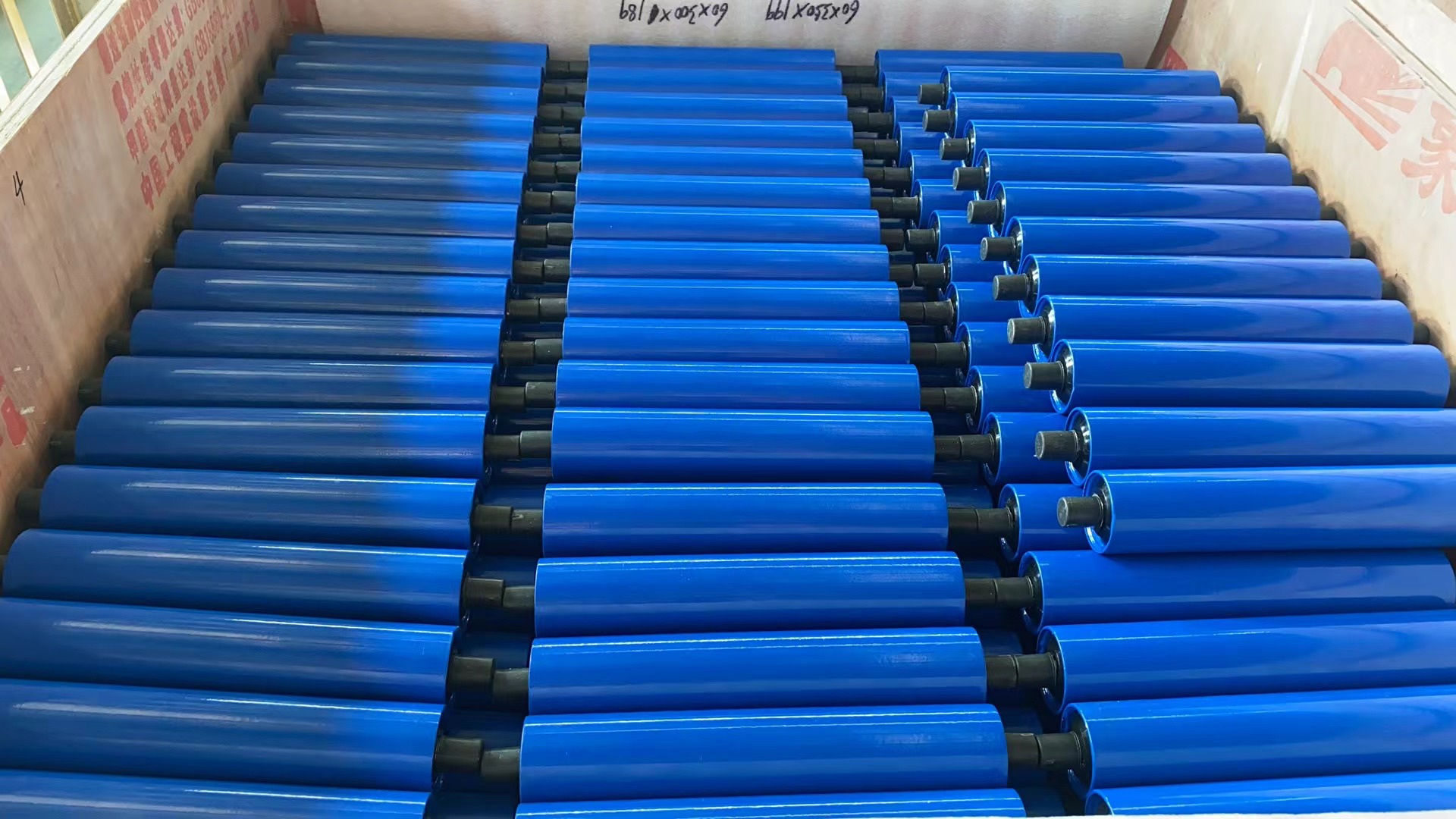
What separates a conveyor roller that lasts five years from one that needs replacing after two? Few buyers can answer that until it's too late. In China's crowded vendor landscape, specs on paper rarely tell the full story—raw material choices, bearing brands, and even the welding method matter more than price. XAN has become a reference point for buyers who've learned to look beyond the surface, but the real advantage comes from knowing how to evaluate any supplier. Let's dig into what actually predicts long-term reliability.
Start With the Bearing, Not the Roller Shell
Most maintenance checks on a roller assembly begin with the obvious: the shell. But that outer cylinder hides the real story. The bearing decides how the roller spins, how much load it carries, and whether the whole unit fails early or runs quietly for years. If you ignore the bearing first, you end up chasing symptoms on the surface.
Take a worn roller. The shell may show scoring, but the cause is often a bearing that has lost its preload or run dry. Replacing the shell alone won't stop the same damage from coming back. Start with the bearing: check its clearance, feel for roughness, see if the seal has let in dirt. That tells you whether the roller can be saved or needs a full rebuild.
Design choices follow the same rule. A thicker shell can't make up for a bearing that's undersized for the load. If you're upgrading a roller, put your money into the bearing selection first—higher load rating, better seals, proper lubrication channels. The shell is just along for the ride.
Ask for Raw Material Mill Certificates, Not Just a Logo
A familiar logo on a product can feel reassuring, but it rarely tells you anything about the actual metal or material inside. If you are buying steel, aluminum, or any structural raw material, you need the mill certificate from the plant that produced it. That document lists the heat number, chemical composition, mechanical properties, and the exact standards the batch was tested against. A logo just shows who marketed it; the certificate shows what it really is.
Suppliers sometimes offer a branded spec sheet or a certificate with no traceable mill information. That should raise a flag. Without the original mill certificate, you cannot verify whether the material meets your required grade or if it has been substituted with something cheaper. Ask for the document that comes directly from the mill, check the batch or heat number, and if needed, contact the mill to confirm the details. That extra step separates a trustworthy shipment from an expensive guess.
Watch a Batch Being Assembled From Start to Finish
The batch kicks off with loose components staged on a wheeled rack. Someone in grey gloves lifts the first base plate, rotates it under a task light to check for burrs, then sets it into a steel fixture. Nearby, a tray of fasteners is counted and arranged by size, so the next steps won't stall.
Once the fixture clamps down, the assembly picks up pace. A driver sinks four screws in a diagonal pattern, the torque limiter clicking at the exact setting. Further down the line, a technician snaps in a small circuit board and runs a quick continuity test with a handheld meter. The half-built units move on a narrow conveyor, pausing only when a sensor flags a misaligned cover.
At the final station, each unit gets a wipedown and a short function check—buttons pressed, lights cycled, lid closed and reopened. A label is printed with the batch code and date, then the finished pieces are nested into foam trays and slid into cartons. Watching the whole batch come together from scattered parts to sealed boxes makes the process feel deliberate rather than rushed.
Run a Pilot Order Through an Independent Lab
Running a pilot order through an independent lab is more than a precaution—it’s a strategic move to catch deviations before they scale. Start by selecting a facility that isn’t commercially tied to your supplier, then ship a small batch identical to what you’d send to customers. Ask for a full breakdown of active ingredients, contaminants, and physical properties like viscosity or particle size. The real value emerges when you compare their report against the Certificate of Analysis you already have: mismatches often reveal overlooked variables in storage, handling, or even raw material sourcing.
Don’t treat this as a one-off checkbox. Use the pilot results to build a baseline dataset, then repeat tests with the same lab over two or three production cycles. That repetition lets you distinguish normal batch-to-batch variation from genuine drift. If the independent results consistently fall within your tolerance bands, you’ve validated not just the product but your entire quality pipeline. If not, dig into the deviations before placing a larger order—fixing a supplier issue at pilot scale costs a fraction of recalling finished goods.
Finally, document every step without turning the process into bureaucracy. Keep a simple log: sample ID, date shipped, lab method used, turnaround time, and any communication with the lab about unexpected results. This record becomes your leverage in supplier negotiations and your defense if a customer ever questions consistency. Over time, you’ll learn which tests give you the most signal for your specific product category, and you can trim the rest—turning the independent lab from an expense into a precision tool.
Interrogate Their Warranty and Return Promise
Generic warranty language often hides loopholes. Instead of accepting a "lifetime guarantee" at face value, ask what lifetime actually means: product lifetime, original owner lifetime, or company lifetime? Request written terms covering exactly which components are included, what constitutes normal wear versus defect, and whether repairs or replacements are prorated over time.
Return promises can be equally slippery. A "30-day money-back guarantee" may only apply to unopened boxes, or you may be responsible for return shipping plus a restocking fee. Confirm whether the clock starts on purchase date or delivery date, and whether refunds go back to the original payment method or become store credit. If a trial period is offered, ask who covers return insurance for high-value items.
Also probe the process: How long does a claim take? Will you deal directly with the brand or a third-party service center? Ask for a sample repair timeline and whether loaner units are provided. A trustworthy company will have no trouble emailing you the full warranty and return policy before you commit.
Talk to a Client Who Had a Problem, Not Just a Happy One
When you're trying to understand how your product or service actually performs, happy clients only tell you half the story. They signed on, everything went smoothly, and they have no complaints—but that doesn't reveal where the rough edges are. A client who ran into a real problem, on the other hand, can walk you through exactly what broke, when it broke, and how it felt to deal with the aftermath. That kind of conversation is worth ten glowing testimonials, because it shows you the gaps between what you promise and what you deliver.
Reaching out to a client who had a difficult experience also signals that you're not afraid of hard feedback. Many businesses avoid those calls because they're uncomfortable, but that avoidance quietly erodes trust. When you ask someone to describe their frustration in detail—and you listen without interrupting or defending—you're not just collecting information. You're rebuilding a relationship that might otherwise have ended in silence. The client sees that their struggle mattered enough for you to investigate, and that alone can change how they remember the whole engagement.
Of course, this only works if you approach the conversation with genuine curiosity rather than a scripted apology. Skip the corporate language and ask simple questions: What was the moment you realized something was wrong? What did you have to do to work around it? What would have made the situation easier? The answers are rarely flattering, but they're specific and actionable. Then, after the call, write down the patterns you notice. One frustrated client might be an outlier; three clients describing the same bottleneck is a roadmap for what to fix next.
FAQ
Look beyond the polished website. Ask if they have an in-house testing bench for radial runout and rotational resistance, and whether they can share raw footage from their production floor. A supplier that hesitates to show you their welding stations, bearing press area, or QC checkpoints usually has something to hide.
Request the mill certificates for the steel tube and shaft, not just a generic material declaration. If possible, ask for a small sample and have the hardness and wall thickness checked independently. Some suppliers will also send along the original purchase invoice from their steel mill for a recent batch, which is a strong transparency signal.
The process is everything. A roller that looks fine externally can fail early if the tube is not cut square, the bearing seats are machined out of tolerance, or the welding introduces excessive heat distortion. Ask specific questions: Do they use automated welding for the end caps? What is their tolerance for shaft concentricity? How do they clean the inside of the tube before bearing assembly?
Ask for the names of three customers in a similar industry who have been buying for at least two years, and actually contact them. Also check export records if possible, and ask for a recent third-party inspection report from an agency like SGS or BV. A vendor that proactively offers a trial order with pre-shipment inspection is more credible than one that only shows certificates.
The bearing is the heart of the roller, so ask for the exact brand and grade, not just 'premium bearing'. A reliable vendor will tell you if they use SKF, NSK, or a domestic equivalent like C&U, and they will explain the clearance class. For sealing, a labyrinth seal combined with a contact lip seal is usually the most robust for dusty or wet environments. Ask what grease they use and how much they fill, as overfilling causes heat and underfilling leads to early wear.
Both have value. A personal visit lets you observe whether the equipment is well maintained, how workers handle parts, and whether the QC lab is genuinely used or just for show. Third-party inspection is better during production or before shipment, because inspectors can check random samples against your agreed specifications. For a first order, do both if your budget allows.
Start with a small pilot order, say 200 to 500 pieces, and measure the critical dimensions on every roller or a statistically meaningful sample. Then place a larger order and compare the variation in radial runout, shaft straightness, and weld quality between batches. A good vendor will have a traceability system that links each batch to the raw material lot and the production date, so you can spot trends before they become problems.
A clear written warranty matters more than a long one. Look for a vendor that states the expected service life under defined load and speed conditions, and who promises to replace or repair rollers that fail due to manufacturing defects within a reasonable period. Also check how they handle a claim: Do they ask for photos and return samples for failure analysis? Do they respond within 48 hours with a corrective action plan, or do they disappear after the invoice is paid?
Conclusion
Evaluating a conveyor roller vendor in China demands going far beyond polished catalogues. The most revealing check starts inside the bearing, since identical shells often hide wildly different internal quality. Request raw material mill certificates for both steel and bearings, not just a supplier's logo on a data sheet. If a factory hesitates to provide traceable documentation, treat that as a red flag. Where possible, watch a batch being assembled from start to finish. Observing how workers seat bearings, apply grease, and align welds tells you more than any audit checklist.
Before scaling up, run a pilot order through an independent lab that measures runout, seal performance, and load capacity under realistic conditions. Then press the vendor on warranty specifics. What exactly triggers a return, who pays freight, and how quickly replacements ship? Finally, ask for a reference from a client who encountered a defect, not just a satisfied one. A supplier that openly walks you through a past failure and its corrective action is far more trustworthy than one offering only praise. Combining these steps turns a vague sourcing decision into a defensible quality call.
Contact Us
Contact Person: Anna Lu
Email: [email protected]
Tel/WhatsApp: 8618561668850
Website: https://www.x-conveyor.com