

China High Precision Shunt Resistor Trends Driving the Future of Current Sensing
2026-07-05
Current sensing is quietly revolutionizing everything from EV battery management to industrial automation, and at the heart of this shift lies a component often overlooked: the high precision shunt resistor. China is driving remarkable innovation in this field, reshaping global trends with demands for higher accuracy, smaller footprints, and extreme reliability. As the market accelerates, one name repeatedly surfaces among engineers who refuse to compromise—Milliohm. This blog explores the key trends powering the next generation of current measurement, and why the attention is firmly fixed on advancements coming out of China.
China's Push for Ultra-Precise Shunt Resistors
In the race for ever-finer measurements, China is rapidly scaling a technological peak once dominated by a handful of global players: the production of ultra-precise shunt resistors. These humble components, tasked with accurately sensing current by measuring the voltage drop across a known resistance, are the unsung heroes inside electric vehicle battery management systems, industrial motor drives, and precision power supplies. The push is fueled by skyrocketing domestic demand for EVs and renewable energy infrastructure, where even a milliohm deviation can translate into critical efficiency losses or safety risks. Today, state-funded labs and manufacturers are perfecting thin-film metal alloy technologies that achieve temperature coefficients of resistance below 10 ppm/°C and resistance tolerances tighter than 0.1%, bringing them in line with the strictest automotive and metrology standards.
What sets this endeavor apart is the vertical integration taking shape from raw materials to final calibration. Chinese suppliers are no longer content with just assembling imported foil elements; they are mastering the entire chain. Specialized alloys like Manganin, Zeranin, and custom copper-nickel blends are being melted, rolled, and etched domestically, cutting reliance on European or Japanese upstream sources. At the same time, automated laser trimming systems developed in-house are achieving sub-milliohm accuracy with exceptionally low stray inductance—critical for fast-switching wide-bandgap semiconductors. This drive for self-reliance is also leading to novel packaging concepts, such as direct-bond-copper shunts with integrated temperature sensors, which simplify system design and improve long-term stability in harsh automotive environments.
Rather than competing solely on price, the highest achievers are targeting niche performance envelopes that global giants have overlooked. For instance, some Chinese teams are exploring hetero-metal junction shunts that eliminate thermoelectric errors at the copper-to-resistor interface, a persistent issue in high-current sensing. Others are embedding shunt resistors into laminated busbars, creating ultra-low profile current sensing modules that can be pressed directly into a traction inverter stack. These innovations are quietly reshaping procurement bills of materials, as Tier-1 suppliers and automakers take notice. The long-term ambition seems clear: to turn a basic passive component into a precision measurement platform, and in doing so, anchor a larger slice of the electronics value chain on home soil.
How Material Innovations Elevate Current Sensing Accuracy
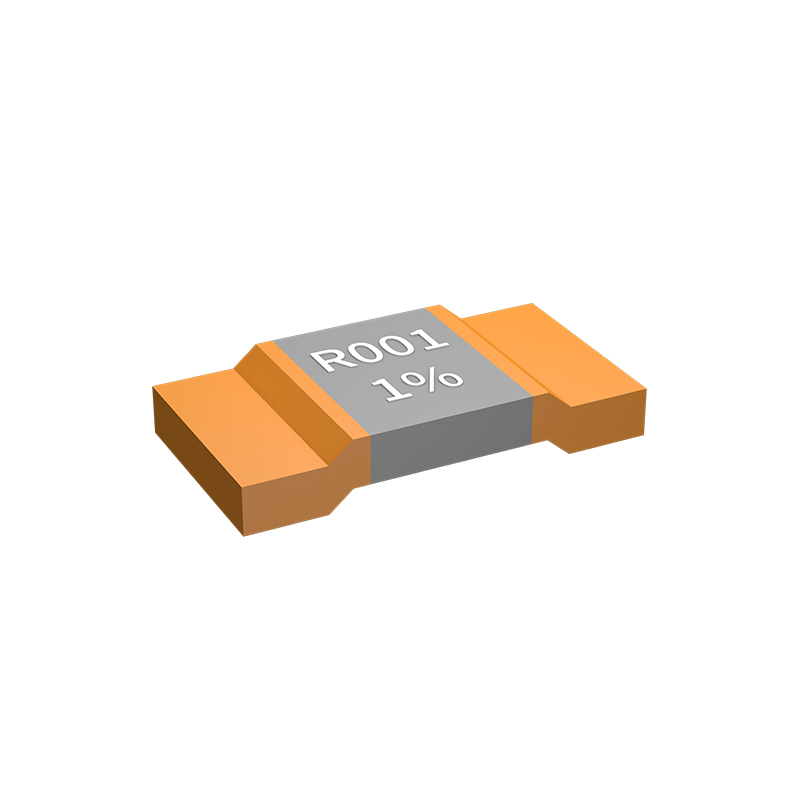
Precision current sensing has long wrestled with thermal drift and nonlinearity, often undermining the very measurements engineers rely upon. Conventional shunt resistors, for instance, gain or lose micro-ohms with every degree of temperature change, turning a seemingly stable reading into a moving target. It’s the material itself that sets the boundary—copper, metal alloys, even standard ferrites can’t escape their inherent physical responses. The push toward more accurate sensing, then, isn’t just about clever circuit design; it starts with rethinking the substances we build from.
Recent strides in material science are quietly revolutionizing this space. Manganin and constantan alloys, long the workhorses of precision shunts, are being refined with ever-tighter composition controls, slashing the temperature coefficient of resistance (TCR) to single-digit ppm/°C. Meanwhile, amorphous and nanocrystalline cores are finding their way into inductive sensors, offering dramatically lower coercivity and higher permeability than traditional laminations, squeezing out phase errors that once seemed inevitable. Even in Hall-effect and magnetoresistive designs, the leap from bulk semiconductors to tailored thin films—like bismuth-based stacks or graphene heterostructures—has pushed noise floors down while amplifying sensitivity, making microamp-level sensing practical in field conditions that were once too harsh.
What this means for real-world applications goes beyond a better datasheet number. When the material itself resists drift, compensation circuits can simplify, auto-zeroing sequences shorten, and whole systems shrink without sacrificing performance. The result is current measurement that stays accurate from a cold start to full load, under vibration, humidity, and aging—conditions where yesterday’s sensors would stray. This isn’t incremental progress; it’s a foundational shift, turning current sensing from a weak link into a trusted constant.
Shunt Resistor Breakthroughs Powering EV Efficiency
Monitoring current with precision used to mean accepting a trade-off between accuracy and heat. Shunt resistors, the tiny components that measure current by tracking voltage drop, have always played a quiet but central role in battery management and motor control. In older electric vehicle designs, higher resistance values helped pull clearer signals, but they also stole energy and generated hotspots that called for extra cooling. New materials and manufacturing techniques are changing that equation, letting shunts deliver ultra-low resistance without losing measurement fidelity. This shift is making a direct impact on how efficiently EVs convert stored energy into motion.
Modern shunts based on electron-beam welded metal alloys now push resistance down to fractions of a milliohm while holding tight tolerances over temperature swings common under the hood. Advanced four-terminal Kelvin connections and lower thermal EMF materials cut out noise that once forced designers to compromise on range calculations. These aren't just incremental tweaks—they reflect a deeper understanding of how stray inductance, thermal drift, and vibration stress interact in a moving vehicle. As a result, shunt-based current sensing keeps getting more competitive next to bulkier Hall-effect or flux-gate solutions.
What does that mean for efficiency? Primarily less waste in the system. When a shunt wastes less power as heat, more energy reaches the inverter and ultimately the wheels. It also lightens the thermal management load, allowing smaller or fewer active cooling components. This becomes especially critical during regenerative braking, where capturing every possible watt matters. Every fraction of a watt saved inside the battery sensing chain translates into real miles on the road. With these breakthroughs, shunt resistors have evolved from simple passive parts into key enablers of longer-range, more responsive electric vehicles.
Miniaturization and High-Precision Synergy
The relentless push toward smaller devices brings with it a fundamental tension: as components shrink, maintaining precision becomes exponentially more difficult. Material behaviors that are negligible at larger scales suddenly dominate, and manufacturing tolerances tighten to the point where even atomic-level inconsistencies matter. Achieving synergy between miniaturization and high precision isn't just a technical challenge—it's a rethinking of design philosophy, where every micro-scale decision must anticipate macro-scale performance.
This synergy emerges when engineers blend advanced fabrication techniques with real-time feedback systems. For instance, integrating in-situ metrology directly into micro-assembly lines allows for adaptive corrections on the fly, turning potential defects into opportunities for refinement. The result is a virtuous cycle: the demand for smaller, more accurate devices drives innovation in control algorithms and material science, which in turn enables the next leap in miniaturization without sacrificing reliability.
In fields like medical robotics or aerospace sensors, the marriage of compact form and exacting accuracy isn't a luxury—it's a prerequisite. A surgical micro-drill the size of a pen tip must rotate with sub-micron runout, and a satellite’s micro-thruster must fire with microsecond precision. These applications don't just tolerate the interplay between small and precise; they thrive on it, demonstrating that when the two forces are properly harnessed, they form the backbone of truly transformative technology.
Overcoming Thermal Drift in High-Stress Environments
Precision systems exposed to extreme mechanical stress often battle an invisible enemy: heat-induced measurement wander. As loads spike, so do internal temperatures, causing sensitive electronics to stray from their calibrated baseline. The real trick isn't just adding cooling—it's embedding thermally matched materials and symmetric circuit topologies that cancel out shifts before they corrupt the data stream. Modern designs lean on substrates with near-zero expansion coefficients and active compensation algorithms that learn the thermal signature of the assembly, turning a vulnerability into a controlled, predictable parameter.
In practice, field-hardened enclosures integrate strain relief and isolation barriers to shield the sensor core from both mechanical and thermal transients. Instead of one-size-fits-all heatsinks, we see layered thermal management: conductive pathways bleed heat away from critical nodes while phase-change materials absorb sudden fluxes. This isn't mere protection; it's co-designing the electronic and mechanical domains so that stress—whether from vibration, pressure, or torsion—doesn't translate into spurious signals. The result reads clean even when the surrounding machinery is shaking itself apart.
Testing reveals that the real breakthroughs come from embracing the drift itself. By pushing prototypes through aggressive thermal-stress cycles and mapping their responses, engineers bake correction tables directly into firmware. Some configurations even use a tiny, deliberately uninsulated reference element that tracks the transient, enabling real-time subtraction of thermal artifacts. It’s a gritty, hands-on approach: cycle until it breaks, understand why, then redesign. The payoff is a sensor node that holds its accuracy not in sterile lab conditions, but right where the action is—inhospitable, relentless, and unforgiving.
The Role of Shunt Resistors in Next-Gen Smart Grids
Shunt resistors serve as the quiet sentinels of modern power networks, translating current flow into precise voltage signals that keep smart grids responsive. By offering a direct, low-ohmic measurement path, they sidestep the complexity of magnetic sensors, delivering accuracy that thrives amid the harmonic noise and variable loads typical of distributed energy systems.
Beyond metering, these components enable real-time fault detection and adaptive protection within grid-edge devices. Their thermal stability and wide-bandwidth response let grid controllers pinpoint transient events, while the resistor’s simple construction reduces points of failure compared to isolated alternatives—a crucial advantage in remote or unmanned installations.
As renewable integration accelerates, shunt-based sensing underpins precise power bidding and islanding detection without the bulk of current transformers. When paired with digital isolators and energy-harvesting microcontrollers, shunt resistors close the loop on autonomous microgrid management, turning raw current data into actionable insights while keeping infrastructure lean.
FAQ
We're seeing a strong push toward ultra-low resistance values, higher power ratings in smaller packages, and tighter tolerance demands. The automotive electrification wave and smart grid upgrades are major drivers, pushing manufacturers to innovate with advanced alloys and automated trimming techniques.
They're moving beyond simple current measurement. New designs integrate thermal compensation, lower temperature coefficients, and improved long-term stability. Some even embed calibration data or digital interfaces, blurring the line between a passive component and a smart sensor element.
It's a combination of aggressive investment in automated manufacturing, access to specialized alloy materials, and a massive domestic market for EVs and energy storage. Local companies are rapidly closing the technology gap, offering competitive precision that rivals established Japanese and European brands.
They're critical for battery management—tracking current flow into and out of the pack with minimal energy loss. A precise shunt lets the BMS optimize charging rates, prevent overcurrent situations, and extend battery life, all while withstanding harsh under-hood temperatures and vibrations.
It's fascinating stuff. They rely on specialty alloys like manganin and zeranin, which have near-zero temperature coefficients of resistance over specific ranges. The metallurgy ensures stable performance even under wide temperature swings, avoiding drift that would mess up current readings in sensitive equipment.
Precision current monitoring is becoming non-negotiable for predictive maintenance and energy optimization. Shunts now need to handle higher bandwidth signals for real-time motor control, all while maintaining 0.1% accuracy over a decade of service. This pushes manufacturers to refine welding techniques and enhance environmental robustness.
Trust and long-term reliability data are the main obstacles. Overseas customers want proof of consistent performance over 10-20 years, which takes time to accumulate. Some companies are tackling this by pursuing AEC-Q200 qualification for automotive grade parts and investing in accelerated life testing facilities.
I'd bet on integration and miniaturization leading the way. We'll likely see shunt resistors combined with isolated amplifiers or ADCs in a single module, reducing PCB space and noise pickup. Wireless current sensing nodes for grid monitoring might also become more common, demanding ultra-low power consumption from the sensing element.
Conclusion
China's drive toward ultra-precise shunt resistors is reshaping current sensing across industries, with material innovations at the core. Novel alloys and composite substrates are pushing accuracy limits, enabling resistors to maintain tight tolerances even as they shrink to fit compact electronics. This synergy between miniaturization and high precision is critical for electric vehicles, where every milliohm matters in battery management and motor control, directly boosting efficiency and range. Breakthroughs in shunt design now allow these components to withstand extreme thermal cycling without significant drift, a feat essential for both automotive power trains and industrial automation operating in harsh conditions.
Beyond EVs, these high-performance shunts are becoming pivotal in next-generation smart grids, where precise, real-time current monitoring underpins energy distribution and fault detection. Chinese manufacturers are tackling thermal drift head-on through advanced temperature compensation and robust packaging, ensuring stability in high-stress environments. As the country integrates more renewables and modernizes its infrastructure, the demand for reliable, ultra-accurate shunt resistors will only intensify, cementing their role as a cornerstone technology in the evolution of global current sensing.
Contact Us
Contact Person: Yuying Gao
Email: [email protected]
Tel/WhatsApp: +86 18926013721
Website: https://en.milliohm.net/