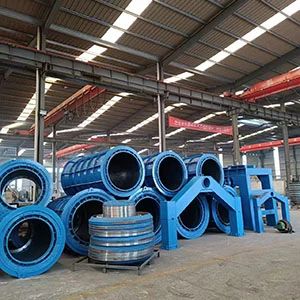

China Steel Cage Rolling Welding Machine Supplier for Efficient Rebar Cage Fabrication
2026-11-03
Rebar cages don't have to be a production bottleneck. Yet on many sites, they still are—because teams rely on slow, labor-heavy methods that eat into both time and weld quality. If you're ready to change that, a specialized rolling welding machine from a trusted China steel cage rolling welding machine supplier could be the upgrade your fabrication line needs. Qianfeng Electromechanical Equipment builds machines around one goal: efficient rebar cage fabrication without the typical trade-offs. Here's a closer look at why that matters.
Choosing a Supplier That Actually Understands Rolling Welding
Most machine shops can lay a bead on a roller, but very few grasp how rolling welds behave after thousands of load cycles. The real test is whether the supplier asks about your roller's base material, hardness profile, and service temperature before quoting. A shop that understands rolling welding will adjust preheat, interpass temperature, and even the welding sequence to avoid residual stress that leads to premature spalling or cracking under contact fatigue.
Beyond the weld itself, a competent supplier will talk about distortion control in terms of runout and cylindricity, not just "minimal warping." They should be able to explain how they'll maintain concentricity after welding and whether they plan to stress-relieve before final machining. If they can't discuss the difference between a rolling weld on a solid forged roll versus a hollow fabricated drum, treat that as a red flag.
Finally, look for evidence of process documentation and repair history. A supplier that truly understands rolling welding keeps records of heat input, filler metal batch numbers, and post-weld inspection data for each job. They won't just hand you a certificate; they'll show you how they verified the weld fusion zone and why their chosen parameters suit your specific rolling application—whether it's hot strip mill, paper machine, or conveyor roller service.
How Machine Frame Rigidity Affects Cage Roundness
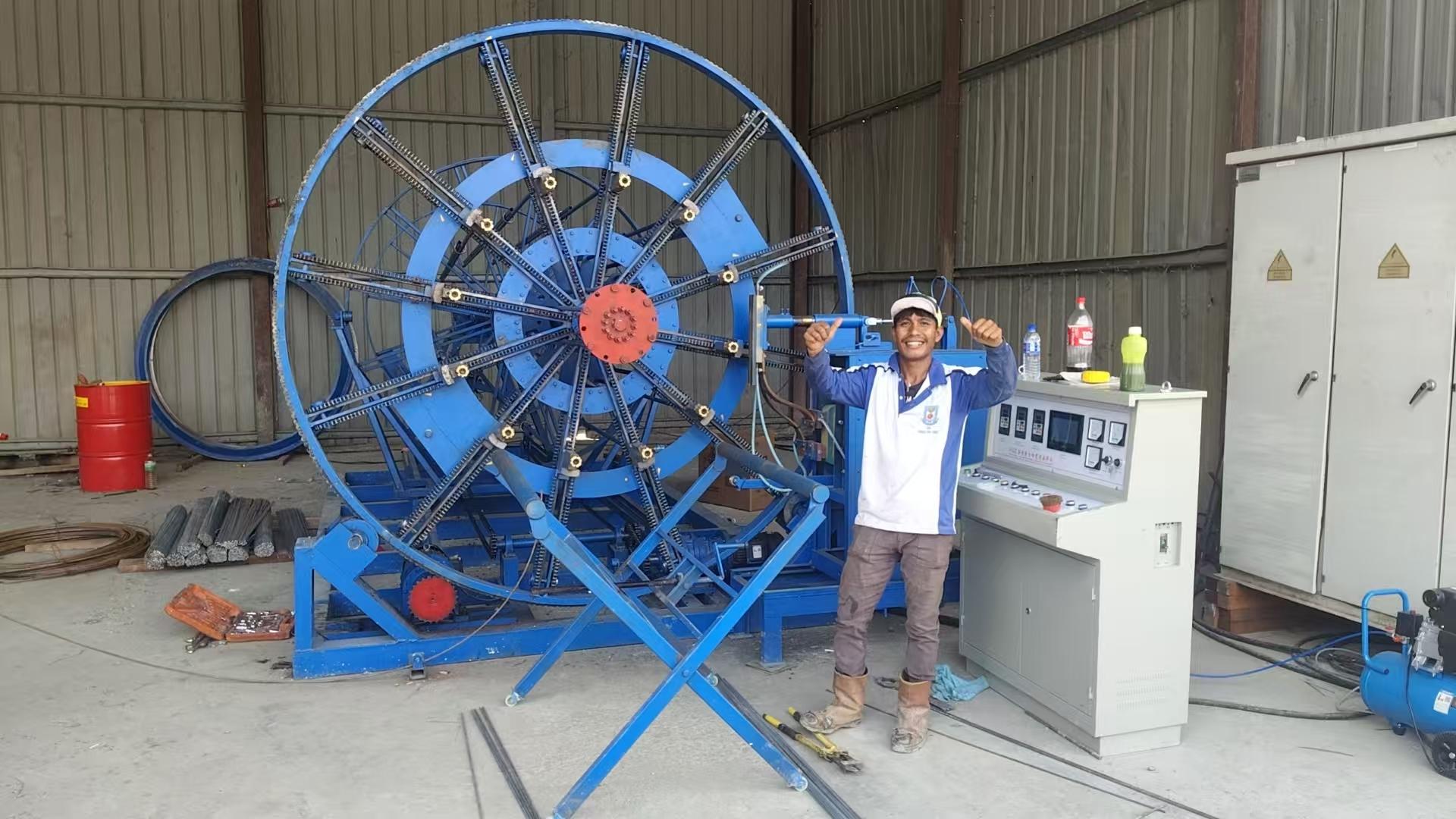
The stiffness of a machine tool's frame directly controls how cutting forces travel through the structure and back into the workpiece. When a bearing cage is being bored or turned, even minor flex in the frame shifts the tool's position relative to the part. That shift may only be a few microns, but it happens at exactly the wrong moment when the tool is engaging the thin, interrupted sections of a cage. The result is localized overcutting or undercutting around the circumference, breaking the perfect circular profile. A rigid frame resists this deflection, keeping the cutting edge on its programmed path and preserving the roundness tolerance that a cage demands.
Dynamic rigidity matters just as much as static stiffness, especially in high-speed finishing passes. A frame that is too compliant will have natural frequencies that fall within the spindle's operating range. When the cutting frequency lines up with one of these modes, resonance sets in, and the tool begins to vibrate rather than cut cleanly. This chatter leaves behind a wavy surface that directly translates into out-of-roundness. A well-damped, stiff frame pushes those resonant peaks higher and flatter, allowing the machine to run at productive speeds without exciting the structure. In practical terms, that means a cage can be finished at higher RPMs while still holding a roundness of just a few micrometers.
Rigidity also stabilizes the machine against slow thermal drift and internal stress release. A flimsy frame warps more easily under the heat generated by spindle bearings, ball screws, and cutting friction. As the frame distorts, the spindle axis shifts imperceptibly over the course of a batch, so cages machined early in the day measure differently from those machined later. Furthermore, a stiff frame returns to its original geometry after each cut, while a flexible one may retain small plastic deformations that accumulate over time. This long-term dimensional wander is fatal for roundness because it changes the effective center of rotation. A rigid machine frame, by contrast, holds its geometry over years of service, ensuring that the first cage and the thousandth cage come off the machine with nearly identical circular profiles.
The Role of PLC Controls in Reducing Operator Error
On busy production floors, mistakes happen when people have to remember too many steps or react quickly under pressure. PLC controls remove that burden by locking in the sequence of operations. A machine won’t cycle unless every sensor confirms the part is seated, the guard is closed, and the previous step finished correctly. This interlocking alone eliminates a large share of accidental starts, skipped actions, and misloaded workpieces.
Operator interfaces tied to the PLC can also guide each movement instead of leaving it to memory. For example, a recipe change automatically loads the correct timers, pressures, and positions, so there’s no chance of someone typing in the wrong value. When something does go wrong, the PLC can stop the process at the exact point of failure and show a clear message on the screen, telling the operator what to check rather than leaving them guessing.
Beyond routine tasks, PLC logic can enforce proper login permissions and e-stop conditions, making certain risky actions impossible without the right clearance. Over time, this shift from relying on individual attention to relying on programmed constraints reduces not just isolated errors but the whole pattern of variability that comes from manual control.
Balancing Speed and Weld Quality in High-Volume Production
In high-volume production, the first instinct is to crank up travel speed to meet takt time. But every extra inch per minute reduces heat input and changes the weld pool’s behavior. Joints that looked fine at 24 inches per minute can suddenly show incomplete fusion at 36, especially in fillet and lap configurations. The real work is mapping how wire feed speed, voltage, and torch angle interact with travel speed for each joint design. Many shops find that a 10% speed increase forces a 15% change in voltage just to keep the arc stable, and that trade-off is rarely linear.
Automation helps, but it doesn’t erase physical limits. Robotic cells can hold a torch steadier than a human, yet they still need real-time adjustment when part fit-up shifts. Weld monitoring systems that read current and voltage signatures can flag underfill or porosity before parts leave the station. The trick is to set thresholds tight enough to catch defects but loose enough to avoid false stops that kill throughput. Some plants combine seam tracking with adaptive fill control so the robot speeds through long straight sections and slows only where gaps or tack welds demand more deposition.
A better lever is often process choice. Switching from single-wire GMAW to tandem or laser hybrid welding can double deposition rate without overheating the base metal. But those processes demand tighter joint prep and more robust fixturing. Ultimately, the balance between speed and quality lives in the details: joint access, preheat consistency, interpass temperature limits, and how well the downstream inspection catches what the high-speed weld missed. Documented weld procedure qualifications are useful, but they only matter if the line operators understand why a parameter window exists instead of just following a digital readout.
After-Sales Support: What to Demand from Chinese Manufacturers
Too many buyers assume after-sales support ends once the container leaves the port. With Chinese manufacturers, that assumption will cost you. Before signing anything, demand a written warranty that spells out response times, parts availability, and who covers return shipping for defective units. If they hesitate to put it on paper, walk away. A factory that treats post-delivery care as an afterthought won't suddenly become responsive when something breaks in month three.
You should also push for direct access to an engineer, not just a sales rep who forwards your emails into a void. Ask for a video call with the actual technical team before the first order ships. Clarify how they handle firmware updates, component obsolescence, and troubleshooting documentation. The best suppliers will already have a process for remote diagnostics and spare-part kits; the worst will promise to 'look into it' and then go silent.
Finally, test their support before you need it. Send a routine technical question during the negotiation phase and measure how long they take to reply with something useful. Require a named support contact and a service-level agreement that includes penalties for missed deadlines. If they balk at any of this, you're not a partner—you're a one-time transaction. And one-time transactions don't get after-sales support; they get a lesson in self-reliance.
Customizing Cage Dimensions Without Expensive Retooling
Most shops still assume a new cage size means new stamping dies or injection molds—and a five-figure tooling bill to match. That assumption falls apart when you switch to modular fixturing and CNC-cut sheet metal. By keeping the corner brackets and latch hardware standard, you can resize the cage body with a simple reprogramming of the laser or plasma cutter. The only hard tooling left is a universal bending die that handles multiple radii, which keeps per-part cost flat even at low volumes.
A simpler route for smaller runs is to build the cage from off-the-shelf wire mesh panels and cut them with a hydraulic shear, then join the edges using crimped sleeves or spot welding. Because the panel stock comes in wide rolls, the length and width become variables you control on the shop floor, not dimensions locked into a mold. One fabricator we worked with cut setup time from six hours to forty minutes just by replacing dedicated weld jigs with a single adjustable frame that uses flip stops and toggle clamps.
For oddly shaped cages or prototypes, additive manufacturing lets you print corner connectors and door frames in nylon or PETG, then mate them with standard tubing or mesh. You avoid tooling entirely, and the printed parts can be reinforced with metal inserts where hinges and latches attach. This approach works especially well when the customer needs a handful of custom-sized cages for a pilot line—design changes are made in CAD, not by grinding steel.
FAQ
It takes pre-cut longitudinal bars and spiral stirrups, then rotates and welds them into a cylindrical reinforcement cage. The rolling action keeps spacing consistent while the welding heads lock intersections, so you end up with a uniform cage ready for piles, columns, or bridge piers.
Usually several times faster. A well-tuned machine can produce a 2-meter cage in a couple of minutes, while manual tying might take an hour or more for the same size. The real gain is repeatability—every cage comes out with the same bar spacing and weld strength.
Chinese manufacturers have built a lot of experience in rebar processing equipment, and they often offer solid build quality at a lower price point than European or American brands. Many also provide custom roller sets and on-site training, which helps if your cage diameters vary.
It typically handles round or spiral cages from about 300 mm to 2,500 mm in diameter, depending on the model. Length is usually adjustable with guide rails. Common uses include bored piles, drilled shafts, columns, and even some precast elements.
Not really. Most machines use replaceable rolling rings or adjustable rollers. You change the ring size, reset the guide arms, and adjust the welding torch angles. A trained operator can do a diameter changeover in under 30 minutes.
Look at the welding power source, the maximum cage diameter and length, the control system's ease of use, and the availability of spare rollers. Also ask for a video of the machine running with your target rebar sizes. It's worth checking if the supplier has local service support or at least responsive remote diagnostics.
Most units sit on a flat concrete floor with anchor bolts or leveling pads. Some longer machines need a simple rail foundation. Installation is usually straightforward—level the frame, connect power and air, calibrate the rollers, and run a test cage.
Conclusion
When sourcing a rolling welding machine for rebar cage production, the real difference often comes down to the supplier's grasp of the process itself. A Chinese manufacturer that has spent years refining cage fabrication understands that frame rigidity is not a spec sheet checkbox—it directly determines how round and stable each cage stays under load. Pair that with a well-tuned PLC system, and you remove much of the guesswork from operators who might otherwise over-adjust parameters or miss subtle feed inconsistencies. The result is a line that holds tolerance without constant manual intervention, which matters more than most buyers expect.
High-volume work asks for a balance that cheap machines rarely deliver: pulling speed up without sacrificing weld penetration or cage geometry. Look for suppliers who talk openly about duty cycles, torch placement, and how their control logic adjusts amperage on the fly. Beyond the machine itself, after-sales support is where Chinese manufacturers distinguish themselves—insist on remote diagnostics, spare parts lead times, and installation support that does not vanish after commissioning. Finally, ask how cage diameter and bar spacing changes are handled. The best setups allow quick parameter or roller adjustments rather than forcing expensive retooling, keeping your production flexible without hidden costs.
Contact Us
Contact Person: Bill
Email: [email protected]
Tel/WhatsApp: 8615063653526
Website: https://www.qianfengjd.com