

Cleanroom Facility Supplier: Expert Tips for Choosing the Right Partner
2026-08-16
Selecting a cleanroom facility supplier is not a box-ticking exercise—get it wrong and you inherit validation gaps, airflow failures, and budget creep. Most advice stops at credentials and case studies, but those rarely reveal how a partner behaves when schedules slip or specs change. In this post, we unpack the signals that actually matter: engineering depth, documentation discipline, and whether the supplier treats your cleanroom as a project or a partnership. We’ll also look at why GENO Pharmatech consistently surfaces in supplier shortlists for regulated industries. If you’re tired of glossy brochures and want a practical filter, read on.
What a Cleanroom Supplier's Old Projects Reveal About Your New One
A cleanroom supplier's portfolio is less a gallery of past triumphs than a forensic record of how they handle pressure. Look closely at the photos, yes, but also ask for the post-project reports nobody brags about. The way a company managed a delayed HEPA filter shipment or a last-minute change in ISO class for a biotech client tells you far more than the glossy case study ever will.
Old projects also expose patterns. If a supplier keeps showing semiconductor cleanrooms with the same ceiling grid design, that's not consistency—it's a lack of adaptation. Your new project might be a medical device build with different particle counts and airflow needs. Dig into the specs of those older jobs and compare them to what you're planning. The gaps you find are where your project will likely stumble.
Smart facility managers treat a supplier's past work as a red flag inventory. Request references from projects that went sideways, not just the success stories. Ask what was promised versus what actually got delivered, and how the supplier handled the mismatch. That single conversation often reveals whether your new cleanroom will be a calm build or a fire drill disguised as a construction schedule.
The Certification Trap: Why Paperwork Alone Can't Keep Your Cleanroom Clean
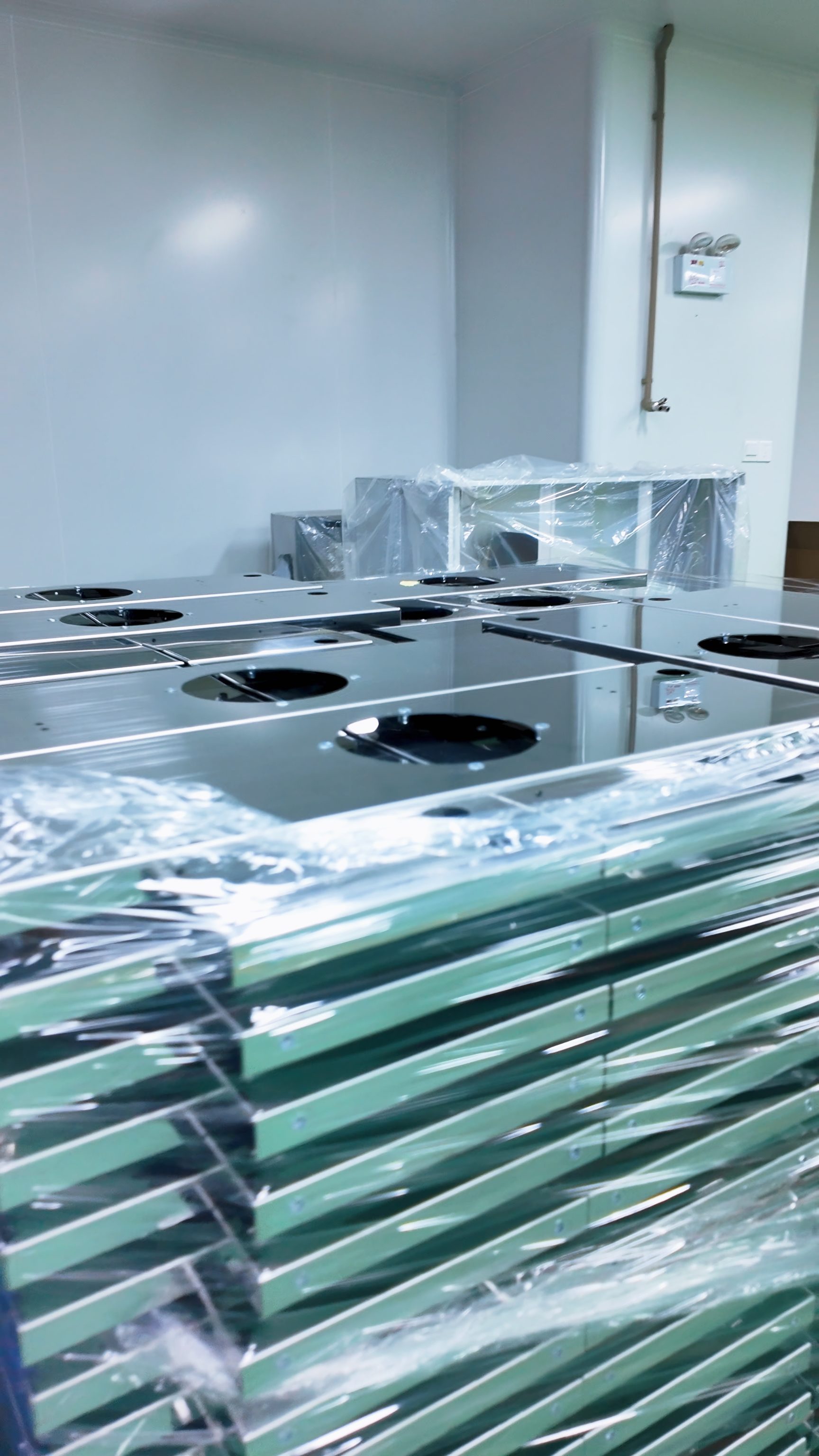
A spotless ISO 14644 certificate framed on the wall can create a dangerous illusion. It suggests that your cleanroom's performance is locked in, validated, and ready for any audit. But certification typically reflects a snapshot in time—a single test under controlled conditions, often with minimal personnel movement and optimized airflows. Real operations introduce variables that no document can capture: technicians entering and exiting, equipment generating heat, consumables shedding particles, and shifts in differential pressure caused by doors left ajar. Relying on paperwork as proof of cleanliness is like trusting a food safety certificate from last year while ignoring the mold growing in the walk-in cooler today.
The gap between certified design and daily reality widens through routine wear and human habit. Filters clog gradually, gaskets lose elasticity, and cleaning protocols drift from what was originally validated. A gowning procedure that was flawless during certification may degrade as new staff cut corners or as training materials become outdated. Without continuous environmental monitoring—particle counts, pressure differentials, and airflow velocity checks—these changes go unnoticed until a batch fails or a customer audit reveals contamination. Certification, at its core, verifies capability; it does not guarantee consistency.
Truly maintaining a cleanroom requires treating the certificate as a starting point, not a finish line. It means integrating real-time data, enforcing behavioral discipline, and conducting regular risk assessments that look beyond what was originally designed. The paperwork proves you can hit a target under ideal conditions. The question that matters is whether you can keep hitting it every single shift, with tired staff, aging infrastructure, and the unpredictable chaos of manufacturing. If your answer lives only in a binder, your cleanroom is already drifting toward failure.
Ask About Their Change Order Process Before Signing the Cleanroom Contract
Cleanroom projects rarely go from signed drawings to final certification without at least a few detours. Equipment specs get revised, airflow balancing reveals surprises, or a vendor delays a fan filter unit and forces a substitution. That is why you need to pin down the change order process before the contract is signed—not after the first variance hits. A contractor who hesitates to show you a written procedure or tells you we will sort it out as we go is handing you a blank check for markup, schedule slips, and finger-pointing.
Ask for the actual mechanics in writing. Who at the firm approves a change? Does a project manager price it in-house, or does it go back to estimating? What is the markup on labor and materials—and is that markup applied to subcontracted work as well? You also want to see how they document field instructions, RFIs, and verbal directives. If the process requires written authorization before any extra work starts, you are protected. If the default is to bill you later without prior approval, that is a red flag.
A sample change order from a previous cleanroom job can reveal more than a policy document. Look for consistent cost breakdowns, clear before-and-after scope descriptions, and reasonable turnaround times. Also check whether the contract caps administrative fees or ties them to actual hours. The goal is not to eliminate changes—it is to make sure each one is evaluated, approved, and priced without derailing the schedule or the budget.
The Cheap Quote Illusion: Where Cleanroom Suppliers Hide Real Costs
A tempting low bid for a cleanroom fit-out rarely tells the whole story. What looks like savings up front often gets clawed back through smaller duct sizes that compromise airflow, filters that need replacing twice as often, or control systems that can't maintain ISO class during peak loads. Suppliers count on buyers not reading the fine print around exclusions, so the real price only surfaces after installation, when changing a single component means recalibrating the entire environment.
There's also the quiet practice of quoting bare-shell construction but leaving out the cost of validation documentation, pressure differential testing, and particle counts—services any compliant cleanroom requires before it can be used. A low initial number often assumes you'll handle these piecemeal, at higher rates, with no single party accountable. The same goes for energy consumption: inefficient fan filter units and poorly sealed panels might pass a visual check but drive operating costs up month after month.
Eventually the "cheap" quote becomes the most expensive one. It erodes margins through repeated callouts, unplanned downtime, and retrofits to meet the standards the original design should have met. When comparing suppliers, push for a line-by-line breakdown that includes commissioning, spare parts, and a realistic performance guarantee. If they won't itemize, the illusion is already showing its seams.
Post-Installation Silence: How to Test a Cleanroom Supplier's Support Promise
The real test of a cleanroom supplier isn't during installation—it's the weeks after handover, when the fan filter units are running and the phone stops ringing. Many suppliers fade once the final invoice clears. To see if their support promise holds, send a routine maintenance question or request a copy of the pressure differential logs. A supplier with a genuine service commitment will reply with specifics, not a sales pitch.
Go further by triggering a low-stakes incident: ask for guidance on a HEPA filter alarm or a small gasket replacement. Note how long it takes to reach a technical person, not just a call center. Check if they offer remote diagnostics or insist on a paid site visit before troubleshooting. Good suppliers often have a named engineer assigned post-installation; if you're bounced between departments, that's your answer.
Finally, read the fine print in your service level agreement. Test the promised response windows during off-hours, because cleanroom failures rarely happen at 10 a.m. on a Tuesday. Ask for a written escalation path and parts availability for critical components. If they hesitate to put numbers on a response time, the support promise was never more than a slide in the sales deck.
Why Cleanroom Design Experience Beats General Construction Experience
Cleanroom design is not an extension of standard construction. It demands a working knowledge of particle control, unidirectional airflow, pressure cascades, and surface cleanability that general contractors rarely encounter on typical projects. A designer who has only built offices or warehouses may understand how to pour concrete and hang drywall, but they won't anticipate how a missing door sweep or an improperly sealed ceiling grid can ruin an ISO 5 environment. That gap in judgment shows up during commissioning when particle counts fail and everyone is left scrambling.
Experience in cleanroom projects brings more than technical checklists. It means knowing where to place air returns so contamination doesn't swirl into critical zones, how to detail pass-throughs and airlocks without turning them into bottlenecks, and which wall finishes can tolerate aggressive disinfectants without peeling. These aren't things you learn from code books; they come from watching real projects go through validation and from fixing problems that only appear after the cleanroom is operational. A general construction background won't teach you why a gowning room needs different pressure monitoring than a buffer room.
The cost of guessing wrong in cleanroom design is high. Rework from failed airflow visualization or particle testing can eat months and destroy budgets. Teams with cleanroom-specific experience have already made and corrected those mistakes on someone else's dime. They bring a practical sense of material compatibility, maintenance access, and testing feasibility that general builders don't develop. In the end, the premium you pay for that specialized background is often cheaper than the alternative of retrofitting a facility that never should have been built the way it was.
FAQ
Look beyond generic cleanroom experience. Ask for examples of projects in your specific sector—pharma, semiconductor, medical device, aerospace—and request to speak with those clients. A supplier who has solved similar particle, microbial, or ESD challenges will ask sharper questions upfront, not just quote standard ISO classes.
Ask whether the installers are direct employees or subcontractors. Direct crews with cleanroom-specific training tend to own the outcome more. Also ask about their protocol for avoiding contamination during construction—how they handle tool cleaning, garment changes, and material staging before entering the controlled area.
It depends on your end use. For regulated environments, ask for FDA, EMA, or ISO 14644 compliance documentation, plus material certifications like FM approvals for fire-rated panels. For electronics, check ESD and outgassing specs. Don't accept a wall full of generic certificates—ask how those translate to your project's specific validation requirements.
Ask for a walk-through of a past custom build where they had to integrate unusual equipment, tight ceiling heights, or existing HVAC constraints. A capable partner will talk about airflow modeling, pressure cascade adjustments, and how they adapted panel systems—not just sell you a standard modular box.
Beware of quotes that skip over details like floor levelness tolerances, door interlocks, pass-through sizing, or final particle count testing. Low bids often exclude these and charge later via change orders. Ask each bidder to line-item the validation, testing, and documentation phase so you can compare true totals.
It's critical, because your cleanroom will need recertification, filter changes, and possible layout tweaks. Ask how quickly they can dispatch a technician, whether they hold spare parts locally, and if they'll help you maintain compliance as regulations evolve. A supplier who disappears after handover can leave you with an asset you can't legally operate.
In most cases, a single design-build firm reduces finger-pointing and speeds up the project. But make sure they have in-house mechanical and controls engineers, not just a general contractor who coordinates subs. Check how they manage design changes—if they can revise air balancing on the fly without stalling the schedule, that's a good sign.
Ask for their approach to air changes per hour, HEPA/ULPA filter selection, and unidirectional flow where needed. Request a sample CFD or smoke study from a similar project. A supplier who can explain how they'll achieve your required ISO class at rest and in operation—and verify it—is much safer than one who only promises 'ISO 7'.
Conclusion
Selecting a cleanroom facility supplier goes far beyond comparing square footage and base prices. Start by examining what their previous projects actually demonstrate—ask for case studies that show how they handled airflow patterns, particulate control, and material compatibility under real operating conditions, not just glossy photos. A supplier's old work reveals whether they understand the subtle interactions between HVAC, pressurization, and gowning protocols that determine long-term contamination risk. Be wary of certification paperwork alone; a cleanroom can pass a one-time particle count yet fail in daily use if the supplier cuts corners on filter sealing, room envelope integrity, or maintenance access. Equally important is the change order process. Before signing, request a written explanation of how scope changes are priced and approved—vague change order clauses are where many cleanroom budgets quietly double. The cheapest quote often hides costs in omitted validation runs, undersized air handling units, or future retrofits for missing pass-throughs and monitoring ports.
Post-installation support is where supplier promises either hold up or evaporate. Contact past clients and ask about response times for airflow balancing issues, spare part availability, and whether the supplier sent technicians who understood cleanroom-specific failure modes rather than general HVAC crews. Design experience in cleanrooms specifically beats general construction experience every time; a contractor used to offices or warehouses may not grasp why a 0.1-inch pressure differential matters, why epoxy flooring must be seamless, or why lighting fixtures need gasketed housings. The right partner treats your cleanroom as a living system—one that requires calibrated sensors, documented cleaning protocols, and a willingness to return for periodic recommissioning. Ultimately, choose a supplier who asks about your product's sensitivity and process flow before quoting, because that curiosity signals they are designing for contamination control, not just building a room with filters.
Contact Us
Contact Person: Amy Yang
Email: [email protected]
Tel/WhatsApp: 008619330882686
Website: https://www.genopharmatech.com/