

Custom Conveyor Pulley Company in China: Engineering Durable Solutions for Global Industries
2026-08-23
A conveyor pulley looks simple from the outside, but the difference between a three-month replacement cycle and a decade of trouble-free service is hidden in the weld. That's where XAN comes in. As a custom conveyor pulley company in China serving global industries, we don't sell one-size-fits-all drums. We engineer load-specific solutions—from lagging to shaft sizing—so bulk handlers in mining, marine terminals, and heavy manufacturing stop treating pulleys like consumables. Here's what that means for your next project.
Custom Pulley Design That Starts with Your Load Data
A pulley that isn't built around your actual operating conditions is just a guess wrapped in metal. We begin every custom design by looking at the numbers you already have: the weight you're moving, the speed of the line, the angle of wrap, and how many cycles a day the system endures. From there, we map out the groove geometry, bearing selection, and hub construction so the finished part holds up under your specific load profile, not a generic catalog average.
That load data also drives decisions about material and surface treatment. A light-duty guide pulley in a clean indoor environment has very different needs from a heavily loaded hoist sheave exposed to abrasive dust and salt air. By working from measured forces rather than assumptions, we can specify a harder groove face, a sealed bearing arrangement, or a reinforced web only where it actually matters. This keeps the pulley lean where possible and strong where necessary.
Production then follows the same data set through every stage. Tolerances are matched to the deflection you can accept under peak load, and balancing is done to the RPM you'll realistically reach. If your load data changes during the design review, the pulley changes with it, because the goal isn't to make a part, it's to make the part your machine keeps asking for.
Material and Bearing Choices for Harsh Environments
Selecting the right materials for bearings in corrosive, high-temperature, or heavily contaminated settings means looking beyond standard steel. Stainless steels like 440C or AISI 316 offer decent corrosion resistance, but for truly aggressive exposure—think saltwater spray, acidic washdowns, or chemical fumes—ceramic and polymer components often win out. Full ceramic bearings, typically made from zirconia or silicon nitride, shrug off both moisture and most chemicals while running lighter and cooler than metal equivalents. Where full ceramic is impractical due to load or shock concerns, hybrid designs pair ceramic balls with stainless or coated rings to balance toughness with resistance.
Lubrication becomes just as critical as the base material. Greases loaded with PTFE or calcium sulfonate complexes hold up under washdown and humidity, while solid lubricants such as molybdenum disulfide or graphite get the nod for dry, dusty, or vacuum-like conditions. Sealing choices follow the same logic: triple-lip contact seals or non-contact labyrinth shields keep abrasive grit out without dragging too much speed. In food processing or pharmaceutical lines, you might also see bearings with food-grade solid polymer cages that eliminate the risk of flaking metal or grease contamination.
The real trick is matching the failure mode to the environment rather than chasing a single “best” material. A bearing that seizes from rust in a marine application needs a different fix than one that wears out from fine silica dust in a mining conveyor. Start with the dominant threat—corrosion, temperature, particle ingress, or washout—and then choose rings, balls, cage, and lubricant as a system. Often the smartest move is a modest upgrade: a thin dense chrome coating on standard rings, paired with a sealed and shielded design, delivers far more life in acidic washdown than a premium ceramic set left unsealed.
From Our Factory Floor to Your Maintenance Schedule
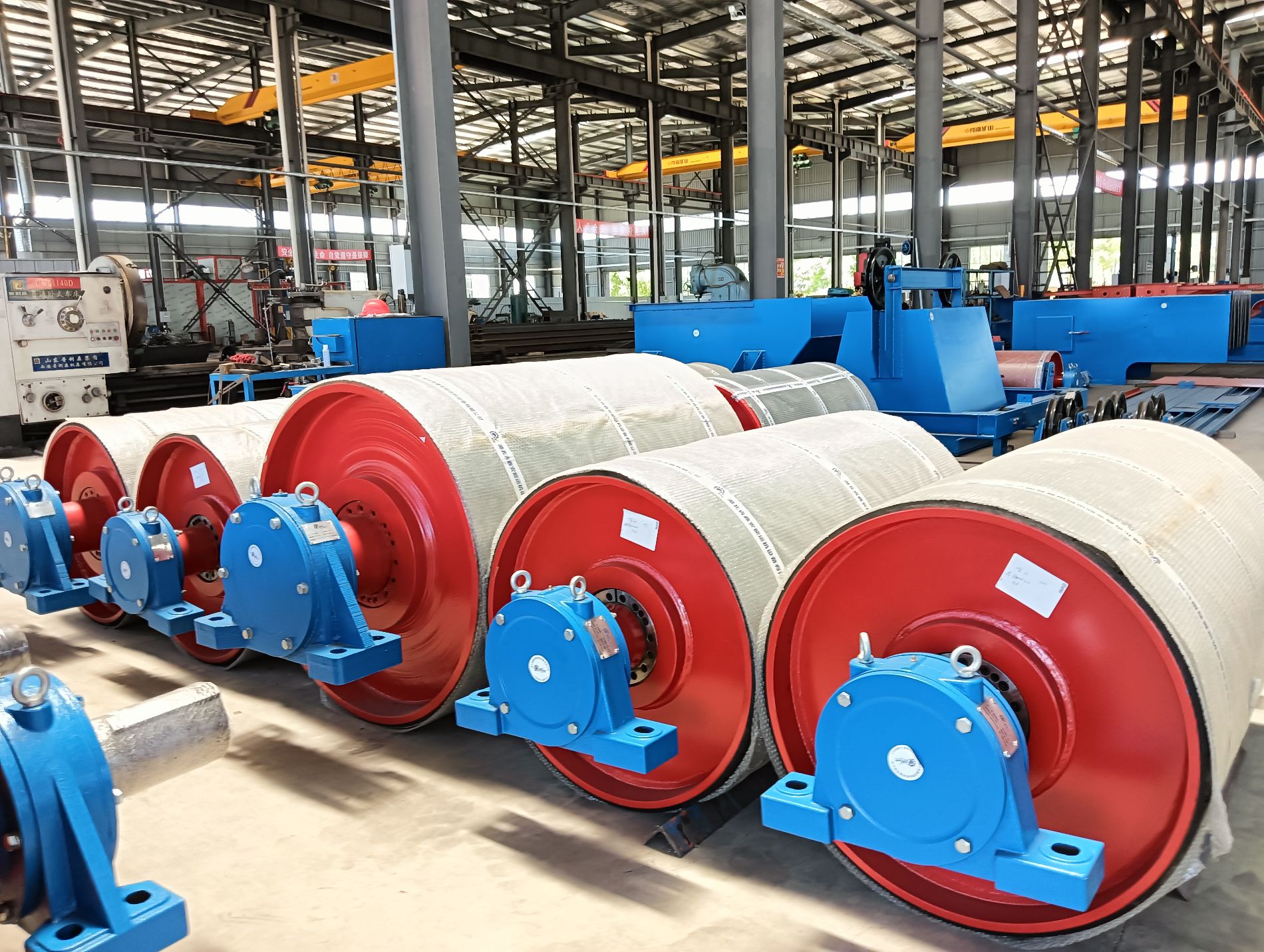
Every component we ship carries the fingerprints of our own workshop. The machines that cut, bend, and finish each part are the same ones our technicians rely on day after day. That direct connection means we don't just build to a spec sheet—we build with an understanding of how a maintenance crew actually works, what frustrates them, and what keeps a line moving without surprises.
Before anything leaves the factory floor, it passes through a series of checks that mirror real-world stress: hours of continuous cycling, exposure to fine dust and temperature swings, and torque tests that go beyond the manual's numbers. It's a slower process than most, but it gives your maintenance schedule a head start. The parts arrive already broken in, aligned, and ready for the intervals you've planned.
That shared history between our floor and your schedule also shows up in the details—like serial-numbered batches that let us trace a single lot from raw stock to final inspection, or the wear indicators we etch onto high-friction surfaces. When your team pulls a component off the shelf six months later, you're not guessing about its past. You're picking up a piece of equipment that was designed, tested, and recorded with the same rhythm you use to keep your own machines running.
Pre-Shipment Testing That Prevents Field Failures
A lot of field failures aren't design flaws—they're manufacturing escapes. A capacitor placed backwards, a cold solder joint that passes visual inspection, a connector not fully seated. Pre-shipment testing that actually works targets these physical realities rather than just running the same firmware self-test the device already runs at power-on. Vibration tables, thermal cycling, and boundary-voltage checks expose weak joints and marginal components before they reach a customer's installation.
The trick is matching the test to the failure history. If warranty data shows early-life failures clustering around a particular power supply rail, adding a load-step test at low and high temperature often catches the drift that a simple go/no-go voltage reading misses. Some manufacturers also run a short burn-in with real-time monitoring of current draw and output ripple, flagging any unit that behaves even slightly outside its siblings. This sort of comparative screening is cheap compared to a truck roll or a site outage.
None of this replaces good design, but it does buy confidence. A well-chosen pre-shipment sequence—often under 30 minutes per unit—can cut DOA rates by an order of magnitude and keep installers from losing faith in a product line. When a unit survives the abuse you throw at it on the factory floor, it's far less likely to become someone's 2 a.m. emergency call.
Lead Times That Respect Your Project Deadlines
We map every production phase against your timeline before the first cut is made. Instead of forcing your project into a rigid schedule, our team adjusts shift patterns, material sourcing, and finishing touches around the date you actually need parts in hand. This means no surprise delays when a design shifts or a supplier runs late—only a buffer built in from day one.
Daily status updates keep you in the loop without adding meetings to your calendar. If a process can be safely compressed without compromising tolerance, we do it. If not, we tell you early and offer alternatives rather than padding the quote. The result is a lead time you can plan around, not one that exists only on paper.
Most customers receive their order ahead of the agreed window, but we never promise that upfront. What we promise is a date we can defend, and a process that treats your deadline as the critical constraint—not an afterthought.
Technical Support Across Time Zones and Languages
When a product ships to customers on four continents, support tickets don't wait for headquarters to wake up. Our team spans eleven time zones, with engineers in Auckland, Warsaw, and São Paulo handing off live queues like a relay race. By the time a bug report filed in Tokyo reaches the morning stand-up in Berlin, it's already been triaged, reproduced, and paired with a draft patch. The sun never fully sets on our incident channel—which means a database hiccup at 2 a.m. in Sydney gets eyes on it before the customer finishes their coffee.
Language coverage isn't just about translation—it's about nuance. We don't route every German ticket to a German-speaking agent; we route it to someone who understands how German developers phrase permission errors. That's why our internal knowledge base is written in English but annotated with regional idioms, and why we rotate native speakers into QA for every major release. When a French partner writes “le module ne se charge pas,” the agent sees more than a string: they see the context of a shared PHP environment, and they answer in the same register the partner used.
The payoff shows up in metrics nobody screenshots: dropped escalation rates, fewer back-and-forth messages, and customers who stop prefacing questions with “sorry for my English.” A follow-the-sun schedule only works if the people on the other side of the planet don't feel like a night shift—so we staff in pairs, keep handoff notes under five lines, and treat every language barrier as a design flaw rather than an excuse. The result is a support system that feels less like a call center and more like a distributed brain with a very patient bedside manner.
FAQ
We don't start with a catalog. Every pulley gets designed around the actual belt tension, material weight, and environment it will face. That means thicker shells, precision-balanced shafts, and lagging choices that hold up to abrasive or wet conditions—details that prevent premature failure in mining, ports, and aggregate plants.
Yes, that's where we spend most of our time. We regularly produce pulleys with tapered bores, extended hubs, custom face widths, and special bearing fits. If you send a drawing or even a sketch, our engineers will turn it into a production-ready design.
Our pulleys are running in mining conveyors, cement plants, steel mills, port terminals, and bulk handling systems across several continents. The common thread is that these operations can't afford unscheduled downtime, so they come to us for custom replacements that last longer.
We inspect from raw material to final assembly. Shell roundness, weld penetration, shaft alignment, and dynamic balancing are checked at set stages—not just at the end. Each pulley also receives a load test before it leaves the factory.
It depends on what the pulley is exposed to. For saltwater or chemical exposure, we often use stainless steel shafts, hot-dip galvanized shells, or special epoxy coatings. For abrasive wear, we recommend ceramic or rubber lagging with the right hardness and pattern.
Absolutely. You can share your conveyor's belt width, speed, motor power, and material type, and we'll calculate the required pulley diameter, shell thickness, and shaft size. This helps avoid oversizing or undersizing mistakes that can shorten bearing and belt life.
Most custom pulleys ship within 30 to 45 days after drawing approval. If you need something faster, we can often expedite a single pulley or a small batch, depending on current factory workload and material availability.
We ship globally and pack pulleys in heavy-duty steel frames or wooden crates to prevent damage in transit. After delivery, you can reach our engineers directly by email, phone, or video call if you have installation questions or need help with maintenance.
Conclusion
A conveyor pulley is only as durable as the data behind it. Instead of forcing your site into a one-size-fits-all shell, our engineering team starts with the numbers you already have: belt tension, material weight, speed, and incline angle. From there, we build the pulley diameter, wall thickness, shaft, and hub configuration to match—no guesswork, no oversized safety factors that waste money, no undersized parts that fail early. When the operating environment includes abrasive dust, saltwater exposure, or temperature swings from -30°C to 60°C, the material and bearing choices shift accordingly: high-chrome shells, stainless steel shafts, sealed spherical roller bearings, or specialized labyrinth seals. That same mindset extends from our factory floor into your maintenance calendar. We stamp each pulley with a unique serial number and keep full material traceability, so when you need a replacement part or a bearing re-grease interval, you're not digging through old emails—you have the exact build record in hand.
Before any pulley earns a packing slip, it goes through a pre-shipment protocol that includes weld ultrasonic testing, runout measurement, and a full load simulation under your specified tension. We've seen too many field failures trace back to a pulley that was never spun up to full speed before it left the plant, so we don't skip that step. On the scheduling side, we plan production backwards from your installation date, not the other way around. If your project slips a week, we adjust the machining queue rather than making you renegotiate a delivery window. And because your maintenance team doesn't work 9-to-5 in one time zone, our technical support does neither: you can reach an engineer in English, Spanish, Russian, or Mandarin, and get a real answer about alignment, bearing temperature, or lagging wear—whether it's 3 PM in Houston or 3 AM in Perth. That's what a custom pulley partner in China should actually deliver.
Contact Us
Contact Person: Anna Lu
Email: [email protected]
Tel/WhatsApp: 8618561668850
Website: https://www.x-conveyor.com