

Export Heavyweight Sound-Absorbing Blanket Solutions for Industrial Noise Control
2026-11-02
Most industrial noise problems don't announce themselves—they build up slowly until every shift feels like a shouting match. If you're exporting heavyweight sound-absorbing blanket solutions for industrial noise control, you already know the basics: mass, density, and durability. But what separates a forgettable order from a long-term acoustic fix? At Top Packaging, we've spent years refining exactly that answer. This guide walks through the real-world factors—material choices, edge sealing, grommet placement, and packaging for export—that determine whether your noise control investment actually works on the floor, not just on a spec sheet.
When a Diesel Generator's Low-Frequency Hum Cuts Through Standard Foam
Standard acoustic foam panels are tuned to absorb mid and high frequencies, but they barely touch the long, rumbling wavelengths produced by a diesel generator. That persistent low-frequency hum travels through walls, floors, and even the foam itself, as if the material were little more than air. The result is a dull, penetrating drone that no amount of thin egg-crate foam can tame, leaving rooms feeling more like engine compartments than quiet retreats.
The physics is straightforward: a 60 Hz wave is about eighteen feet long, while a typical foam wedge is only a few inches thick. To catch that kind of energy, you need mass, limp membranes, or dedicated bass traps—not the lightweight open-cell foam sold for home studios. When a generator sits nearby, the low end simply bypasses the foam and couples into the building structure, turning every wall into a passive radiator for the same monotonous note.
In practice, this means shutting down the generator is the only real fix if foam is your only barrier. You can pile on more panels, but the low-frequency hum will still leak through, unchanged in tone and barely reduced in level. The gap between what foam promises and what a diesel engine actually delivers becomes obvious the moment you step outside the room: the foam stops the hiss, but the deep throb marches on without pause.
Mass-Loaded Vinyl Cores: What Actually Stops Industrial Noise
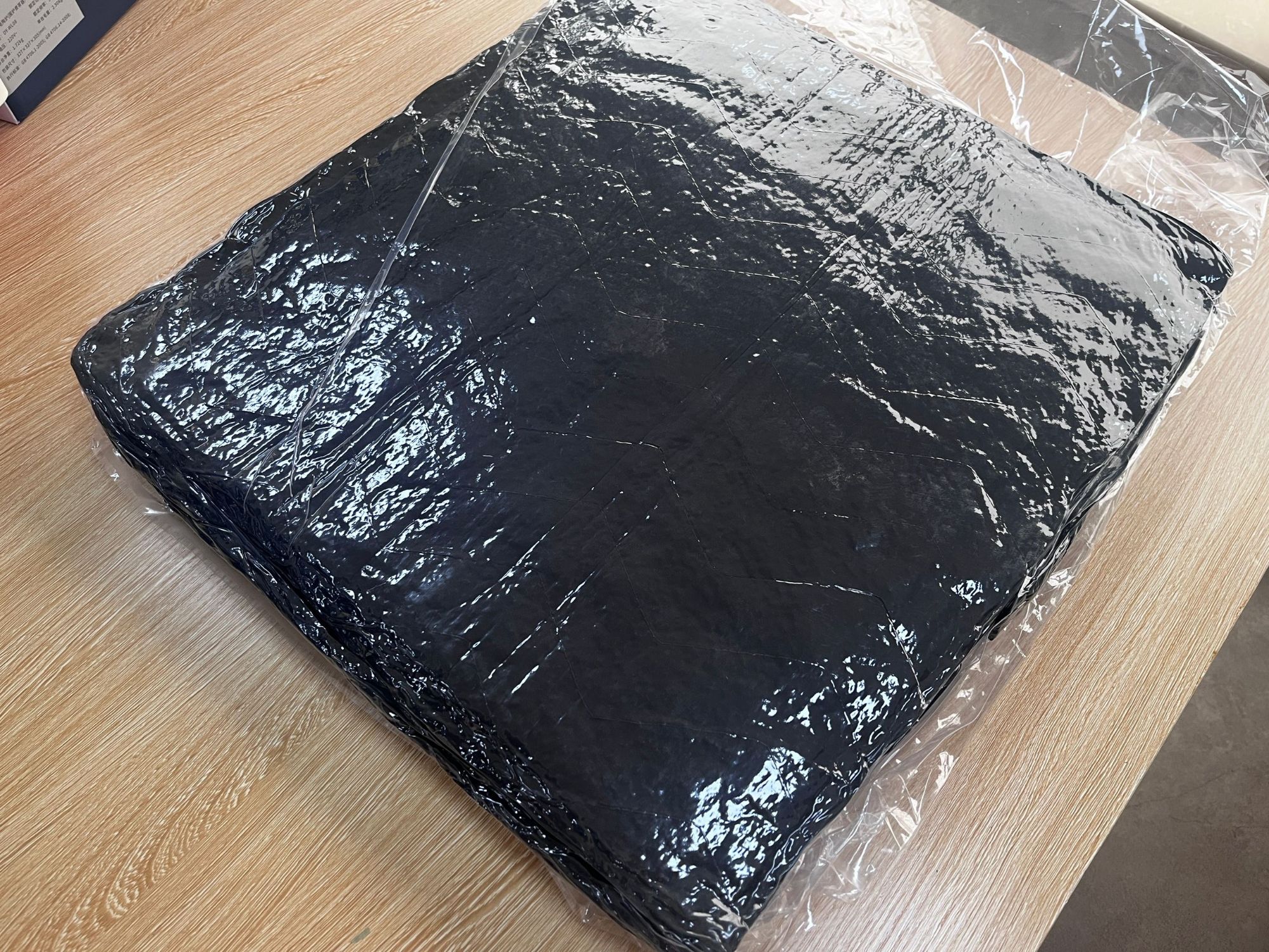
Mass-loaded vinyl doesn't block industrial noise by being thick—it works because its core packs a surprising amount of mass into a thin, flexible sheet. Barium sulfate or calcium carbonate fillers are blended into the vinyl, pushing the weight up to one or two pounds per square foot without turning the material rigid. That density is what forces low-frequency rumble from compressors, conveyors, and punch presses to lose energy as it tries to pass through. A thin foam or fiberglass layer might absorb some high-frequency hiss, but it does almost nothing to the deep, structure-borne vibrations that dominate industrial settings. The vinyl core acts as a limp mass barrier, reflecting and dissipating sound pressure waves instead of letting them through.
What really makes the difference is the combination of mass and internal damping. When a sound wave strikes the vinyl, the heavy core resists movement, but it also flexes just enough to convert some of the acoustic energy into a negligible amount of heat. That dual behavior stops the panel from acting like a drum skin, which would otherwise re-radiate noise on the quiet side. In practice, the material works best when it's sealed at every seam and edge—industrial noise will find any gap, no matter how small. Contractors often sandwich the vinyl between layers of drywall or plywood, creating a constrained-layer damping system that outperforms a single thicker sheet of the same total weight.
For serious industrial applications, the face weight of the vinyl core matters more than the brand name. Lighter residential grades—around half a pound per square foot—won't do much against a 100-horsepower motor or a stamping line. Most engineers specify one pound per square foot as a starting point, with two-pound material reserved for extreme low-frequency problems like vibrating hoppers or large exhaust fans. It's also worth noting that MLV is not a standalone fix. It works as part of a layered assembly, often paired with an air gap or decoupled framing. Without addressing direct structural connections, even the heaviest vinyl core will let flanking noise travel around it through steel beams and concrete floors.
Custom-Fit Covers for Turbines, Compressors, and Irregular Piping
Off-the-shelf covers tend to fit square or cylindrical equipment, but turbines and compressors rarely follow those shapes. A custom-fit cover follows the exact profile of flanges, bearing housings, cable trays, and access hatches. That means no loose fabric flapping in high wind, no pockets collecting rain or debris, and no abrasive contact against delicate sensor wiring.
Patterning starts with laser measurements or a full 3D scan of each asset. The resulting cover includes reinforced openings for inspection ports, oil fill points, and cooling air inlets, so crews can perform routine checks without removing the whole cover. Materials are chosen for the operating temperature and chemical environment—silicone-impregnated fiberglass works for many outdoor turbines, while PTFE-coated fabrics hold up around aggressive chemicals.
Irregular piping is where custom covers really earn their keep. Elbows, tees, reducers, and valve clusters are nearly impossible to seal with flat or pre-formed insulation blankets. A tailored cover wraps each bend and branch separately, maintaining insulation thickness and minimizing thermal breaks. Each piece is labeled for its location, which cuts installation time and reduces the chance of mismatched sections on site.
Outdoor Sites, UV Exposure, and Constant Vibration: Blankets That Hold Up
Outdoor worksites come with a set of conditions that quickly expose weak materials. Sunlight breaks down fibers, dust and grit work their way into every layer, and machinery that runs all day sends constant vibration through anything resting nearby. A blanket that survives in a quiet indoor setting can fall apart within weeks when it is dragged across gravel, left under direct UV for hours, and shaken by compressors or generators.
The key to durability is not just thicker fabric but smarter construction. Tightly woven, solution-dyed yarns hold color and strength even after prolonged sun exposure, while reinforced edges and triple-stitched seams stop vibration from turning small frays into large tears. A heavy, dense weave also resists snagging on rough surfaces, so a blanket stays intact when it is used as a temporary ground cover, a vibration damper, or a windbreak on a rocky site.
Real longevity shows up in how the blanket performs after a month of daily abuse. It should not turn brittle from UV, develop holes from constant rubbing, or lose its shape when equipment runs beside it. The best outdoor blankets are built to be forgotten about until they are needed again, because they hold up without requiring constant care or replacement.
Reinforced Grommets and Straps: Faster Rigging Without Damaging the Blanket
Most tie-down points on standard blankets fail at the corners first. Reinforced grommets fix that by spreading tension across a wider brass or stainless ring, so you can cinch straps down hard without tearing the fabric around the hole. The stitching around each grommet runs in a box pattern with extra bar tacks, letting you pull at angles that would normally rip a plain eyelet loose.
The straps themselves are built from double-layer webbing, and they’re sewn into the hem rather than just attached on the surface. That means when you run a rope or bungee through and yank it tight, the load transfers into the blanket’s edge instead of peeling the strap away. Rigging goes faster because you’re not babying weak points—just hook, pull, and move on.
Export-Ready Packing That Keeps Heavyweight Blankets Intact Over Ocean Freight
Heavyweight blankets bound for overseas customers face a gauntlet of rough handling, salt air, and condensation inside shipping containers. The packing strategy starts with compression—not so tight that fibers lose their loft permanently, but firm enough to stop shifting during a vessel's pitch and roll. Each blanket gets folded into a uniform stack, then wrapped in a moisture-barrier film that blocks the kind of humidity that breeds mildew on long hauls. Corners and edges receive extra cushioning because those are the first points to abrade when cartons rub against pallet walls.
Palletizing demands more than shrink wrap. We use double-wall corrugated cartons with reinforced side seams, then strap them to heat-treated pallets with polyester banding that won't stretch under load. A desiccant pouch goes inside each carton to absorb residual moisture, and an outer layer of heavy-gauge poly sheeting shields everything from rain squalls during loading and unloading. Labels get placed on three sides—top, long side, and short side—so handlers never have to guess orientation, reducing the chance of a forklift tine punching through.
The real test comes after weeks at sea. Blankets packed this way arrive without the musty smell or flattened pile that plagues cheaper methods. Corners hold their shape, edges stay crisp, and the product feels fresh enough for retail shelves. It costs a bit more in materials up front, but the alternative—customer returns or claims for water damage—eats far deeper into margins. That's why export-ready packing for heavyweight blankets is treated as part of the product, not an afterthought.
FAQ
The core is a dense, needle-punched fiberglass or mineral wool layer, sandwiched between a reinforced vinyl or silicone-coated fabric facing and a rugged mesh backing. This combination blocks and absorbs sound energy while resisting tears, oil, and moisture.
Most installations see a 15 to 30 dB reduction, depending on frequency and coverage. They are particularly strong at dampening low-frequency rumble from compressors, generators, and heavy machinery, which standard acoustic foam often misses.
Yes. Panels can be cut to fit around pipes, valves, or irregular housings, and grommets, straps, or hook-and-loop edges can be added. Custom sizes and multi-layer builds are available without a big jump in lead time.
Absolutely. The outer facing is UV-stabilized and waterproof, so they handle rain, snow, and direct sun. Some versions include a breathable membrane to prevent condensation buildup against metal surfaces.
Oil and gas, power generation, manufacturing, mining, and wastewater treatment are the main buyers. They are also used around HVAC systems, punch presses, and conveyor lines where noise levels exceed workplace safety limits.
They work best when hung with a small air gap between the blanket and the noise source—around 2 to 4 inches. Overlap seams by at least a few inches and seal edges with hook-and-loop or magnetic strips to stop sound leaks.
Yes, they are typically certified to ISO 9001 for quality and can be supplied with fire ratings like ASTM E84 or EN 13501. Documentation for customs and safety data sheets is included with every shipment.
Very little. Wipe down the outer surface with mild detergent and water every few months. Inspect grommets and straps annually, and replace any panel that shows deep cuts or crushed core material.
Conclusion
Standard acoustic foam gives up long before a diesel generator does. The low-frequency thrum passes through porous absorbers almost untouched, leaving crews exposed and sites out of compliance. That’s where mass-loaded vinyl cores change the conversation. By adding limp, high-density barriers to the blanket build, the sound energy is forced to work against dead weight instead of slipping through air pockets. It’s not a laboratory trick; it’s the same principle behind lead aprons and marine bulkheads, reworked for turbines, compressors, and the odd bends of industrial piping. Custom-fit covers make the difference between “close enough” and a sealed perimeter, especially where flanges, valves, and irregular shapes create flanking paths.
Field conditions don’t wait for fair weather. These blankets are built to eat UV exposure, constant vibration, and the occasional chemical splash without delaminating or losing their limp mass. Reinforced grommets and double-stitched straps let riggers hang or wrap them quickly without tearing the edges, which matters when shutdown windows are tight. And when the order is headed across an ocean, the packing is not an afterthought. Heavyweight panels are stacked, strapped, and wrapped so they arrive dry, flat, and ready to deploy—no crushed corners, no mold from condensation, no surprises at the unloading dock.
Contact Us
Contact Person: Shelly
Email: [email protected]
Tel/WhatsApp: 86-577-64286522
Website: https://www.topmovingpad.com/