

Fine Chemicals Manufacturer: Driving Innovation in High-Purity Synthesis
2026-07-30
In the world of fine chemicals, precision is everything—yet true innovation lies in pushing the boundaries of high-purity synthesis. From life-saving pharmaceuticals to advanced materials, the demand for flawless compounds is soaring, but not every manufacturer delivers on the promise of consistency and scale. Enter DSL Chemicals, a partner that doesn’t just synthesize molecules; it redefines what’s possible in purity and process. What really sets a leader apart in this exacting field? The answer might change how you think about your next project.
Mastering the Art of Ultra-Pure Synthesis
Ultra-pure synthesis isn't just about following a protocol—it's about developing an almost intuitive feel for the interplay of reagents, conditions, and contaminants. Every step, from solvent purification to final product isolation, demands a meticulousness that borders on obsession. The aim is not simply high yield, but a level of purity where even trace impurities are treated as unacceptable intruders.
The journey begins long before any glassware is touched. It starts with understanding the hidden personalities of your starting materials: their quirks, their potential to harbor moisture or metals, and the subtle ways they can degrade before you even begin. This knowledge shapes everything, from storage protocols to the precise moment you decide to use them. In this world, a successful synthesis is one where the product emerges not just clean, but almost unnervingly flawless.
What sets apart true mastery is the willingness to question every assumption. Why settle for commercial "anhydrous" solvents when you can distill them yourself under an inert atmosphere? Why trust a column when recrystallization might tease out that last stubborn impurity? It's this relentless refusal to compromise that transforms a routine procedure into an art form, where the final crystalline structure or colorless oil becomes a quiet testament to skill and patience.
Tailor-Made Molecules for Specialized Applications
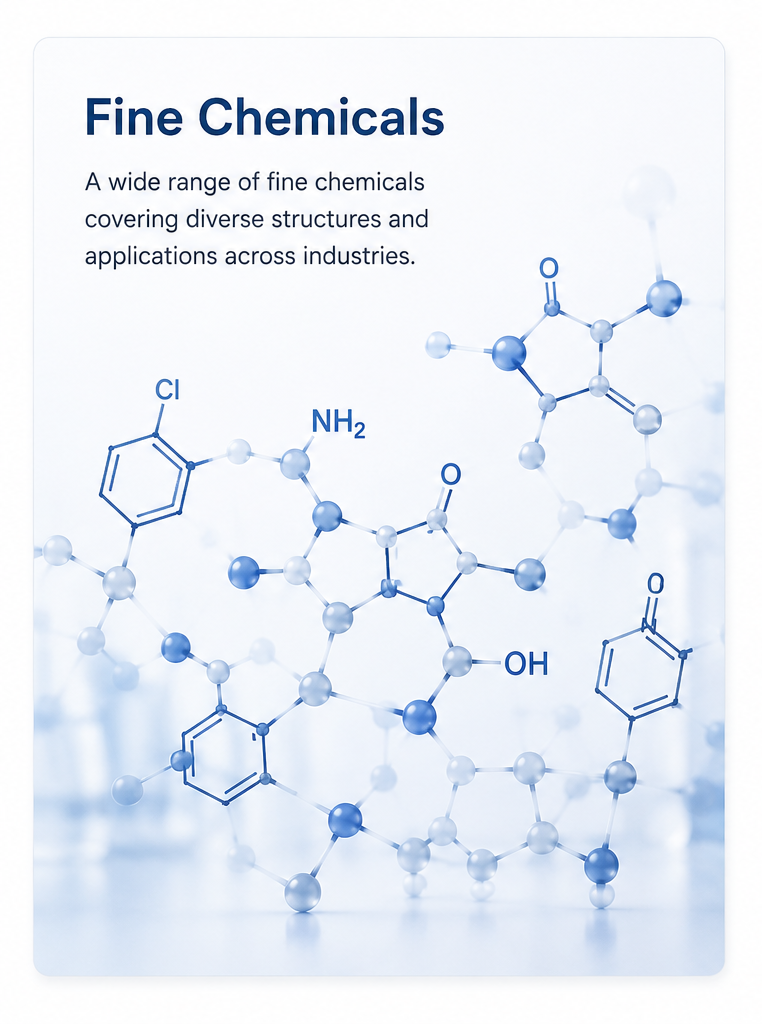
In today’s fast-moving industrial landscape, off-the-shelf chemicals rarely hit the mark when it comes to highly specialized functions. That’s where tailor-made molecules step in—designed from the ground up to fit precise performance criteria, whether it’s enhancing the stability of a pharmaceutical formulation or enabling a breakthrough in organic electronics. By manipulating molecular architecture, chemists can dial in properties like solubility, reactivity, or binding affinity, creating compounds that behave exactly as needed in their intended environment.
The process goes far beyond simple modification. It often involves computational modeling to predict how a molecule will interact with its target, followed by iterative synthesis and testing. For example, in agrochemicals, custom-designed molecules can target specific pests while leaving beneficial insects unharmed, reducing environmental impact. In material science, tailored structures can yield polymers with exceptional heat resistance or self-healing capabilities, opening doors to applications that were previously out of reach.
What sets this approach apart is the fusion of creativity and precision. Rather than settling for a one-size-fits-all solution, researchers and engineers collaborate to define the exact molecular characteristics needed, then build them atom by atom. The result is a library of highly efficient, purpose-built compounds that push the boundaries of what’s possible in fields ranging from renewable energy to personalized medicine, where even a subtle change in molecular shape can mean the difference between success and failure.
Bridging the Gap Between R&D and Industrial Scale
Translating a laboratory breakthrough into a full‑scale manufacturing process is rarely straightforward. The conditions that work beautifully in a controlled benchtop environment often unravel when subjected to the relentless demands of industrial production—heat transfer limitations, mixing inefficiencies, and raw‑material variability can turn a promising reaction into a costly bottleneck. Recognizing these pitfalls early is the first step toward bridging the divide.
Successful scale‑up hinges on more than just bigger equipment; it requires a fundamental rethinking of process parameters. Pilot‑scale trials become the critical proving ground, where seemingly minor details—like stirrer geometry or cooling rates—are rigorously tested. Chemical engineers and R&D chemists must collaborate closely, iterating between the laboratory and the pilot plant to identify robust operating windows that accommodate the inevitable fluctuations of large‑volume production without sacrificing yield or purity.
Ultimately, the gap narrows when organizations treat scale‑up not as an afterthought but as an integral part of development. By embedding process‑scale thinking from day one—through statistical design of experiments and continuous flow‑chemistry approaches, for instance—companies can dramatically shorten the timeline from discovery to market. This proactive mindset transforms what is often a frustrating chasm into a manageable technical challenge, ensuring that innovation isn’t stifled by the journey out of the lab.
Green Chemistry at the Core of Production
The shift toward greener manufacturing isn't just a trend—it's a fundamental redesign of how chemical processes are conceived. Instead of treating waste as an afterthought, production methods are now engineered to prevent hazardous byproducts from forming in the first place. This means rethinking solvents, catalysts, and entire reaction sequences to maximize atom economy, where nearly every input atom ends up in the final product rather than as discarded waste.
Biocatalysis and renewable feedstocks have moved from niche research to industrial reality, enabling reactions under mild conditions that slash energy use and improve safety. Solventless reactions and continuous flow processing are closing the loop on resource consumption, while life-cycle thinking ensures that every material choice makes sense not just for yield but for the planet long-term.
Regulatory pressures and consumer awareness often get the credit, but the real momentum comes from the economic resilience built into these methods. Lower purification costs, reduced liability, and accelerated time-to-market are convincing even the most profit-driven operations that green chemistry isn't an expense—it's the smartest capital investment in their production line.
Ensuring Consistency Through Rigorous Analytical Protocols
Reliable outcomes hinge on the disciplined application of standardized methods. Every step, from sample preparation to final interpretation, follows a documented procedure that eliminates guesswork. By embedding calibration checks and reference materials into the daily workflow, minor deviations are caught before they ripple into larger inconsistencies. This methodical approach transforms raw data into a trustworthy narrative, where each result stands on a foundation of verified, repeatable practice.
Beyond mere compliance, rigorous protocols serve as a common language across teams and instruments. When multiple analysts adhere to the same detailed instructions, the data pool becomes coherent rather than fragmented. Regular round-robin testing and blind replicates reveal hidden biases, prompting refinements that sharpen precision. Over time, this iterative cycle fosters a culture where analytical integrity is not an aspiration but an ingrained habit, visible in every chromatogram and calculated value.
Maintaining consistency also means embracing a proactive mindset toward potential disruptions. Equipment maintenance logs, reagent lot verification, and environmental monitoring are woven into the protocol fabric. When unexpected outliers appear, a pre-established investigation pathway guides the response, ensuring that corrective actions are both swift and scientifically sound. Such thoroughness minimizes downtime and preserves the chain of custody, ultimately delivering results that stakeholders can rely on without second-guessing.
Co-Creating Next-Generation Chemical Technologies
Real innovation in chemistry doesn’t happen in isolation. It springs from the collision of expertise, where industrial veterans, academic pioneers, and bold startups share a lab bench. Our model is built on active partnership, not just consultation. We embed our scientists alongside yours, blending deep domain knowledge with fresh perspectives to tackle challenges that haven’t even been named yet.
We’re not afraid to question the fundamentals. Why does a catalyst deactivate so quickly? Can we redesign that separation step to cut energy use by half? By reframing problems and marrying computational prediction with rapid experimentation, we break through plateaus. The result isn’t a glossy report—it’s a physical sample, a scaled-up process, a patent that shifts the landscape. We measure progress in breakthroughs you can hold.
This is chemistry at the speed of imagination, but grounded in years of hands-on know-how. From bio-based monomers that turn waste into high-performance polymers, to electrochemical routes that sidestep harsh reagents, we’re crafting the building blocks of a smarter, cleaner industry. And we’re doing it with partners who aren’t just looking for a service—they’re looking to write the next chapter with us.
FAQ
We focus on custom-engineered reaction pathways that minimize by-products, relying on real-time analytics and modular reactor designs. This lets us consistently achieve purity levels above 99.9% without iterative reprocessing.
We combine flow chemistry with in-line purification, using techniques like simulated moving bed chromatography. Every step is monitored by mass spectrometry, allowing us to meet stringent specifications for pharmaceutical and electronic-grade materials.
Our team uses digital twin simulations to model scale-up parameters, avoiding the typical pitfalls of heat and mass transfer issues. We also employ continuous processing to maintain consistency, so the material from kilogram to multi-ton batches remains identical.
While we serve pharma and biotech heavily, our real niche is in providing ultra-pure precursors for advanced materials—think OLED intermediates, semiconductor dopants, and specialty polymers where even trace impurities ruin performance.
We maintain a blockchain-based chain of custody from raw material to final shipment. Every batch gets a digital passport with full analytical history, exceeding ICH Q7 and ISO requirements. This cuts client audit time by half.
We don't just fulfill specs; we challenge them. Recently we designed a four-step telescoped synthesis that eliminated two isolation stages, reducing waste by 40% and lead time by three weeks for a key client building block.
We've built a strategic network of vetted partners and in-house cryogenic storage for sensitive reagents. More importantly, we develop alternative synthetic routes using more accessible feedstocks, ensuring business continuity even during market disruptions.
It means our scientists have a green-lit 20% time budget to explore reagent-free coupling or biocatalytic shortcuts. We file multiple patents yearly, not for vanity, but because these breakthrough methods directly translate into more sustainable, cheaper high-purity molecules for our customers.
Conclusion
At the heart of high-purity synthesis lies an almost obsessive dedication to precision, where every reaction is calibrated to eliminate even the faintest trace of impurity. This fine chemicals manufacturer does not simply produce compounds; it engineers molecular perfection for fields where there is no room for error—think pharmaceutical intermediates that demand 99.9% purity or electronic-grade materials where a single contaminant can compromise an entire device. The team excels in crafting tailor-made molecules, translating abstract ideas from early R&D into robust, scalable processes. Bridging the gap between a chemist’s bench and multi-ton reactors is where true expertise shines: it involves rethinking kinetics, heat transfer, and mixing dynamics so that a synthesis that works beautifully in a flask performs identically in a 5,000-liter vessel. That seamless scale-up, without sacrificing yield or purity, is a hallmark of their technical mastery.
Beyond the molecule itself, the manufacturer embeds sustainability into its production DNA. Green chemistry isn’t an afterthought but a guiding principle—whether through solvent recovery systems that slash waste, catalytic routes that bypass toxic reagents, or continuous flow processes that shrink energy footprints. Yet innovation means little without consistency, which is why every batch undergoes a battery of rigorous analytical tests: HPLC, mass spectrometry, NMR, and more, all orchestrated to leave no deviation unchecked. This analytical vigilance, paired with a collaborative spirit, turns clients into true partners. Instead of merely fulfilling orders, the company co-creates next-generation chemical technologies, working side-by-side with customers to solve challenges that haven’t even been named yet. The result is a fusion of reliability and foresight that redefines what a fine chemicals partner can be.
Contact Us
Contact Person: Wei Zhang
Email: [email protected]
Tel/WhatsApp: 862163529955
Website: https://www.dslchem.com