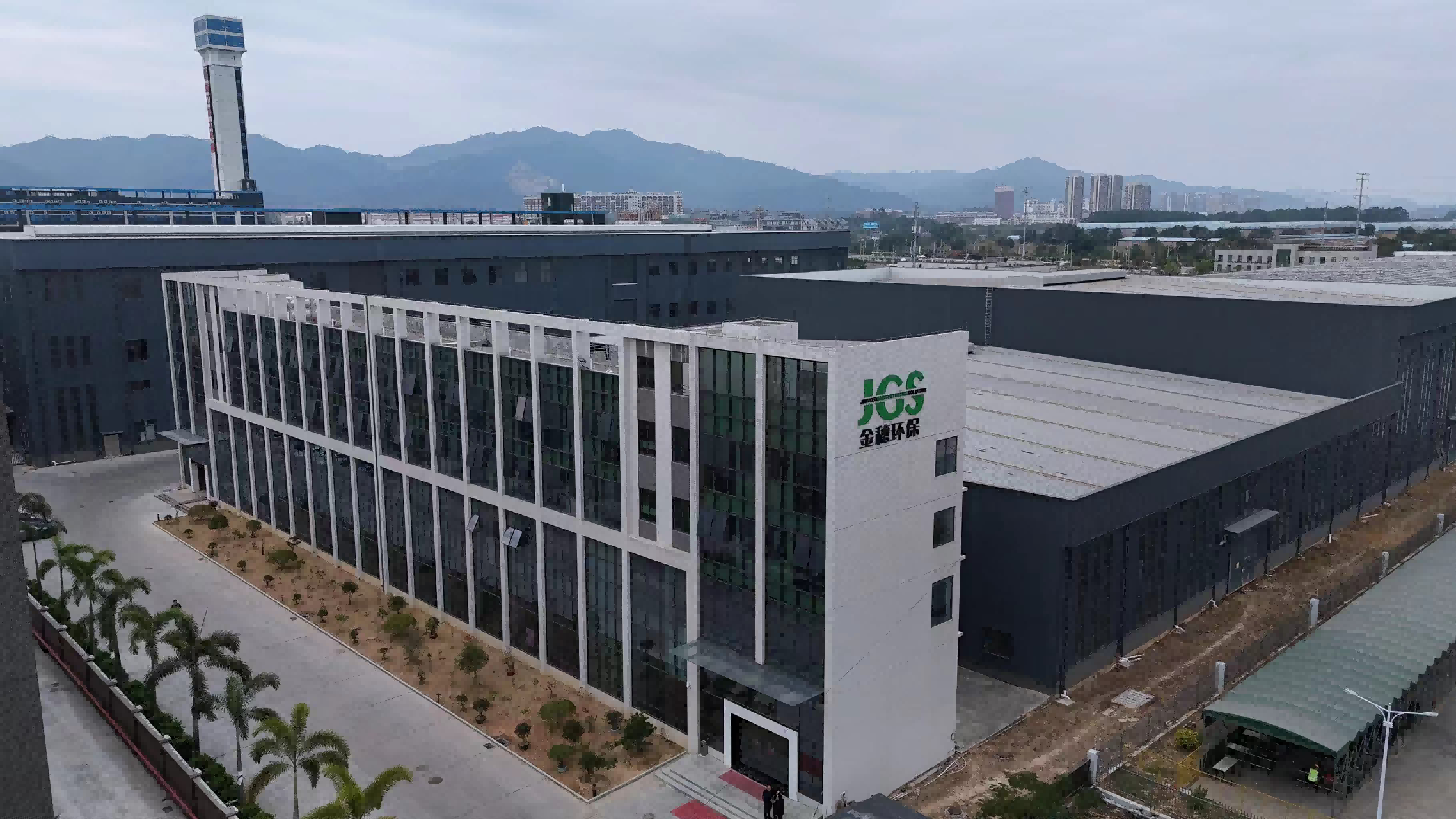

Geotextile Fabric Factory: A Behind-the-Scenes Look at Production and Testing
2026-09-03
Ever wondered what really happens inside a geotextile fabric factory before those rolls hit your construction site? From raw polymer to rigorous tensile testing, the journey is more intricate than most engineers realize. In this behind-the-scenes look, we walk you through the production and testing processes that separate reliable geosynthetics from the rest—and why JInseed Geosynthetics Solution insists on exceeding standard protocols at every step.
Resin Arrives: Checking Polymer Pellets Before They Enter the Hopper
The moment a fresh shipment of resin shows up at the dock, it’s tempting to just slit the bags and dump everything into the hopper to keep the line moving. But experienced operators know that the ten minutes spent eyeballing the pellets before they ever touch the feed throat can save an entire production shift. Grab a handful from a few different bags, not just the top one on the pallet. You’re looking for color consistency first—any darker specks or streaking usually means the material got overheated somewhere during compounding or transport. Then roll the pellets between your fingers. They should feel uniform, not sticky or chalky. If they cling to your glove like static-charged dust, that’s a moisture or fines problem waiting to clog filters and ruin melt quality.
Beyond the quick visual and tactile check, run a small sample through a sieve if you have one handy. Fines and angel hair—those wispy strands that form when pellets rub together—will separate out fast. A surprising amount of those tiny particles can cause bridging in the hopper, uneven feeding, and even burn marks in the final part. If the resin sits in a humid warehouse, don’t skip the moisture analyzer. Nylon and polycarbonate are notorious for picking up water, and pushing damp pellets into a hot barrel is a recipe for splay, bubbles, and brittle parts. Also keep a magnet wand nearby: a single stray metal shaving from a torn conveyor belt can wreck a screw or check ring. The goal isn’t to turn the loading dock into a lab, but to catch the obvious failures before they become expensive scrap downstream.
The Melt Phase: Watching Solid Plastic Become a Workable Geotextile Web
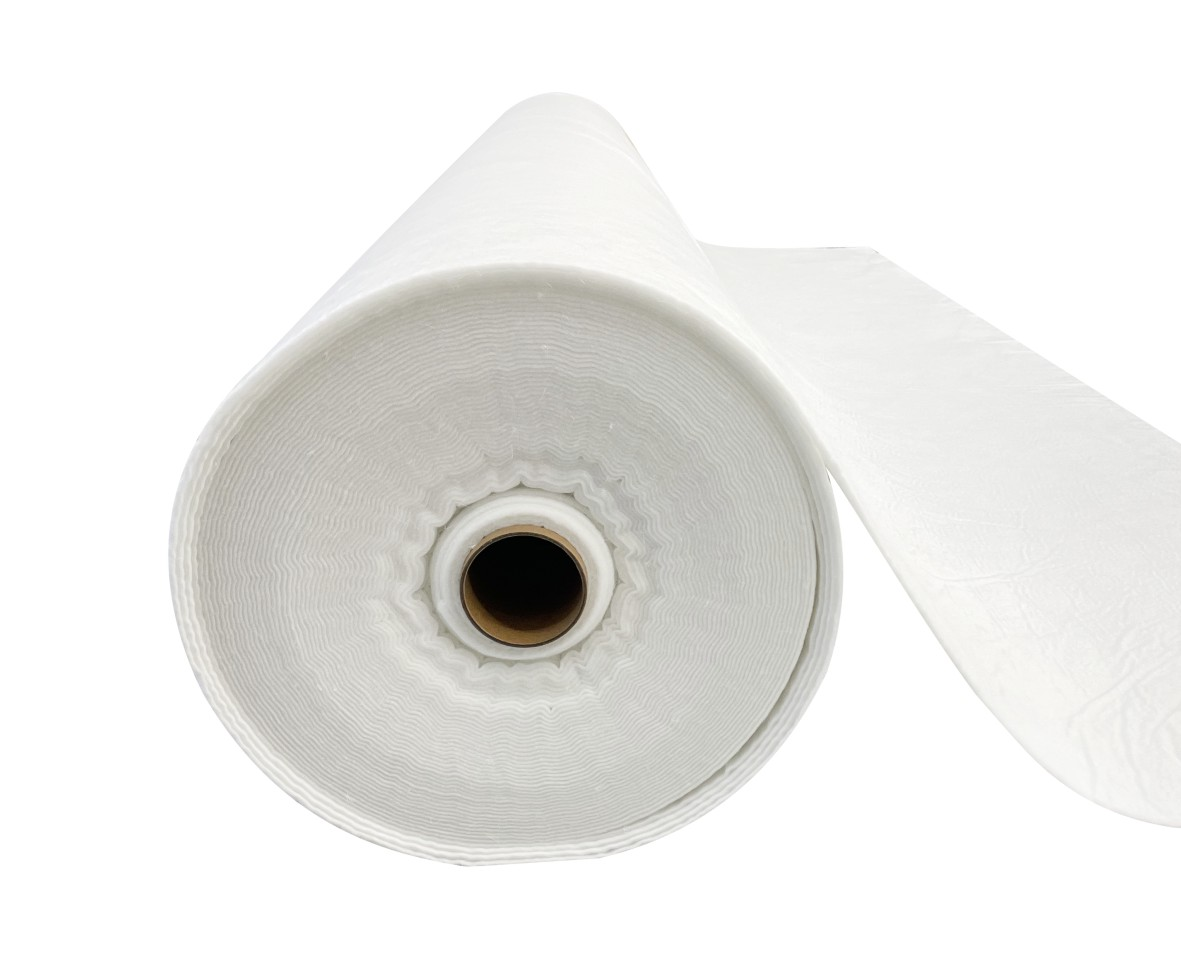
The melt phase starts when recycled resin pellets or flakes are fed into the extruder barrel, where screw shear and barrel heat work together to bring the polymer past its melting point. Under temperatures that often range between 230°C and 280°C for polypropylene or polyester, the solid granules turn into a clear, honey-like fluid that still remembers its molecular chains.
What's striking at this stage is the abrupt change in behavior. The molten plastic becomes elastic enough to be pushed through a spinneret plate, yet cohesive enough to form continuous filaments rather than droplets. The viscosity has to sit in a narrow window: too thick and the pumps will strain, too thin and the web will sag before it reaches the quenching air.
Once extruded, the threads are drawn down by cold air and laid onto a moving belt in a tangled but controlled pattern. Watching the transition, you can see the solid input lose its original shape entirely and re-emerge as a soft, fibrous mat that will later be needle-punched or thermally bonded into a geotextile.
Needle Loom Choreography: How Barbed Needles Punch Fibers into a Cohesive Fabric
Watching a needle loom run at full speed feels less like industrial manufacturing and more like a tightly rehearsed dance. Each barbed needle drops, catches a few loose fibers, and yanks them down through the web before pulling back up—over and over, hundreds of times per minute. The barbs aren't random; they're angled to grab on the downstroke and release on the upstroke, which is what lets the machine build density without shredding the material. That precise coordination between needle shape, stroke length, and bed plate timing is the real choreography behind nonwoven fabrics.
Different fiber blends demand different rhythms. Coarse synthetics like polypropylene can take a faster, shallower punch cycle, while finer natural fibers—wool, cotton, bamboo—need a slower descent or the barbs will tear rather than entangle. Operators often tune the penetration depth by fractions of a millimeter, and that adjustment changes how the finished fabric drape, thickness, and tensile strength all come together. It's a tactile kind of engineering, where subtle shifts in motion produce a noticeably different hand feel in the final roll.
What makes needle punching so versatile is that the bonding happens mechanically, without glue or heat. The fibers interlock because the barbs physically drag them into a three-dimensional knot. That means you can punch almost anything fibrous—recycled denim scraps, carpet waste, even carbon fiber for composite preforms. The loom itself doesn't care about the story behind the fiber; it just keeps dancing to whatever pattern the operator sets, turning a chaotic pile of fluff into something strong enough to hold its shape.
Heat-Stabilized for the Long Haul: Why We Bake Every Roll
We bake every roll because a quick pass through heat does more than dry the surface—it locks the structure. The resin and fiber layers settle into each other under controlled temperature, eliminating microscopic gaps that later cause warping or delamination. That's why our rolls keep their shape even after months on the shelf or repeated runs through demanding presses.
You'll notice the difference in the weight and the feel. A properly baked roll has a uniform density and a smooth, almost glassy surface that doesn't chip under normal handling. It also resists moisture absorption, which means no swelling or soft spots when the humidity in your shop climbs. We don't rush this step; the heat cycle is timed to the specific material blend, not a generic recipe.
When you put one of these rolls to work, the payoff is consistency. Ink transfers evenly, pressure stays true across the full width, and you spend less time adjusting for drift. It's not flashy—just a roll that behaves the same on day one and day one hundred, because we baked it right from the start.
Lab Day: Tensile Rigs, Tear Tests, and Puncture Probes on Full Display
The lab bench was crowded with clamps, load cells, and cables snaking toward data loggers. A tensile rig near the window had a strip of woven polyester locked between its jaws, stretching slowly as the crosshead moved upward. The force curve on the monitor climbed in uneven steps, then dropped sharply when the sample let go with a crisp snap. A few feet away, a technician reset the tear tester, aligning a notched rubber sheet so the next run would propagate a clean split down the pre-cut line.
At the puncture station, a stainless-steel probe descended into a layered composite at a constant rate. The display tracked penetration depth against resistance, and the operator tapped the screen to mark the first ply failure. Visitors leaned in to compare the puncture marks left in different foams, running a thumbnail over the holes. Throughout the afternoon, each rig ran sample after sample, producing a steady rhythm of servos, cracking fibers, and quiet conversations about grip pressure and strain rate.
The Last 10 Feet: Unrolling, Inspecting, and Wrapping Each Finished Roll
The last ten feet before a finished roll leaves the floor carry more weight than their length suggests. Here, the material is unrolled from the core at a controlled pace, letting surface defects, edge nicks, or gauge variations show themselves under the inspection lights. It’s not a frantic hunt—more like a deliberate, almost tactile read of what the line produced minutes earlier. Operators run a gloved hand along the web, feeling for the subtle ridges that cameras might miss, and watching how the coating settles as it relaxes off tension.
Once the roll passes inspection, the wrapping step becomes its own craft. Instead of a generic sleeve, the packaging is chosen to match the product’s sensitivity: moisture-barrier film for hygroscopic grades, breathable wrap for materials that need to off-gas, or simple kraft paper for short hauls. Each layer is tensioned by hand, not just by machine, so the roll emerges with a tight, uniform surface that won’t shift during transit. Corner boards are slipped under the straps at exactly the right angle—not to look tidy, but because a crushed edge at this stage means a customer rejection three states away.
Small decisions made in this final stretch ripple outward. A roll wrapped too tightly can imprint its own pattern onto the first few feet of product. A label placed without checking the batch code forces a warehouse rewind. That’s why the crew treats the last ten feet as a handoff rather than an afterthought: the roll isn’t just leaving their line, it’s entering someone else’s process. The unroll, the inspection, the wrap—each one is a quiet agreement that what leaves here is what was promised, down to the outermost layer.
FAQ
Most lines start with polypropylene or polyester pellets, sometimes recycled chips. Incoming batches get a quick melt-flow check and moisture content test, so the extrusion crew knows exactly what they're dealing with before anything hits the hopper.
It's less about glue and more about mechanical entanglement. Loose carded webs pass under banks of barbed needles that punch up and down thousands of times per minute. Each stroke drives fibers deeper into the web, creating a fabric that holds together through friction and interlocking.
Technicians pull samples from the beginning, middle, and end of each roll. They measure mass per unit area, tensile strength, elongation, and tear resistance. If a roll drifts outside the spec sheet, it gets flagged and either downgraded or sent back for rework.
Probably the CBR puncture test. A plunger pushes through a clamped fabric sample to simulate sharp stones under load. Watching a geotextile stretch and eventually burst gives a very direct sense of whether it can survive installation abuse and long-term soil pressure.
Stabilizers are usually compounded into the polymer before extrusion. The lab runs accelerated weathering tests with xenon-arc lamps, cycling heat and moisture, then compares retained strength. This helps predict whether a fabric can sit uncovered through a construction season without falling apart.
Yes, and the energy is completely different. Nonwoven lines tend to be louder, with carding and needle looms dominating the floor. Woven lines are slower and more deliberate, feeding slit-film or tape yarns through looms. Some factories keep them in separate halls just because of the noise and dust.
Clean, dry scrap often gets ground and blended back into certain product lines, especially for noncritical applications. Heavily contaminated material is sent to external recyclers. The goal is to keep as much polymer out of the landfill as possible without compromising the core product's performance.
For a standard nonwoven, you're looking at roughly 30 to 45 minutes from extrusion through winding, not counting lab hold time. Woven fabrics take longer because loom speeds are lower and coating or finishing steps add hours. Then the roll sits in quarantine until QC signs off.
Conclusion
A geotextile factory floor doesn’t start with fabric—it starts with a sack of polymer pellets and a healthy dose of skepticism. Before anything goes into the hopper, resin is checked for contamination, moisture, and melt flow. What passes becomes a molten stream, extruded and drawn into a web that’s still fragile. The needle loom is where it gains identity: thousands of barbed needles punch through the loose fibers, entangling them into a fabric that can hold soil, filter water, or reinforce a roadbed. Then every roll goes into the oven for heat stabilization. It’s not glamorous, but baking locks the fibers in place so the fabric won’t shrink or warp under load or UV exposure.
But nothing leaves the plant on trust. Lab day means tensile rigs pulling strips until they snap, tear tests starting a rip and watching how far it runs, and puncture probes pressing steel balls through the web. Each roll must meet stated values, not just hoped-for ones. The last 10 feet are the most honest: the roll is unrolled, inspected for thin spots or needle lines, and wrapped with a label that tells exactly what it is. By then, the polymer pellets have been melted, punched, baked, stretched, torn, and inspected—and only then do they earn the name geotextile.
Contact Us
Contact Person: Jerry Qiu
Email: [email protected]
Tel/WhatsApp: +65 84265294
Website: https://www.jinseed-geo.com