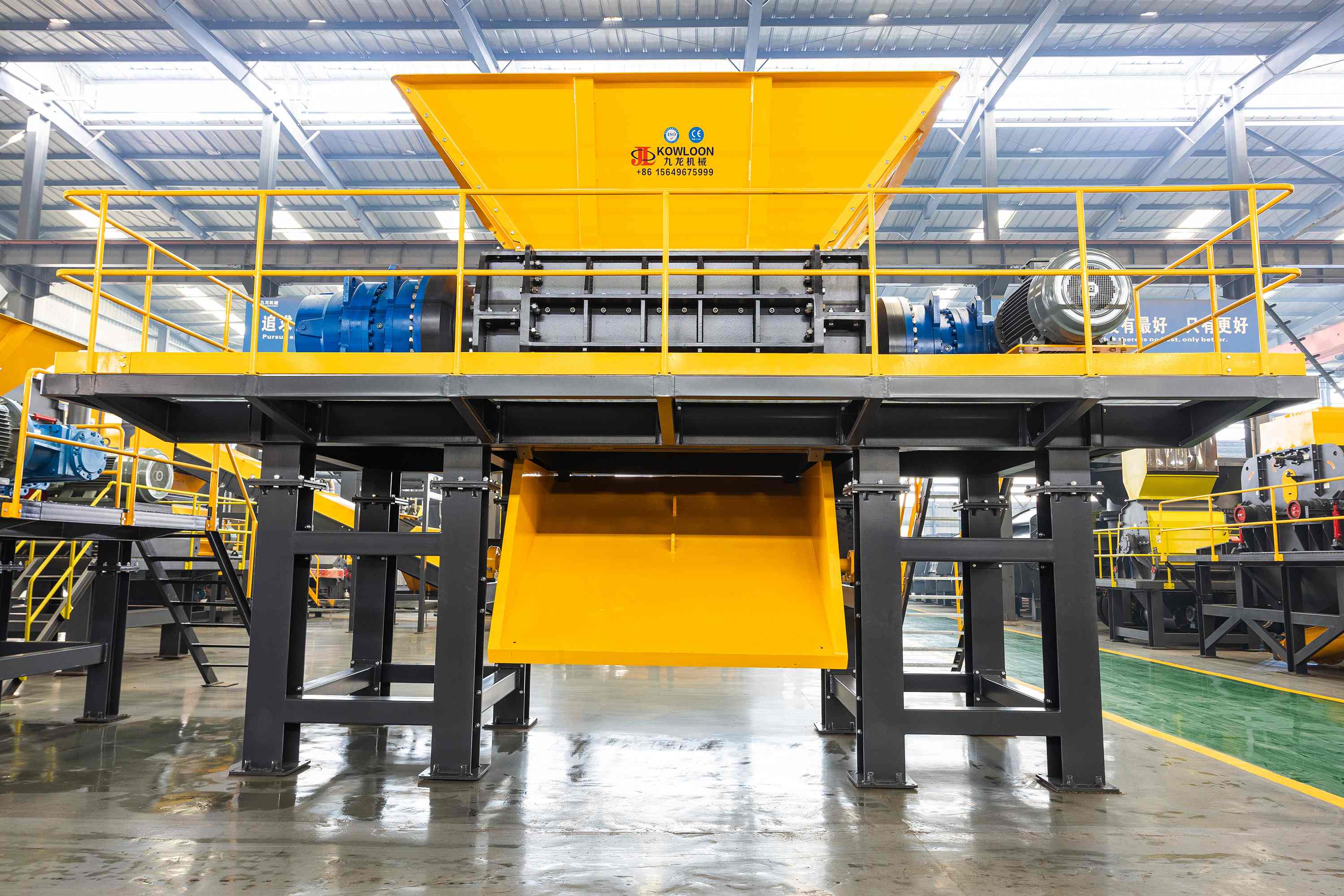

High Quality Tire Shredder Features That Ensure Long-Term Performance
2026-09-21
When a tire shredder has to run day after day, the difference between constant downtime and smooth operation comes down to the details most buyers overlook. The best machines aren't just built to shred—they're engineered with specific features that protect the rotor, bearings, and cutting chamber from the brutal wear that tires bring. Kowloon Machinery has spent years refining these high-quality tire shredder features, and understanding them before you buy can save you from expensive repairs and lost production later. So what separates a shredder that lasts a decade from one that struggles in its first year? Let's examine the design choices that ensure long-term performance.
Blade Metallurgy That Resists Chipping on Steel-Reinforced Tires
Cutting steel-reinforced tires punishes blades in ways softer rubber never does. Each pass through the casing brings the edge against high-tensile wire, often bundled or twisted, and impact energy concentrates at microscopic carbide boundaries. Standard high-hardness tool steels respond by shedding tiny fragments from the cutting edge—chipping that turns a sharp profile into a jagged, inefficient scraper within hours. The metallurgy that avoids this begins with a powder-metal matrix engineered for controlled carbide size and even dispersion, ensuring no single brittle cluster grows into a crack initiation site.
A second measure involves deep cryogenic treatment after heat treating, which converts retained austenite into fine martensite and relieves grinding-induced stress. That yields an edge which holds its geometry under repeated shock instead of flexing and micro-fracturing. Some alloys further add small amounts of vanadium or niobium to refine grain structure, while a low-friction coating such as titanium aluminum nitride reduces heat buildup and wire adhesion. These choices collectively shift the failure mode from chipping to gradual, predictable wear.
On high-volume tire recycling lines, the difference shows up as longer intervals between blade changes and a steadier cut with less horsepower draw. Operators see fewer sparks and less wire pull-out, which also protects downstream screens and conveyors. Rather than chasing hardness at the expense of toughness, the blade metallurgy treats edge retention as a system-level property—balancing carbide architecture, residual stress, and surface chemistry to keep cutting steel-reinforced rubber cleanly.
Precision Rotor Balancing to Stop Bearing Wear Before It Starts
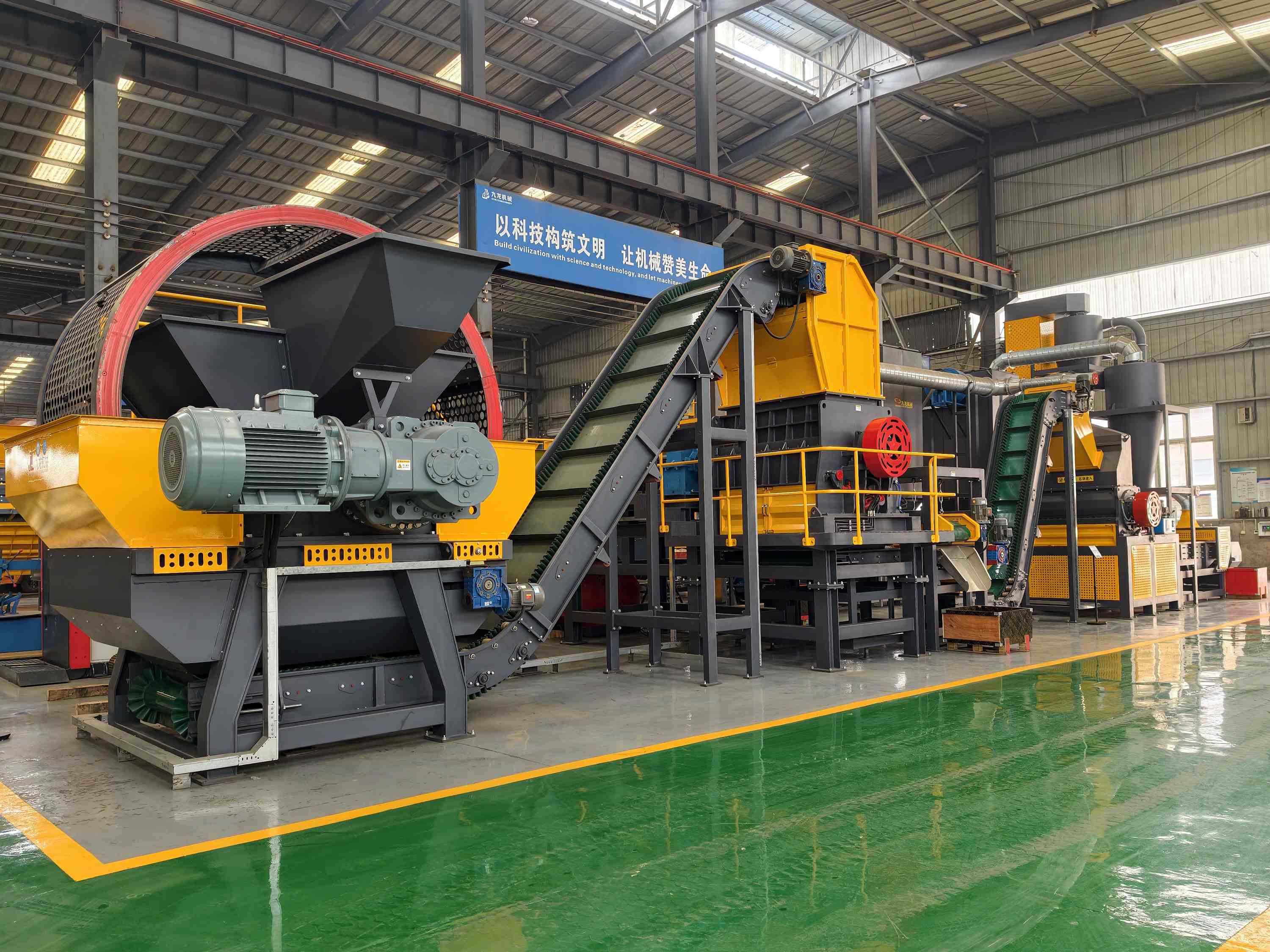
Most bearing failures don't begin with a sudden crack or a visible defect. They start as a faint, repetitive vibration that slowly hammers the rolling elements into the raceway. A rotor that's only a few grams out of balance can generate forces far beyond what the bearing was designed to absorb. Over time, that constant pounding breaks down the lubricant film, creates micro-pitting, and sets the stage for fatigue spalling. The frustrating part is that by the time you hear the noise or feel the heat, the damage is already underway.
Precision rotor balancing interrupts this cycle before it gains momentum. Instead of simply matching a static weight, the process measures dynamic imbalance across the full operating speed range and corrects it in both planes. This brings the residual unbalance down to levels that keep bearing loads well inside their safe zone. The result isn't just smoother rotation, it's a bearing that stays cooler, holds its lubrication longer, and avoids the early wear patterns that would otherwise shorten its service life.
Sealed Bearing Housings That Keep Out Rubber Dust and Moisture
Rubber processing plants are notoriously dirty environments. Fine particles from ground rubber, carbon black, and talc hang in the air, while washdown routines and humidity introduce constant moisture. Standard bearing housings fail quickly here, letting grit grind away at rolling elements or allowing water to emulsify the grease. The sealed housings built for these conditions take a different approach: they don't just shield the bearing from occasional splash, they create a positive exclusion zone. A double-lip contact seal rides against a precision-ground collar, wiping away debris before it can reach the shaft. Behind that, a labyrinth ring breaks up any remaining airflow that might carry dust inward.
What separates these units from generic “sealed” alternatives is the attention to pressure differentials. As a bearing heats up during operation, the air inside the housing expands and tries to escape. When it cools, moist outside air gets drawn back in through any tiny gap—carrying rubber dust with it. These housings counter that with a vented expansion chamber or a pressure-equalizing diaphragm, so the seal never works against a vacuum. The housing body itself uses a thicker wall section around the seal seat, preventing distortion when mounted on uneven surfaces. Field rebuilds show the payoff: after months of exposure to tire curing presses or mixing mills, the grease stays amber instead of turning into a black, gritty paste.
On a rubber extruder line, where fine dust settles on every horizontal surface, these sealed housings keep running without daily grease purges. One maintenance team swapped a set of standard pillow blocks after repeated failures every six weeks. The sealed versions ran fourteen months before scheduled inspection, and the internal clearance was still within spec. The real test comes during steam cleaning—operators spray hot water directly at the machine frame. A well-designed sealed housing shrugs this off, because the outer flinger throws water away from the seal lip while the inner labyrinth drains any condensation through a bottom port. That combination of flinger, contact seal, and drain path means the bearing never sits in trapped moisture, which is exactly what turns rubber dust into a grinding compound.
Variable Speed Drive Logic for Handling Mixed Feedstock
Mixed feedstock rarely behaves uniformly, and fixed-speed approaches tend to stall or surge when material density shifts mid-batch. The variable speed drive logic reads load current, belt tension, and rotor position in short loops, then adjusts frequency to keep the feed rate within a narrow torque envelope. Instead of waiting for an overload alarm, the controller watches the rate of change in amp draw and eases motor speed just before a dense cluster reaches the cutting or separation zone.
The logic also separates transient spikes from sustained shifts. A wet, fibrous slug may trigger a brief slowdown and recover automatically, while a long stretch of heavy material re-baselines the operating point to lower speed with higher torque. This keeps downstream screening and air classification stages fed at a steady volumetric pace, cuts nuisance trips, and reduces the need for operators to manually clear jams.
Frame Reinforcements Where Stress Concentrations Actually Occur
Most chassis and frame failures start at predictable locations—sharp corners, weld terminations, or abrupt changes in cross-section. Reinforcing the entire rail adds weight without addressing the root cause. A smarter approach is to map the load paths under real operating conditions, then place gussets, doublers, or local plate reinforcements exactly where the stress lines bunch up.
Stress analysis often reveals that a small diagonal brace near a suspension pickup point can drop peak stress by 30 percent, while adding the same amount of steel to a low-stress mid-span section does almost nothing. The goal is to direct force through existing strong sections rather than letting it linger at notches or holes.
During fabrication, this means reinforcing before cracks appear, not after. Weld sequencing matters too—preheating thick joints and staggering the ends of reinforcement plates prevents new stress risers from forming at the very spot you just strengthened. Done right, the frame stays lighter, rides better, and survives far longer than a blanket-reinforced version.
Maintenance Alerts Based on Real Wear Patterns, Not Fixed Intervals
Fixed maintenance schedules assume every machine wears down at the same predictable rate, but real equipment rarely follows a calendar. A pump running abrasive slurry degrades far faster than an identical unit handling clean water. Waiting for a preset date either lets damage accumulate unnoticed or forces unnecessary downtime on healthy components. Shifting to alerts based on actual wear patterns means listening to what the machine is already telling you through vibration, heat, and load data.
Sensors attached to critical points feed continuous streams of operating signatures into a lightweight analytics layer. Instead of triggering an alarm when the odometer hits a round number, the system compares current stress cycles against historical failure curves and flags deviations that matter. A sudden change in bearing frequency or a slow drift in hydraulic pressure becomes the trigger, not a date on the wall calendar.
The payoff shows up in reduced unplanned stoppages and longer component life. Operators stop replacing parts that still have plenty of service left, and they intervene early when a real problem is brewing. Maintenance stops being a guessing game tied to hours run or months passed, and becomes a response to the machine's own condition.
FAQ
It comes down to how the rotor is built. A solid one-piece rotor with oversized bearings spreads stress evenly, so you aren't dealing with cracks or alignment drift after months of daily operation.
Look for blades made from high-carbon alloy steel that is heat-treated and then hard-faced. That combination stays sharp longer and survives repeated contact with metal cords without chipping the way standard tool steel does.
More than most people realize. A direct coupled gearbox with a variable frequency drive gives smooth torque delivery and lets the machine start under load without shocking the motor or drivetrain.
Some well-built machines run an independent cooling circuit for the hydraulic or lubrication system, not just a basic fan. That keeps oil temperatures stable even when ambient temperatures climb.
Yes. A hydraulic lift chamber or quick-change screen frame means one person can clear jams or swap screens in minutes instead of losing half a shift to disassembly.
Bearing housings that are isolated from the cutting chamber and fitted with heavy-duty seals make a big difference. Contaminants like rubber fines and steel dust are the main killers of bearings.
Check whether wear parts are bolt-on and replaceable, and whether the bolts are accessible without removing the rotor. That reduces labor hours and keeps regular maintenance under a couple of hours per week.
Definite. Overload monitoring, phase reversal protection, and automatic shutdown on high vibration help catch small issues before they turn into expensive failures.
Conclusion
The most durable tire shredders start with blade alloys chosen specifically to withstand the impact of steel belts and sidewalls without chipping or cracking. Instead of relying on generic hardened steel, manufacturers that prioritize longevity select metallurgy with the right balance of hardness and toughness, so edges stay sharp through thousands of mixed passenger and truck tires. That same attention to detail carries into rotor balancing. A rotor that spins true prevents the kind of micro-vibration that quietly destroys bearings over time, even when the machine looks fine from the outside. Paired with sealed bearing housings, which block rubber dust and moisture from reaching the rolling elements, the result is a shredder that doesn't demand frequent bearing replacements just to keep running.
Operators dealing with inconsistent feed material benefit from variable speed drive logic that adjusts rotor speed to the load, preventing stalls and excessive wear when heavy steel-reinforced chunks enter the chamber. Rather than applying a fixed reduction ratio, the drive monitors torque and fine-tunes output so the machine works through difficult batches without overheating. Long-term durability also depends on how the frame is reinforced. Stress concentrations appear at weld joints, mounting brackets, and the areas around the rotor bearings, not uniformly along the main beams. A high-quality shredder adds gussets and thicker plate only where the finite element analysis shows actual load paths, avoiding needless weight while strengthening weak points. Maintenance alerts that learn from real wear patterns complete the package: sensors track vibration, temperature, and blade wear to notify operators only when components actually need attention, not on a generic schedule. This approach extends service life while cutting unnecessary downtime.
Contact Us
Contact Person: Ray
Email: [email protected]
Tel/WhatsApp: +86 13733817580
Website: https://www.zzkowloon.com/