
Laminated Tube Company: Crafting Sustainable Packaging Innovations
2026-08-08
In an era where sustainability is no longer a choice but a necessity, the packaging industry faces mounting pressure to innovate. Among the pioneers, Sanrong Packaging stands out as a laminated tube company redefining eco-friendly solutions. How are they transforming everyday packaging into a force for environmental good? Dive into their journey of crafting sustainable packaging innovations.
The Heart of Eco-Friendly Tube Design
At its core, eco-friendly tube design isn't just about swapping materials—it's a fundamental rethinking of how a simple container can minimize its footprint from cradle to grave. The heart lies in material selection that goes beyond recyclability; it prioritizes post-consumer recycled content, bio-based plastics that actually break down in realistic composting conditions, and monomaterial constructions that simplify the recycling stream. When a tube sheds unnecessary layers and mixed polymers, it stops being a sorting headache and becomes a valuable resource in a circular loop.
Equally vital is the invisible work of light-weighting and efficient shaping. Trimming just a fraction of a gram from each tube through precision engineering can slash resin use by tons annually, and thoughtful dispensing mechanisms reduce product left inside—waste that consumers rarely see but that adds up globally. These design choices, often hidden in the subtle curve of a shoulder or the smallest orifice size, embody a quiet commitment to doing more with less.
Finally, the real heartbeat is a supply chain that ties it all together. It means partnering with suppliers who can provide verified recycled resins without fossil-fuel loopholes, and designing for disassembly so pumps and caps can be easily detached for proper recycling. When every pinch, click, and seal is planned with end-of-life in mind, the tube becomes more than packaging—it becomes a statement of intent, proving that thoughtful design can hold even the messiest creams and gels without leaving a lasting mess on the planet.
Materials That Make a Difference
Everyday items often hide the extraordinary stories of their origins. Take bamboo, for example—this fast-growing grass is quietly replacing hardwoods and plastics, offering strength from a source that regenerates without replanting. Then there's mycelium, the root network of mushrooms, which can be molded into packaging and insulation, decomposing fully when its job is done. These aren't futuristic fantasies; they're in production now, reshaping how we think about disposability.
The ocean, littered with plastic waste, has become an unlikely quarry. Companies now harvest ghost nets and bottles, refining them into pellets for injection molding. The outcome? Chairs, phone cases, and even skateboards born from the very pollution that threatens marine life. It's a brutal kind of poetry—turning a problem into a product, though the real trick is designing so these items never return to the sea.
Some materials don't just perform—they adapt. Concrete infused with bacteria can seal its own cracks when water seeps in, dramatically extending the life of structures. In electronics, researchers are developing gallium-based alloys that remain liquid at room temperature, allowing circuits to flex and stretch without breaking. These advances aren't about incremental improvement; they're rewriting the rules of what a material can be, and in doing so, they quietly transform entire industries.
Innovation in Every Layer
True breakthroughs rarely come from one big idea. They emerge when creativity seeps into each stratum of a product—from the core materials upward. We start by questioning the fundamentals: why does this layer exist, what if it behaved differently? That mindset turns ordinary components into unexpected sources of delight. It’s not about adding features, but about reimagining essentials until they feel like magic.
In our process, every interface, support structure, and hidden substrate becomes a canvas. Engineers and designers collaborate not just on what’s visible, but on the invisible dynamics that shape experience. A cushioning layer becomes more adaptive; a bonding technique doubles as a design accent. These increments of reinvention stack quietly, creating products that feel cohesive without screaming for attention. The innovation isn’t loud—it’s layered in.
This philosophy builds resilience. When each layer is thoughtfully crafted, the whole becomes harder to replicate. Competitors might mimic a surface, but duplicating the interplay of innovation across multiple depths? That takes years of embedded culture. For our users, it means gear that wears in, not out—evolving with use because the intelligence runs all the way through.
From Concept to Conscious Creation
Every idea starts as a whisper, a fleeting spark that demands attention but rarely arrives with a manual. Moving from that raw concept into something tangible isn't about rigid blueprints—it's about letting the vision breathe while you shape it. The shift toward conscious creation happens when you stop asking what you should make and start exploring what wants to emerge, allowing intuition and intention to guide the next step rather than chasing a predetermined outcome.
This process thrives on a quiet kind of honesty. It means noticing when a direction feels forced and having the courage to pause, recalibrate, and even dismantle parts you've already built. Conscious creation isn't a linear march; it's a conversation between the maker and the made, where material choices, form, and function evolve through deep listening. You learn to trust that limitations aren't obstacles but invitations to refine purpose—turning constraints into character.
Ultimately, what you bring into the world carries the imprint of how you worked. When creation arises from presence rather than pressure, the result resonates differently. It holds a kind of stillness that invites others to engage with it on their own terms, not as something imposed but as something discovered. That's the quiet power of moving from concept to conscious creation: the work stops being just a thing you made and becomes a shared experience waiting to unfold.
Reducing Footprints, One Tube at a Time
Every squeezed tube represents a small victory for our planet. That final curl at the end of a toothpaste or lotion container might seem trivial, but it’s a quiet rebellion against the throwaway culture that clogs our landfills. When you take the extra ten seconds to roll, clip, or cut open a tube, you’re not just salvaging the last drop of product—you’re challenging a system designed for convenient waste. This simple act slows the rush from bathroom shelf to trash can, buying a little more time and a lot less regret.
It’s easy to underestimate how these tiny habits accumulate. A single family can easily go through dozens of tubes a year: toothpaste, sunscreen, hand cream, condiments. Multiply that across a street, a neighborhood, a city, and the numbers become staggering. But flip the narrative—what if each of those tubes was stretched to its true usable end? The collective reduction in waste would be enormous, and it starts with a stubborn refusal to accept “empty” as the end. Rinsing, flattening, even repurposing the plastic and aluminum layers turns a passive routine into a mindful ritual.
Beyond the immediate waste diversion, there’s a deeper shift happening. You begin to see packaging differently, not as a nuisance but as a resource mismanaged. That flattened tube in your recycling bin becomes a statement: I value what went into this, and I refuse to trash what remains. It’s a quiet kind of advocacy that doesn’t need a megaphone—just a willingness to squeeze a little harder, fold a little neater, and inspire a neighbor to do the same. One tube at a time, we’re reshaping our relationship with the things we use every day.
The Future of Packaging, Unwrapped
The future of packaging is quietly unfolding in labs and studios, far from the roar of production lines. Materials grown from mycelium are replacing foam, and fruit skins are being engineered into films that vanish in water. It’s a shift from inert shells to active participants—packaging that breathes, senses, and even repairs itself. This new wave isn’t just about containment; it’s about turning a box into a brief but meaningful episode in a product’s life, one that leaves no trace behind.
We’re moving past the binary of recyclable versus trash-bound. Soon, a wrapper might dissolve into nutrients for soil, or a bottle could unfold into a bowl. Edible water pods already hint at this blurring of boundaries. Designers are rethinking the very edges of objects, making them adaptable so that the line between the item and its wrapping grows thin. It’s a quiet rebellion against single-use thinking, crafting items that change roles instead of ending them.
The real unwrapping isn’t about technology alone—it’s about changing how we relate to the things that carry our goods. Packaging loses its anonymity when it can tell a story or respond to its environment. Imagine a milk carton that signals freshness or a shipping box that folds into a toy. These aren’t distant dreams but prototypes being tested in neighborhoods and small shops. The future isn’t something to wait for; it’s being passed from hand to hand right now.
FAQ
Laminated tubes use multi-layer materials that reduce raw material consumption, extend product shelf life, and often incorporate post-consumer recycled content, cutting down on waste and carbon footprint.
We rigorously test each material combination for barrier performance, strength, and compatibility, so the tube still protects the product perfectly while being eco-friendlier.
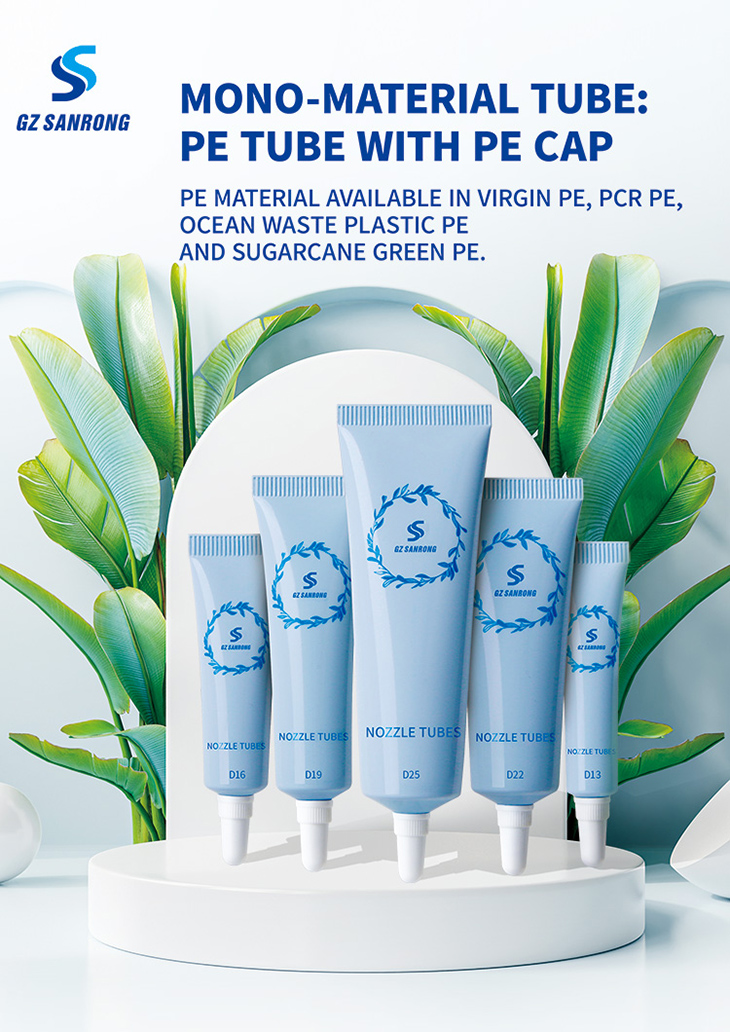
One breakthrough is a mono-material PE-based tube that’s fully recyclable in existing HDPE streams, eliminating the need for mixed-material separation and boosting circularity.
Many of our clients challenge us with specific sustainability targets, like using 50% recycled plastic or achieving carbon-neutral packaging, which pushes our R&D to deliver real solutions.
Initially, there can be a slight premium for advanced materials, but the long-term benefits—like lower disposal costs and stronger brand loyalty—often outweigh the upfront investment.
We design for recyclability and partner with recycling facilities to guide consumers on proper disposal, plus we're exploring refill and take-back programs to close the loop.
Conclusion
At Laminated Tube Company, sustainability isn't just a buzzword—it's embedded into every stage of tube design. By rethinking the very structure of packaging, the team has pioneered eco-friendly tubes that don't compromise on durability or aesthetics. Each layer is carefully engineered, using renewable and recycled materials that lower environmental impact without sacrificing performance. This layered innovation allows for reduced plastic content and improved barrier properties, ensuring products stay fresh while minimizing waste. The creative process transforms raw concepts into conscious creations, blending functionality with a deep respect for the planet.
Beyond materials, the company actively shrinks its manufacturing footprint through smarter production methods and lightweight designs that cut transport emissions. Every tube produced reflects a commitment to circular thinking, from sourcing to end-of-life. Looking ahead, Laminated Tube Company is unwrapping the future of packaging—one where innovation meets intention, and every layer of a tube tells a story of responsible progress. The result is packaging that protects both the product and the planet, setting a new standard for the industry.
Contact Us
Contact Person: Alex Wu
Email: [email protected]
Tel/WhatsApp: 86-20-37965868
Website: https://www.gzsanrong.com/en.html