

Metering Unit Fabrication: A Comprehensive Guide to Precision Assembly and Quality Control
2026-05-14
Precision metering units are the unsung heroes of countless industrial processes, yet their performance hinges on meticulous assembly and rigorous quality control. In this guide, we delve into the art and science of fabricating these critical components, offering practical insights that separate excellence from mediocrity. Drawing on decades of hands-on experience, Fanchang Machinery shares the techniques that ensure every unit meets the tightest tolerances and operational demands. Whether you're an engineer, technician, or manufacturing manager, prepare to explore the fine details that make all the difference.
Core Principles of Metering Unit Assembly
The very heartbeat of a metering unit lies in precision alignment. When components are joined, even a micron of misstep can distort measurement integrity. It's not just about bolting parts together—it's about ensuring that each interface, from sensor mounts to flow chambers, is seated with meticulous care. The process demands an almost obsessive attention to geometric truth, where flatness, concentricity, and squareness are the unspoken guardians of long-term calibration stability.
Beyond the mechanical marriage of parts, a successful assembly weaves in environmental awareness. Temperature swings, vibration sources, and contamination ingress are all silent saboteurs. Builders must treat cleanliness as a ritual, eliminating microscopic debris that can wedge between critical surfaces or clog narrow orifices. Equally, the thoughtful application of torque sequences and controlled lubrication prevents the kind of stress warping that quietly undermines accuracy months down the line.
Finally, true mastery is revealed in the verification phase—where assembled theory meets physical reality. Hydraulic or pneumatic proof tests aren't mere pass/fail checkpoints; they are dialogues with the unit that uncover hidden internal leaks or erratic flow patterns. Calibration runs, paired with traceable reference standards, close the loop between design intent and output truth. Each metering unit that leaves the bench carries with it a fingerprint of workmanship that no amount of documentation can fake.
Material Selection and Pre-Processing Techniques
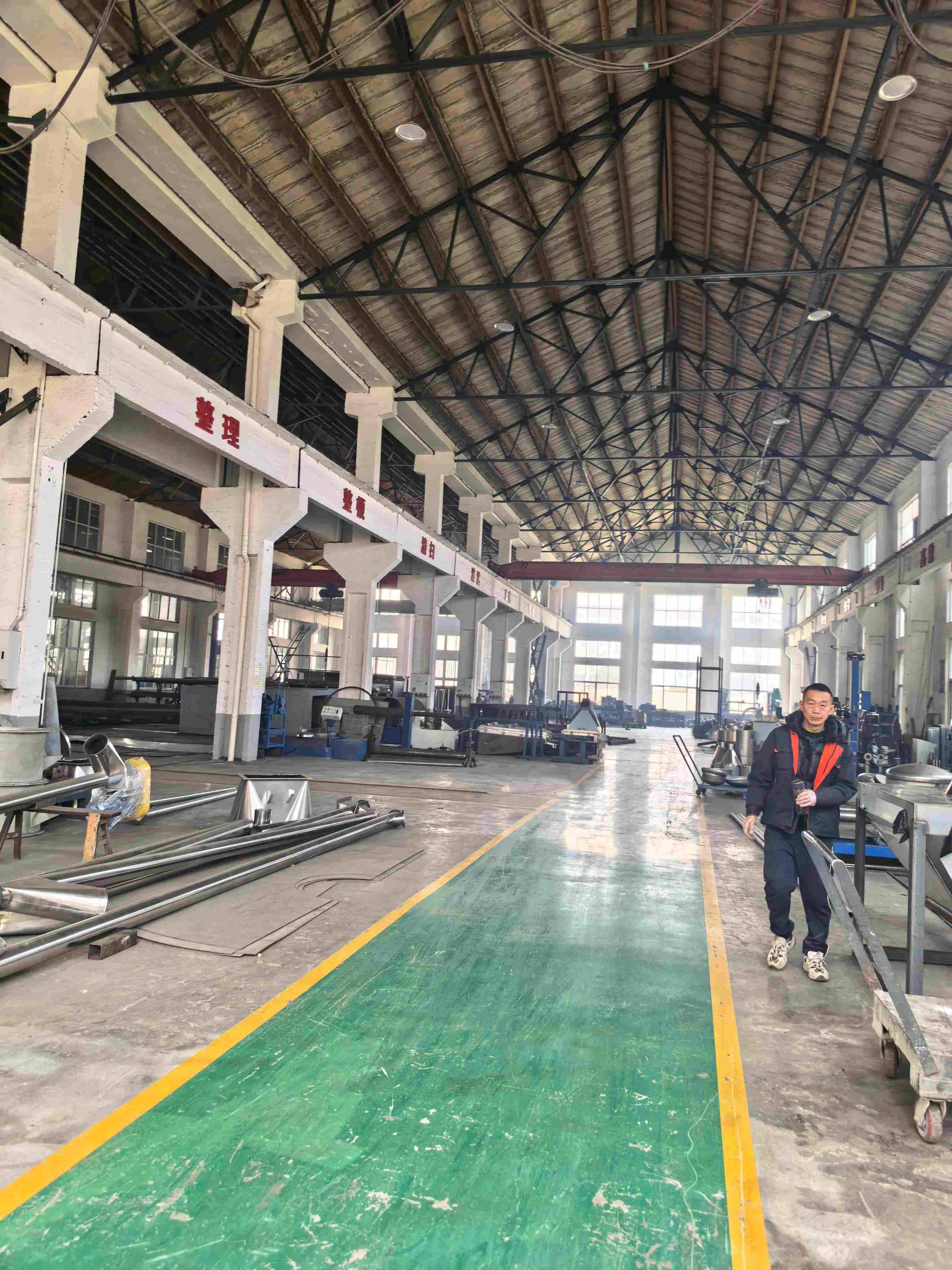
Choosing the right material is rarely a straightforward decision—it involves balancing mechanical demands, environmental resistance, cost, and manufacturability. Engineers often begin by mapping out the functional requirements: Will the part endure cyclic loading, corrosive chemicals, or extreme temperatures? From there, they narrow down candidates using material indices and property charts, blending intuition with data. The goal is not just to find a material that works, but one that aligns with the entire lifecycle of the product, from sourcing to end-of-life disposal or recycling.
Once a material is chosen, pre-processing steps can dramatically alter its behavior and suitability. For metals, heat treatments like annealing or quenching can refine grain structure, boosting toughness or hardness exactly where needed. Polymers might undergo drying or compounding to remove moisture and add stabilizers before molding. Even in additive manufacturing, the quality of the powder or filament—its particle shape, purity, and size distribution—directly influences the final part’s integrity. These preparatory phases are not mere formalities; they are where many latent defects are caught or, if neglected, allowed to propagate into costly failures later on.
In modern production, the line between selection and pre-processing is increasingly blurred. Advanced simulation tools allow designers to iterate on both material choice and processing parameters in tandem, predicting warpage, residual stress, or microstructural evolution. This integrated approach shortens development cycles and helps avoid the trial-and-error that once dominated shop-floor decision-making. Ultimately, thoughtful material selection paired with meticulous pre-processing creates a foundation for reliability that downstream assembly and finishing steps can only preserve, not create from scratch.
Precision Machining and Component Integration
Bringing together advanced machining capabilities with thoughtful component integration doesn’t just streamline production—it reshapes how complex assemblies come to life. When tolerances are measured in microns and every interface matters, the marriage of precision turning, milling, and grinding with seamless assembly planning ensures that individual parts don’t just fit; they function as a cohesive unit from the very first build.
What sets this approach apart is the early engineering dialogue that happens long before chips fly. By overlapping design intent with manufacturing reality, we catch potential mismatches, material stress points, and alignment issues while they’re still lines on a screen. The result is a workflow where components arrive pre-validated for integration, slashing rework and eliminating the need for on-the-fly adjustments during assembly.
Beyond the machine shop, true integration means understanding how a part behaves in its final environment—thermally, dynamically, and under load. That insight guides everything from surface finish specifications to subtle geometry tweaks that make downstream welding, bonding, or fastening not just possible, but repeatably precise. It’s fabrication and foresight working together, turning a collection of parts into a system that performs right out of the box.
Calibration Strategies for Accurate Flow Measurement
Flow meter accuracy doesn’t happen by accident—it’s earned through deliberate, context-aware calibration. The first step is matching the calibration method to the actual operating conditions. A meter calibrated with water in a pristine lab will behave differently when it’s metering viscous crude oil at high temperature. Field-based calibration, using a master meter or a prover loop that closely mimics the process fluid and piping configuration, often yields more trustworthy results than relying solely on factory data. This isn’t just about traceability; it’s about ensuring the calibration accounts for the real-world variables that quietly sabotage measurement integrity.
Another underappreciated strategy is using multi-point calibration curves instead of settling for a simple linear adjustment. Many flow meters exhibit nonlinear behavior at the extremes of their range, yet installers often apply a single correction factor derived from one flow rate. By verifying performance at several points across the expected measuring span—especially near the minimum and maximum thresholds—you can map out a more nuanced correction profile. This approach catches dead zones, transitional flow regimes, and repeatability drift that a single-point check would miss. It’s a practical way to stretch accuracy without necessarily upgrading the hardware.
Over time, even the best calibration drifts. Smart facilities treat calibration as a dynamic schedule, not a fixed calendar event. Vibration, solids buildup, corrosion, and thermal cycling all shift a meter’s baseline. By trending diagnostic data—like signal strength in magnetic meters or the transit time ratio in ultrasonic units—you can flag the onset of degradation before it violates measurement tolerances. Pair that with planned verification runs against a reference device, and you move from reactive recalibration to a predictive maintenance mindset. The payoff is less downtime, fewer measurement disputes, and tighter control over the process.
Quality Assurance and In-Process Inspection Methods
Establishing a robust quality assurance framework begins with embedding in-process inspection directly into the manufacturing workflow, rather than treating it as a final gate. This proactive approach allows teams to catch deviations early, when corrections are less costly and disruptive. By setting clear critical control points and defining precise acceptance criteria for each stage, production staff can quickly identify trends that signal process drift. Real-time data capture at these checkpoints not only supports immediate decision-making but also builds a rich history for long-term analysis, helping to refine processes and reduce variability over time.
In-process inspection methods benefit from a balanced combination of manual expertise and automated measurement technologies. Skilled operators bring nuanced judgment to visual and tactile checks, detecting subtle indicators that machines might overlook, such as surface finish irregularities or atypical sounds during assembly. Complementing this with inline sensors and automated optical inspection systems ensures consistent, high-speed verification of critical dimensions and features. Integrating these tools into a single workflow allows for a more comprehensive assessment, where human insight and machine precision reinforce each other to catch defects that might otherwise slip through.
To sustain effectiveness, inspection methods must be dynamic and continuously improved based on both production data and feedback from downstream stages. Regular calibration of measurement instruments is essential, but equally important is the periodic review of inspection criteria themselves—adjusting for design changes, new materials, or evolving customer expectations. Bringing cross-functional teams together to analyze inspection findings can uncover systemic issues and spur process innovations, turning quality data into a driver of operational excellence rather than just a record of compliance.
Final Testing, Validation, and Compliance Standards
Before any product reaches the market, it undergoes a rigorous final testing phase designed to catch the smallest inconsistencies that earlier stages might have overlooked. This isn't just a box-checking exercise — engineers push prototypes through real-world simulations, extreme condition trials, and long-duration stress tests that often reveal weaknesses no spec sheet could predict. Every component is scrutinized, from material integrity to software responsiveness, ensuring the design intent holds up under pressure.
Validation goes beyond functionality to ask a harder question: does this product actually solve the user's problem in a meaningful way? Here, feedback loops with beta testers, domain experts, and compliance officers help refine the final output. It's common to discover that a device meets all internal benchmarks yet still falls short in actual use. Those insights feed back into rapid retooling, often turning a good product into a great one. Documentation trails from these processes become the backbone of audit-readiness, proving due diligence at every step.
Compliance isn't a finish line but a continuous alignment with evolving standards. Whether it's regional safety regulations, environmental directives, or industry-specific certifications, the goal is to embed these requirements early to avoid rework. Smart teams treat compliance as a design parameter, not an afterthought, which often sparks innovation — building cleaner, safer, and more accessible products. The final sign-off isn't just a stamp of approval; it's a commitment to accountability that extends across the product's lifecycle.
FAQ
A metering unit is a precision device that controls the flow or dosage of fluids, gases, or granular materials in industrial processes. You'll find them in everything from fuel injection systems and pharmaceutical dispensing to chemical processing and food production lines.
Even microscopic misalignments can cause flow inaccuracies, leaks, or premature wear. In applications like medical dosing, a tiny error could mean the difference between an effective treatment and a harmful overdose. So every component must mate with hair-splitting accuracy.
Stainless steel and hard alloys like Hastelloy dominate for their corrosion resistance and durability. But increasingly, engineering ceramics and advanced polymers are being used where chemical compatibility or weight are concerns. The choice often comes down to the fluid being metered and the operating environment.
Sure. It usually starts with thorough cleaning of all parts in an ultrasonic bath to remove any debris. Then comes the sub-assembly of the housing, followed by the precise installation of the plunger or diaphragm and seals under a cleanroom or controlled environment. Torque tools ensure consistent fastener loads, and then the unit gets calibrated on a test stand using a master fluid.
Metrology is the backbone. Coordinate measuring machines (CMMs) and optical comparators verify that each component falls within spec, often down to microns. Without that level of scrutiny, you can’t guarantee the interchangeability or performance of parts once they’re assembled.
They subject units to accelerated life testing—cycling them with abrasive or aggressive media at elevated temperatures and pressures. Regular calibration intervals are built into the maintenance schedule, and some designs incorporate self-diagnostic sensors that alert operators to any performance degradation.
Beyond precision, it’s about consistency over time and under stress. A high-quality unit maintains its calibration throughout its service life, resists contamination, and minimizes maintenance needs. The inside surfaces often have a mirror-like finish to reduce friction and prevent buildup. Also, serviceability—how easily you can replace wear parts—is a hallmark of thoughtful design.
Additive manufacturing is starting to change the game by allowing complex internal passageways that improve flow dynamics. Also, IoT integration is big—smart metering units that self-report data and enable predictive maintenance are becoming more common in advanced plants. And miniaturization continues, driven by medical and lab-on-a-chip applications.
Conclusion
The fabrication of metering units demands unwavering attention to core assembly principles, beginning with meticulous material selection and pre-processing. Every component, from seals to flow paths, must be chosen for chemical compatibility and dimensional stability, followed by thorough cleaning and conditioning to eliminate contaminants that could impair measurement accuracy. Precision machining then transforms raw materials into parts with micron-level tolerances, and component integration becomes a delicate choreography of fit and alignment, often leveraging advanced bonding or welding techniques to ensure leak-proof assemblies. Maintaining strict environmental controls during these stages is critical, as temperature variations and particulate intrusion can silently degrade the integrity of the metering unit well before it ever enters service.
Once assembled, the unit enters a rigorous calibration phase where flow measurement is verified against certified references under conditions that mirror real-world operation. This process fine-tunes the instrument’s response, compensating for subtle manufacturing variances and ensuring linearity across its operating range. Quality assurance is woven throughout the workflow, with in-process inspections such as non-destructive testing and dimensional audits catching deviations early. Final testing then subjects the unit to endurance runs, pressure cycling, and environmental stress screening, validating its performance against international compliance standards. Only through this exhaustive sequence—where every step is documented and traceable—can a metering unit be trusted to deliver precise, repeatable measurements in demanding industrial applications.
Contact Us
Contact Person: Darye WANG
Email: [email protected]
Tel/WhatsApp: 86-13501017897
Website: https://www.fcntd.com/