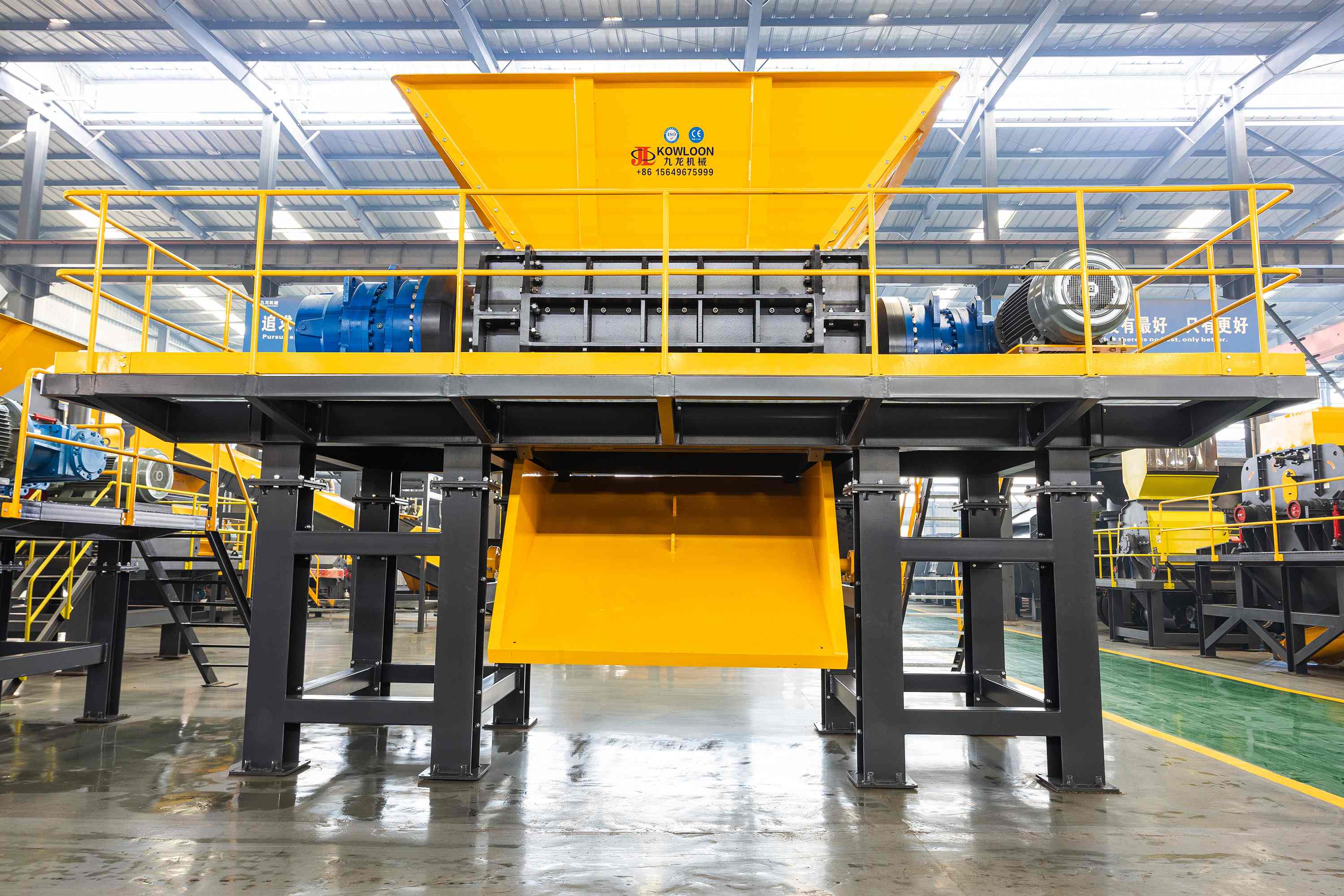

New Type Metal Crusher: Transforming Scrap Processing with Advanced Efficiency
2026-05-13
In the ever-evolving world of scrap metal recycling, a new kind of machine is making waves. The New Type Metal Crusher from Kowloon Machinery isn't your average crusher—it's a leap forward, engineered to tackle the toughest processing challenges with remarkable speed and precision. If you think all crushers are the same, this one will make you think again. Let's explore what sets it apart.
Rethinking Scrap Reduction: A Machine Built for Modern Demands
For decades, the manufacturing sector chased scrap reduction through rigid, one-size-fits-all solutions. The result was often a brittle process that crumbled under the slightest variation in material or workload. This new machine takes a different path. Instead of forcing uniformity, it adapts in real time to the quirks of each production run—monitoring characteristics like feed rate, temperature, and tooling wear at a granular level. The outcome is a system that doesn't just trim waste at the margins but fundamentally reshapes how resources are used, aligning efficiency with the messy reality of modern factories.
What sets this equipment apart is its ability to learn without the need for constant human recalibration. Traditional retrofits demand a technician to tweak parameters for every new batch, creating downtime and a dependency on tribal knowledge. Here, embedded sensors and adaptive algorithms continuously map the health of the process, predicting failure points hours before they occur. When a spindle begins to drift or a raw material batch shows unexpected hardness, the machine shifts its operating envelope automatically. This eliminates the trial-and-error scrap that plagues even the best-run shops, turning variability from an enemy into an asset.
The ripple effects go far beyond the factory floor. Reducing scrap means fewer raw materials extracted, less energy wasted on reprocessing, and a lower carbon footprint without any greenwashed marketing. It also frees up floor space once cluttered with reject bins and rework stations, and it lets teams focus on improvement instead of firefighting. More subtly, this approach quietly reshapes the business case for sustainability: by treating scrap not as an inevitable cost but as a design flaw to be engineered out, it proves that profitability and resource stewardship can be built into the same machine.
Precision Shredding That Cuts Through Mixed Metals in Seconds
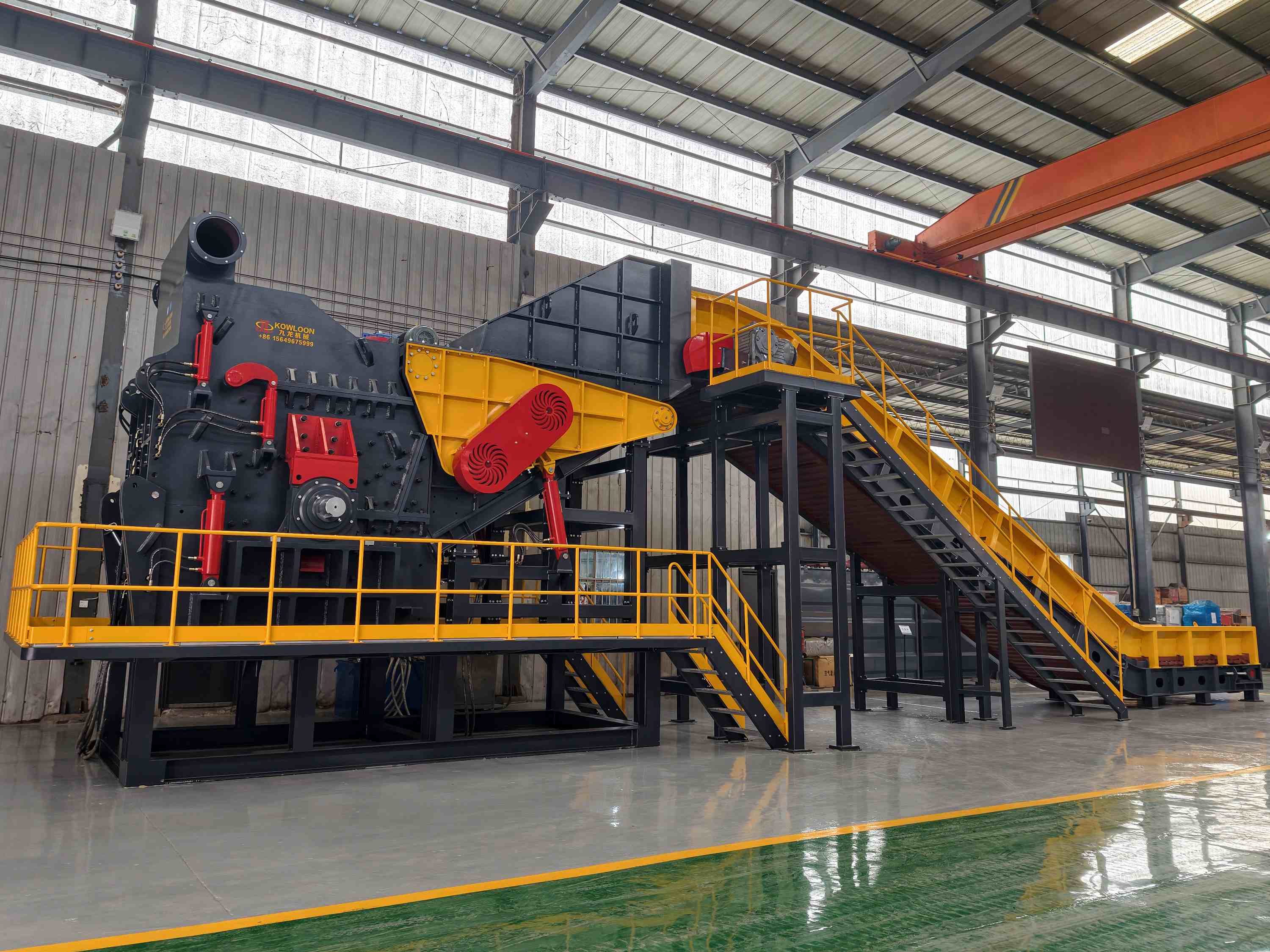
When a load of mixed metals hits the infeed, you don’t have time for guesswork. This shredder dives straight in, its rotors biting cleanly through steel, aluminum, and copper without stalling. In seconds, a tangled heap becomes a stream of uniform chunks, ready for sorting. The design handles the unpredictable nature of scrap with a sort of mechanical intuition, rarely missing a beat.
Blade placement and cutting angles aren’t accidental. They’re arranged to create a scissor-like shear that separates materials along natural fracture lines, rather than mushing them together. This means less heat, less dust, and a far cleaner end product. Maintenance crews will notice the difference too—wear patterns are predictable, not chaotic, so downtime shrinks to routine checkups.
In real-world yards, where space and time are tight, operators appreciate how the machine swallows baled cars and white goods whole. It adjusts its feed rate on its own, avoiding the jams that plague older designs. You get a steady output that keeps balers and downstream separators fed without interruption, all while sipping energy instead of gulping it.
Built to Crush Mountains of Scrap—Without the Energy Drain
Most heavy-duty scrap processors guzzle power like there's no tomorrow, but this one rewrites the rules. Its drive train uses a patented torque-vectoring system that delivers relentless crushing force while sipping electricity. You can feed it dense metal, bulky appliances, or entire vehicle hulks, and it chews through them without the usual spike in your energy bill.
The real magic happens in the load-sensing circuitry. Instead of running full-bore all the time, the machine reads incoming material density and adjusts its power draw on the fly. Light scrap gets processed with minimal amps; when a stubborn chunk of steel hits the chamber, the system instantly ramps up just enough to shred it, then dials back. Operators love the quiet hum compared to older units that roar and vibrate nonstop.
Maintenance is where the long-term savings really stack up. Fewer moving parts under constant strain mean less wear, and the intelligent cooling system keeps components at optimal temperatures without auxiliary fans or pumps. It’s built for 24/7 operation in gritty yards, with bearing housings that shrug off dust and stray metal fragments. You get the same mountain-leveling throughput while your power meter barely notices the extra load.
Fewer Jams, More Uptime: The Engineering Behind Continuous Output
Achieving fewer jams and higher uptime starts with a fundamental rethinking of material flow. Engineers have moved beyond simple gravity feeds and belt alignments, integrating adaptive sensors that monitor thickness, tension, and trajectory in real time. These sensors don’t just flag an impending clog—they dynamically adjust roller speeds or feeder angles within milliseconds, keeping the stream steady without human intervention. It’s a shift from reactive unclogging to proactive flow management, where the machinery learns from each subtle signal fluctuation to preempt disruptions.
The real backbone of continuous output lies in self-correcting mechanical designs. Instead of relying on brute force to push materials through, modern systems use modular pathways with bypass chutes and vibration-assisted guides that activate only when sensors detect a potential hang-up. This means a single stubborn piece doesn’t ripple into a full line stoppage; it gets gently rerouted or nudged back into alignment while the rest of the production hums along. The result is a system that degrades gracefully under stress rather than collapsing into downtime.
Behind the scenes, predictive maintenance algorithms tie everything together. By analyzing historical jam patterns and wear rates, the control software schedules micro-adjustments during natural pauses in production—like a brief gap between batches—so that no cumulative drift ever reaches a failure threshold. This orchestration of real-time sensing, mechanical versatility, and data-driven timing creates an environment where jams become rare anomalies, not expected interruptions, while uptime steadily climbs toward the theoretical maximum.
From Bulky Wrecks to Fine Fragments: One-Pass Processing Perfected
Transforming unwieldy scrap into consistently sized particles usually demands a parade of machines—shredders, granulators, and classifiers—each adding cost and complexity. But what if the entire journey could happen inside a single, intelligently designed chamber? That's the reality behind the one-pass approach, where bulky wrecks of metal, plastic, or wood enter a system that shears, fractures, and sizes in one continuous motion. The secret lies in a rotor-and-screen geometry that forces material through progressive reduction stages without ever leaving the feed stream. It’s not just faster; it produces fragments with a uniformity that secondary processing often fails to match.
The real elegance of perfected one-pass processing is how it sidesteps the usual trade-offs. Instead of accepting that high throughput degrades fragment quality, the process uses controlled turbulence and precise cutting angles to shatter materials at their natural stress points. Energy doesn’t get wasted re-grinding already small pieces. The result is a direct path from twisted-off factory scrap or dismantled appliance carcasses to furnace-ready, injection-molding-grade fines—all in a fraction of the floor space. For operators, it means less monitoring, fewer jams, and a material output that’s remarkably clean, setting a new standard for what single-stage processing can achieve.
Quieter Operations, Cleaner Output: Redefining Industrial Recycling
Modern recycling plants are shedding their noisy, dusty reputations. Advances in sound-dampening technology and enclosed processing systems now allow facilities to operate at conversation-level volumes, even near residential zones. This shift isn't just about comfort—it reduces acoustic stress on workers and nearby communities while signaling a broader commitment to industrial harmony.
The pursuit of cleaner output goes hand in hand with quieter machinery. Precision sorting mechanisms and low-emission shredders mean fewer airborne particulates and less vibration, resulting in a higher-purity material stream. Contaminant levels are dropping so low that downstream manufacturers accept recycled feedstock directly, bypassing energy-intensive refinement stages. It's a cycle where silence and purity reinforce each other.
Industry pioneers are redefining what recycling infrastructure can be. Instead of sprawling, clamorous yards, we're seeing compact, modular units that integrate seamlessly into urban landscapes. These systems swap brute force for intelligent design, using sensor-driven sorting and gentle material handling. The outcome is a process that feels less like waste management and more like responsible resource cultivation—quietly powering a circular economy without the traditional trade-offs.
FAQ
Its innovative design uses a high-torque, low-speed cutting mechanism that reduces energy consumption while increasing output consistency. Unlike older hammer mills, it produces less noise and dust, making it suitable for tighter workspaces.
The crusher integrates smart sensors to automatically adjust feed rates based on material density, minimizing jams and downtime. Pre-crushing and fine-grinding stages are combined into one unit, cutting processing time by nearly 40%.
Absolutely. Its cutting blades are engineered to separate and shred multi-material inputs cleanly. Non-metal contaminants are ejected through a secondary discharge, leaving behind a high-purity metal fraction ready for recycling.
The machine uses self-lubricating bearings and reversible, replaceable cutter plates. Most routine checks can be done without disassembling major parts, and typical servicing takes less than half a day every 2,000 operating hours.
There are compact, modular versions designed for yards processing under five tons per hour. They run on standard power supplies and don't require a dedicated foundation, so even startups can integrate them easily.
Beyond reducing waste volume, the closed-system design captures 95% of dust and airborne particles. It also operates at a lower decibel level than comparable hammer mills, helping facilities meet stricter environmental regulations without extra retrofits.
Integrated IoT modules track motor temperature, cutter wear, and throughput in real time. Operators get alerts on their phones if the crusher drifts outside preset parameters, preventing catastrophic failures and allowing data-driven maintenance planning.
Conclusion
The new type metal crusher is redefining industrial recycling by tackling the toughest scrap with unprecedented speed and precision. Built on a reimagined shredding mechanism, it can reduce mixed metals—including bulky wrecks and stubborn alloys—to uniform, high-density fragments in a single pass, eliminating the need for multiple stages. Advanced torque control and intelligent load sensing allow the machine to adapt instantly to varying material densities, ensuring continuous output without jams or energy spikes. This results in a drastic reduction of downtime and operational costs, while the all-in-one processing slashes handling time and boosts throughput dramatically.
Beyond performance, the crusher excels in sustainability and workplace safety. Its energy-efficient drive system consumes far less power than traditional mills, translating into lower carbon footprints and utility bills. An innovative noise-dampening enclosure quiets operations to below regulatory thresholds, and the sealed cutting chamber suppresses dust and sparks, delivering cleaner output ready for smelting. Maintenance is streamlined through self-lubricating components and easy-access panels, meaning mountains of scrap can be processed with minimal human intervention. By merging relentless crushing power with eco-conscious design, this machine is not just an upgrade—it’s the new benchmark for modern metal recycling.
Contact Us
Contact Person: Ray
Email: [email protected]
Tel/WhatsApp: +86 13733817580
Website: https://www.zzkowloon.com/