

Nickel Alloy Steel Factories Producing Alloys for Extreme Environments
2026-09-01
From deep-sea drilling to jet engines, extreme environments demand metals that refuse to fail. Nickel alloy steel delivers that reliability—but only when it’s produced with precision. In this article, we explore how Jiangsu Baowu New Materials and similar specialized factories are pushing the boundaries of alloy manufacturing.
When Temperatures Soar: Nickel Alloy Steel's Heat Tolerance
Nickel alloy steel doesn't just survive high heat—it holds its shape and strength long after ordinary steel would have softened into a liability. The secret lies in nickel's ability to stabilize the austenitic structure at elevated temperatures, which prevents the rapid grain growth and phase changes that plague carbon steels. In practical terms, components made from these alloys can operate continuously at temperatures exceeding 900°C without significant creep, making them indispensable in turbine blades, exhaust valves, and furnace hardware. The heat tolerance isn't merely about melting point; it's about resisting oxidation, maintaining toughness, and avoiding thermal fatigue across repeated heating and cooling cycles.
What sets nickel alloy steel apart is how it handles thermal stress over time. When temperatures swing from ambient to hundreds of degrees, most metals expand and contract unevenly, leading to micro-cracks and eventual failure. Nickel's low coefficient of thermal expansion, combined with its high ductility, allows the material to absorb these stresses without fracturing. Engineers often exploit this by designing thin-walled components that would warp or buckle if made from conventional alloys. The result is a material that doesn't just tolerate heat—it thrives in it, offering a predictable service life even in environments where temperature gradients are steep and unrelenting.
Heat tolerance in nickel alloy steel is also about chemical stability at the surface. Oxidation and scaling, which eat away at ordinary steel in hot, oxygen-rich atmospheres, are dramatically slowed by the passive oxide layers that nickel promotes. Add chromium or molybdenum, and the alloy forms a tight, adherent scale that shields the base metal from further attack. This allows the material to be used in heat exchangers, chemical processing equipment, and aerospace applications where both temperature and corrosive gases are present. It's this combination of mechanical strength, thermal stability, and surface protection that makes nickel alloy steel the go-to choice when the heat is truly on.
Corrosion Can't Touch These Alloys - Here's Why
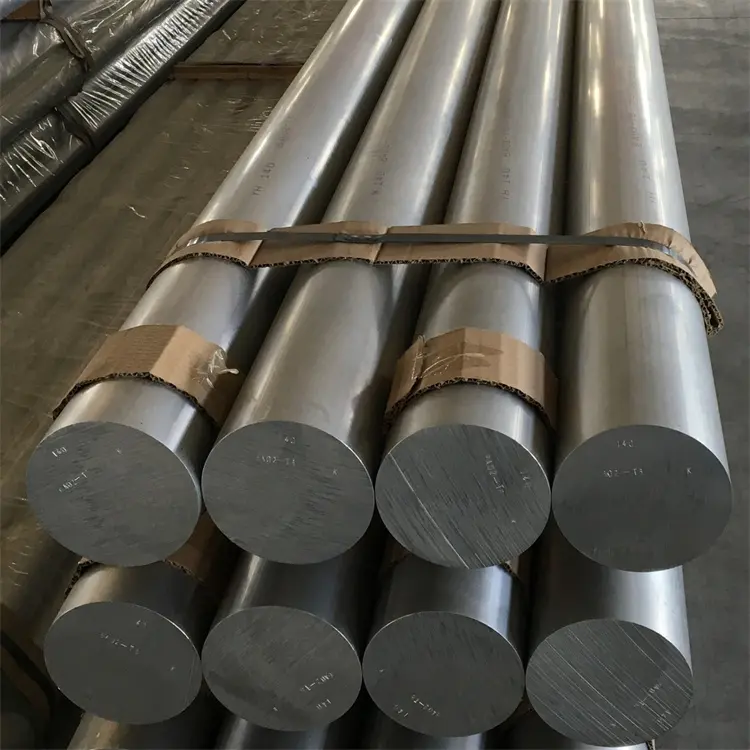
When engineers talk about materials that shrug off rust, they're usually pointing to a small group of alloys that form an invisible shield. Stainless steel gets its name from a thin layer of chromium oxide that develops the instant the surface meets oxygen. Scratch it, and the layer heals itself in seconds. That's not a flaw; it's the whole trick.
But chromium isn't the only player. Nickel and molybdenum sneak into the mix to fight off nastier enemies like salt spray and acidic fumes. Alloys such as Hastelloy and Inconel lean hard on these elements, which is why you find them inside chemical plants and jet engines. The metal doesn't just sit there—it actively resists by forming stable, tightly bonded oxides that water and chloride ions can't pry apart.
The real genius is thermodynamic. These alloys are designed so their corrosion products are denser and more adherent than the metal itself. Instead of flaking away like rust on iron, the oxide clings and blocks further attack. That's why a titanium hip implant can survive decades inside the human body, and why a duplex stainless bridge can stand in seawater without paint.
From Oil Rigs to Rockets: The Reach of Nickel Alloy Steel
Few materials earn their keep in both the crushing dark of a subsea wellhead and the white-hot fury of a rocket exhaust. Nickel alloy steel does exactly that, pairing corrosion resistance with mechanical toughness in ways that standard carbon steel cannot match. On offshore platforms, it shrugs off chloride pitting, hydrogen sulfide cracking, and decades of salt spray while still holding pressure in risers, manifolds, and downhole tools.
The same metallurgical tricks that keep nickel alloy steel alive in the ocean also make it indispensable for launch vehicles. Cryogenic propellants like liquid oxygen and liquid hydrogen would embrittle ordinary alloys, but nickel-rich grades retain ductility at -250°C. Rocket engine turbopumps, combustion chambers, and high-pressure ducting rely on that low-temperature resilience plus creep strength when exhaust gases scream past at thousands of degrees.
Between those extremes sits a quieter industrial backbone: gas turbines, chemical reactors, and power-generation hardware all borrow from the same nickel alloy steel playbook. It is not a single magic formula but a family of alloys tuned for different failure modes. That flexibility is why the material keeps showing up wherever failure is not an option, from a drilling riser in the North Sea to a booster engine firing at the edge of space.
Inside the Test Lab: Pushing Alloys to Failure
The first thing that hits you inside the test lab is the sound: a low, metallic groan that climbs in pitch until it snaps into a sharp crack, followed by the whisper of fractured grains settling into the catch tray. Alloys don't fail quietly. Here, every specimen is tortured with singular purpose—tension racks pulling dog-bone samples until their necks thin to a thread, thermal chambers cycling between cryogenic cold and furnace heat, and salt-spray booths accelerating years of coastal corrosion into a single workweek. The goal isn't prevention, at least not directly. It's to find precisely where the metal gives up, to map the boundary between resilience and rupture.
What makes this work feel less like engineering and more like interrogation is the patience required. A creep test on a turbine alloy can run for ten thousand hours—the machine inching its load upward while technicians log strain every few minutes, waiting for the material to confess its microstructural secrets. Electron microscopes then scan the fracture surface, reading river lines and dimples like a forensic detective reads a crime scene. Was it fatigue from cyclic stress? Hydrogen embrittlement from a bad heat treatment? The alloy keeps its own ledger, written in slip bands and grain boundaries, and the lab's job is to translate that brittle handwriting into something designers can actually use.
The most unsettling moments come when a supposedly tough alloy fails early—not with a bang but a sigh, a sudden drop in the load cell that no amount of repeated testing can explain away. Those are the failures that get pinned to the wall of shame, the samples still clamped in their grips as a reminder that every material has a personality, and sometimes that personality is vindictive. The lab isn't just a place of destruction; it's a confessional where metals reveal what they can and cannot endure, one broken test bar at a time.
The Formula Behind Custom Nickel Alloy Steel
A workable custom nickel alloy steel starts with a base chemistry, but the exact percentages are never pulled from a generic table. Mills begin with a target nickel load, usually between 8% and 12%, because that range pushes the austenite phase into stable territory at room temperature and keeps the material from turning brittle in cold service. From there, chromium is layered in at 15% to 20% to build a passive oxide film, while molybdenum often lands between 2% and 3% to resist pitting in chloride-heavy environments. Small shifts—half a percent of molybdenum or an extra point of chromium—can push the alloy toward a different corrosion mechanism, so the mix is adjusted in narrow increments rather than broad strokes.
Carbon is deliberately starved below 0.03% in many custom grades, not because carbon is useless, but because it can pair with chromium to form carbides at grain boundaries. That reaction steals chromium from the surrounding matrix and leaves the steel vulnerable to intergranular attack after welding or high-temperature exposure. Titanium, niobium, or tantalum are sometimes added as stabilizers to lock up carbon before it can do damage. Nitrogen, often ignored in commodity steel, becomes a powerful tool in custom formulas: a few hundred parts per million can raise yield strength without sacrificing toughness, and it reduces the need for expensive nickel.
The final formula is rarely settled on the first pour. Modern alloy design uses phase-diagram modeling to predict which microstructures will survive quenching, aging, or long-term creep, but that prediction still has to be verified with a pilot heat. A foundry may run three or four small heats, varying only molybdenum or nickel by half a percent, then section the castings and map hardness, impact energy, and corrosion rate across each one. The chosen formula is the one that repeats its performance from heat to heat—not the one that looks best in a single laboratory report.
Why Standard Steel Fails and Nickel Alloy Steel Prevails
Standard carbon and low-alloy steels depend on a thin oxide skin that works only in a narrow range of pH, temperature, and chloride concentration. Push past those limits and the film breaks locally, allowing pits to form and then spread under stress. Weld zones and heat-affected areas make the problem worse because their mixed microstructures set up small galvanic cells that eat away at the surrounding metal even when the bulk surface looks intact.
Nickel alloy steel takes a different route. The nickel stabilizes the austenite phase, so the material does not go through the brittle phase changes that plague standard grades during welding or high-temperature service. It also helps the alloy reform its protective layer after mechanical damage, which slows pitting and virtually eliminates chloride stress corrosion cracking in many process environments.
The practical result is that standard steel tends to fail suddenly after a period of hidden attack, while nickel alloy steel usually shows gradual, predictable degradation. That shift in failure mode gives operators time to plan maintenance instead of dealing with an unplanned shutdown.
FAQ
They are engineered for environments that combine high heat, corrosive chemicals, and intense mechanical stress—think deep-sea drilling, jet engine combustion zones, or chemical reactors handling acids at elevated temperatures.
They carefully control the nickel and chromium ratios during melting and use vacuum induction melting or electroslag remelting to reduce impurities, which helps the alloy maintain a stable microstructure even when parts glow red-hot.
Nickel encourages the formation of a dense, self-healing chromium oxide layer on the surface, so even if the material gets scratched in a sour gas pipeline or acid storage tank, it quickly repassivates instead of rusting through.
Yes, but factories often supply them in a solution-annealed condition and recommend low heat input welding with matching filler metals. Post-weld heat treatment is sometimes skipped for certain grades to avoid sensitization near the weld.
Aerospace engine manufacturers, offshore oil and gas platforms, chemical processing plants, and power generation turbines are the biggest buyers, along with niche users in nuclear reactors and desalination facilities.
They perform ultrasonic testing for internal flaws, tensile and creep tests at simulated service temperatures, and corrosion tests like ASTM G48 to check pitting and intergranular attack.
They use narrow temperature windows and slow, controlled cooling after forging. Some grades require reheating between blows because they work-harden quickly and can tear if forced too fast.
Yes, recent developments focus on adding molybdenum and tungsten to boost resistance to chloride-induced stress corrosion cracking, and some labs are experimenting with cobalt-free formulations for cost stability.
Conclusion
Inside these plants, metallurgists chase failures on purpose. A heat tolerance trial might hold a nickel-chromium blend at 1,000°C while load cells log creep, and the alloy barely budges where standard steel would sag. Salt spray chambers run for months, yet the surface stays clean because nickel forms a stubborn passive oxide layer that chloride simply cannot breach. That explains why the same base chemistry leaves the factory for both an offshore wellhead and a rocket engine turbopump. The difference is not magic but measurement: every batch gets pulled, sectioned, and stressed until it cracks, then the data feeds back into the next melt. That loop keeps tolerances tighter than any spec sheet.
Custom alloys start with scrap sorted by spectrometer, not guesswork. A customer might need yield strength at cryogenic temperatures plus resistance to sour gas, so the recipe adds molybdenum, tungsten, and a tightly controlled carbon window. Standard steel fails because its grain boundaries weaken under thermal cycling and its chromium, if any, is too low to self-heal. Nickel alloy steel wins by holding its microstructure together when the environment tries to tear it apart. Factories do not just sell metal; they sell a guarantee written in tensile curves and corrosion rates.
Contact Us
Contact Person: Zoe Liang
Email: [email protected]
Tel/WhatsApp: 86 189 2128 6299
Website: https://www.baowuchina.com