

NPT Ball Valve Supplier Selection Tips for Industrial Buyers
2026-11-16
Thread by thread, an NPT ball valve either seals or silently fails—and your supplier choice decides which outcome you get. Most industrial buyers learn this the hard way: after a batch arrives with off-spec threads or missing material certs. This guide flips the script with a practical selection checklist built for real procurement, not sales brochures. By the end, you'll know exactly what to demand from any supplier. If you're ready to skip the trial-and-error, UPTAI offers the kind of consistency these tips are designed to verify.
Verify Thread Fit with Actual Gauges, Not Just Specs
Thread specs on paper only tell part of the story. A part might pass every dimensional check with a micrometer or optical comparator, yet still bind or wobble when a real mating thread tries to engage. That happens because pitch diameter alone ignores lead error, flank angle deviations, and root or crest truncations that stack up differently in actual geometry. A go/no-go thread ring gauge or plug gauge checks the functional envelope, not just isolated numbers. If the go gauge doesn’t thread in smoothly by hand, the thread isn’t right, no matter what the inspection report says.
Relying on calipers or thread wires is fine for rough setup work, but final acceptance should always involve the actual gauge that matches the intended class of fit. Keep a calibrated set of gauges for every thread series you run, and check them across multiple parts throughout the batch, not just the first piece. Gauges wear too; if a no-go gauge starts to enter more than a turn or two, it’s time to verify the gauge itself against a master. That catches drift before you ship a box of borderline threads to a customer who will find the problem with their own gauge on the dock.
Require Mill Test Reports for Every Heat of Material
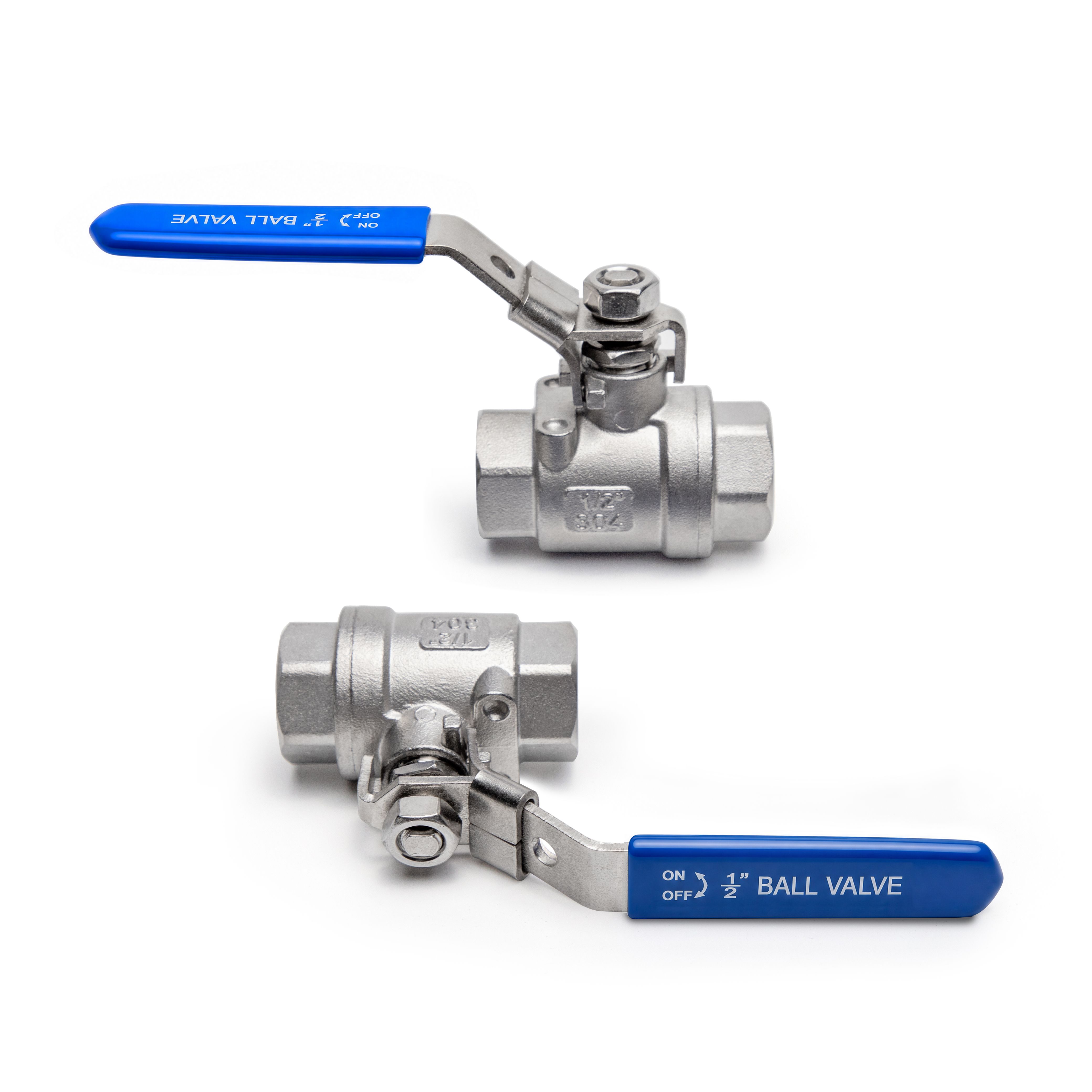
Mill test reports are not just paperwork; they are the material's fingerprint. Requiring one for every heat means the exact chemical composition and mechanical properties from the actual production run arrive with the metal. Without this, a supplier could easily mix heats with different hardenability or toughness, and you would never know until a part fails in service.
The real value shows up when you compare the reported values against your purchase specification heat by heat. A single out-of-spec heat—say, carbon content drifting above the maximum or impact toughness at low temperature falling short—can slip through if you only review a typical or average certificate. Reviewing every heat forces the supplier to segregate and verify each batch before it leaves their facility.
On the receiving end, make the mill test report a condition of acceptance. Match the heat number on the report to the stamp or tag on each bar, plate, or coil. If the numbers don't align, quarantine the material. File the reports by heat number so that any future failure investigation can trace back to the exact production lot, not just a general grade or specification.
Ask for Burst and Cycle Test Data, Not Just Certificates
A certificate tells you a hose or fitting passed a baseline check, but it rarely shows how the product behaves near its limits. If you're specifying components for high-pressure or cyclical systems, ask the supplier for raw burst and cycle test results. Look for burst pressures well above the rated working pressure and impulse test counts that reflect your actual duty cycle, not a one-time proof test.
Cycle testing exposes failures that static certification won't catch—crimping fatigue, liner cracks, leakage at the coupling interface. Request data from tests run at your operating temperature, with the same fluid and bend radius. A vendor that can't or won't share this information is often hiding margin erosion or inconsistent production batches.
Compare the test methodology, not just the final pass/fail. Ask how many samples were tested, what the acceptance criteria were, and whether the data is from in-house or third-party labs. Raw data lets you calculate your own safety factor and predict maintenance intervals instead of trusting a certificate that may be five years old.
Check If They Stock What They Sell in Your Sizes
Before you fall for a product photo, open the size filter and see what actually shows up. Many stores list a full range on the category page, but once you select your size, the options shrink to a handful of items—or nothing at all. That gap between the catalog and the cart is where disappointment usually starts.
Don’t stop at the size chart. Read the reviews from people who mention their height, weight, or usual size. If the same complaint keeps appearing—runs small, sleeves too short, waist tight—take it as a signal, not a coincidence. A size label is just a starting point; the actual cut is what decides whether you’ll wear it or return it.
For pieces you really want, contact the store directly and ask about current stock in your size before checking out. Some online shops don’t update inventory in real time, so an item can appear available and then trigger a cancellation email later. A quick message or call can save you from that loop, especially if the brand only restocks a few times a season.
Pin Down Response Times for Replacement Parts
Getting a straight answer on how long a replacement part will take can feel like pulling teeth. Many suppliers default to vague phrases like "soon" or "as fast as possible," which leaves your maintenance team guessing and your equipment sitting idle. Instead, push for a concrete window—say, 48 hours for standard parts and 8 hours for critical ones—and get it in writing.
Once you have those numbers, don't just file them away. Break down response times by urgency level: emergency, routine, and planned replacements all deserve different targets. Then check actual delivery against those targets every quarter. You'll quickly spot which vendors are reliable and which ones only talk a good game.
Another practical move is to map out the parts that repeatedly cause delays. For those, consider holding a small buffer stock or lining up a secondary supplier who can ship faster when the primary one stalls. This isn't about overstocking everything—it's about knowing where the bottlenecks are and closing them before they cost you a full production day.
Calculate Costs Beyond the Purchase Order
Most teams stop at the invoice total, but real cost includes freight, duties, storage, and the labor spent chasing missing paperwork. A single rushed order can carry a 20% premium once those hidden line items surface.
Build a habit of marking up the purchase order with actual landed cost before the goods arrive. Compare that number against the original quote every quarter. The gaps will show you which suppliers quietly shift fees or which shipping routes eat margin.
Where those gaps repeat, renegotiate or switch lanes. Cost isn’t just the number on the PO—it’s the full path from supplier dock to your shelf, and every step has a price tag.
FAQ
A dependable supplier will proactively ask about the media, operating pressure range, and whether the valve will see frequent cycling. They will also specify whether the ball is full-port or reduced-port and confirm the NPT thread engagement length, rather than just quoting a part number.
Request a pre-shipment inspection report from an independent third party, and ask for samples from the same production batch you will receive. Then run a thread fit test with a calibrated NPT plug gauge and cycle the valve at rated pressure to check for stem leakage.
Yes, and their response reveals a lot. A good supplier will discuss lead time, minimum order quantity, and whether the modification affects pressure ratings. If they instantly say yes without raising technical concerns, treat that as a warning sign.
Watch for vague material descriptions like 'brass' without an ASTM or EN grade, missing maximum working pressure at elevated temperatures, and no clear policy on lot traceability. Also be wary of suppliers that cannot explain how their NPT threads are machined or inspected.
Ask both for the same set of operating conditions and require a written performance statement. Also compare their warranty terms around seat leakage and stem seal replacement, and check whether they stock replacement seats and stem packing kits rather than forcing a full valve swap.
It can matter a lot. A supplier with regional warehousing or a reliable drop-ship agreement can shorten downtime when you need a replacement valve quickly. But confirm the regional stock is the same specification as what you approved, not a lower-cost substitute.
At minimum, ask for material certificates for the body, ball, and stem; a pressure test certificate; and a statement of compliance for the thread standard such as ASME B1.20.1. For critical applications, request an NDE report and a documented calibration record for the test equipment.
Conclusion
Industrial buyers often get burned by assuming a supplier's paperwork matches what actually arrives on the dock. Thread fit is a classic example: NPT dimensions on a datasheet mean little until you spin a calibrated plug or ring gauge into the port and feel the engagement. Make that check part of incoming inspection, and don't accept verbal reassurances. Along the same lines, insist on mill test reports tied to each heat number stamped on the valve body. A generic material certificate can hide a bad pour from a subcontractor. You want traceability from the foundry to your shelf, not a pretty PDF that only restates the spec.
Beyond paperwork, push suppliers for burst and cycle test data from their own production runs. A certificate of conformance is not proof the valve survives repeated actuation under pressure. Ask what happens at the failure point and whether they record cycle counts. The same skepticism applies to inventory claims. If a distributor says they stock 1/2-inch and 3/4-inch NPT valves, ask for bin locations and same-day shipping proof, not a catalog listing. Replacement parts are another hidden risk: pin down realistic response times for stems, seats, and seals, and get those numbers in writing before you place the first order. Finally, look past the unit price. Freight, inspection labor, potential line downtime, and the cost of a failed batch often dwarf the savings from a low bid. Smart buyers compare total landed cost and the supplier's willingness to stand behind their product, not just the number on the purchase order.
Contact Us
Contact Person: Adonis
Email: [email protected]
Tel/WhatsApp: 8615858822657
Website: https://www.uptaivalve.com