

OEM Carbonated Beverage Production Line Factory: Streamlining Your Bottling Process
2026-07-07
Every second counts on the bottling line—inefficiencies in carbonated drink production can quietly drain profits and delay market launches. At INTOP Machinery, we’ve turned this challenge into an opportunity by offering OEM production lines that strip away complexity while boosting output. Whether you’re scaling up a craft soda brand or optimizing an established facility, our factory-integrated approach ensures you’re not just buying equipment, but gaining a streamlined process that fits your exact specs. Let’s explore how the right partnership can turn your bottling bottlenecks into a smooth, revenue-building flow.
The Core Steps of Beverage Bottling Simplified
At its heart, bottling beverages is about preserving freshness and delivering a consistent taste. The journey starts with unprocessed liquid, whether it's water, juice, or a soft drink syrup blend. Before anything else, the liquid must be purified and balanced—filtration systems remove impurities while mixers ensure every batch matches the target flavor profile. This preparation phase sets the foundation, and no two drinks are treated quite the same; each recipe demands its own handling temperature, carbonation level, and blending sequence.
Once the beverage is ready, it flows into a meticulously hygienic filling chamber. Here, containers—made of glass, plastic, or aluminum—are rinsed, sterilized, and often preheated or cooled to prevent thermal shock. The actual filling happens in one of several ways: gravity fillers let the drink cascade gently into bottles, counterpressure systems balance gas levels for carbonated drinks, and aseptic lines keep everything sterile for longer shelf life. Precision nozzles dispense exact volumes, leaving just the right headspace to accommodate expansion or carbonation without waste.
With the containers filled, the next critical step is sealing them instantly to lock out contaminants. Caps, corks, or lids are applied under controlled torque or vacuum, often followed by a quick rinse to remove any residue on the exterior. Then, labels, date codes, and batch information are printed, and bottles pass through inspection stations—cameras and sensors check fill levels, cap integrity, and label alignment. Finally, the bottles are packed into cases or shrink-wrapped onto pallets, ready to travel from the line to the consumer's hand.
How Custom Equipment Fits Your Production Goals
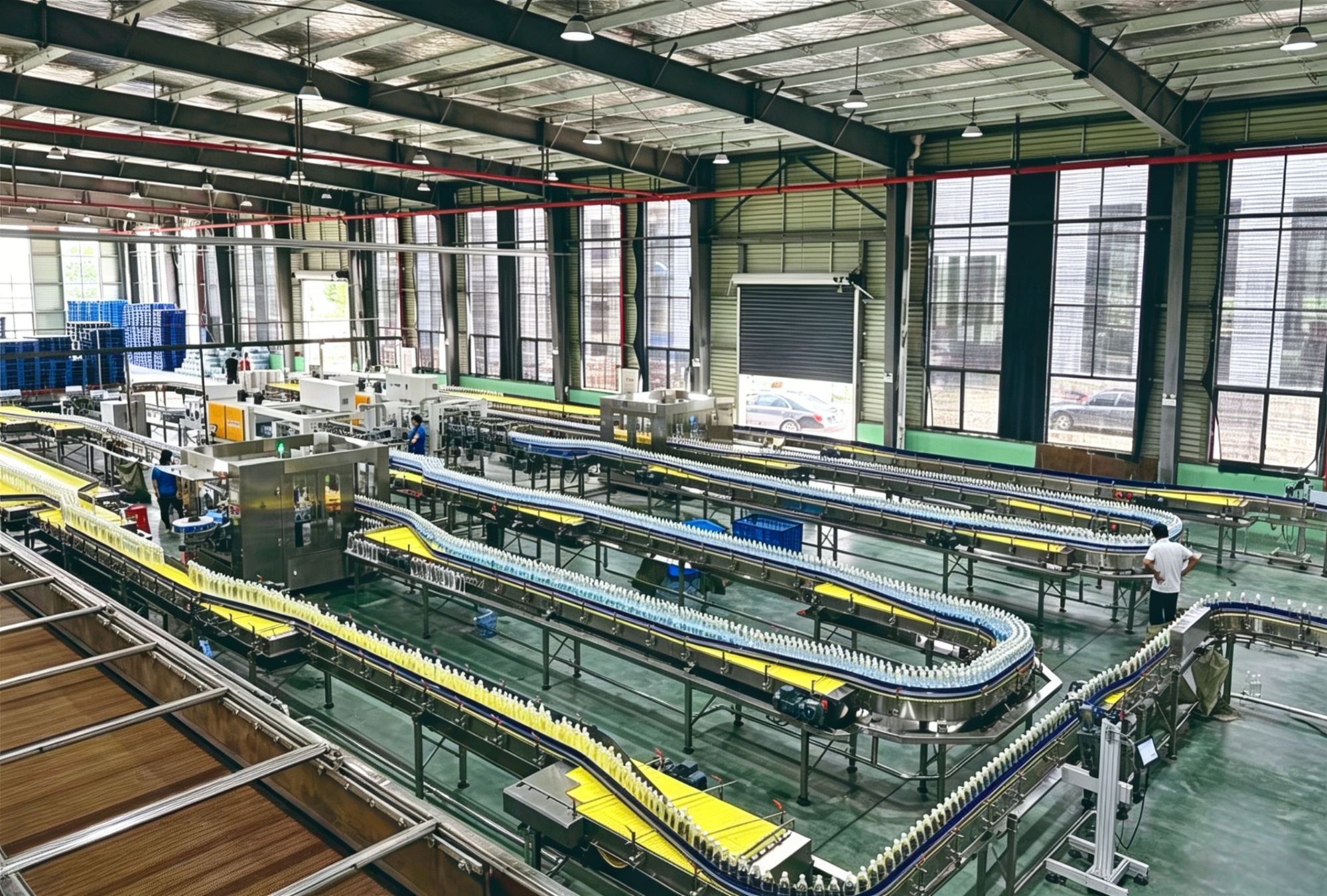
Standard machinery often forces you to adapt your processes to its constraints, but that should never be the norm. Custom equipment is designed from the ground up to align with your specific output targets, material handling needs, and floor layout. Whether you require higher throughput, tighter tolerances, or seamless integration with existing systems, tailored solutions eliminate compromise. They match the rhythm of your operation, not the other way around.
Every production line has subtle bottlenecks that off-the-shelf systems can’t address. Custom builds let you zero in on those constraints, refining each step from loading to final packaging. The result is a smoother workflow that conserves energy, reduces waste, and boosts overall equipment effectiveness. Because the design centers on your actual data and operator feedback, you get a tool that evolves with your goals instead of becoming a limitation.
Investing in bespoke equipment also means planning for scalability. As market demands shift, your machinery can be reconfigured or expanded without a complete overhaul. This forward-thinking approach keeps you competitive and avoids the sunk cost of replacing rigid, one-size-fits-all machines. Ultimately, custom solutions turn your production goals into measurable daily outcomes, driving consistency and growth.
Key Machines That Keep Your Line Humming
The heartbeat of any smooth-running production line isn't the hum of conversation or the shuffle of boots on concrete—it's the quiet, relentless rhythm of a few core machines. Take the carton erector, for instance. It sits there, unassuming, snapping flat-packed cardboard into shape with a series of well-timed pushes and folds, never asking for a coffee break. Then there's the rotary filler, a whirling dervish of stainless steel that doses everything from sauces to solvents with an accuracy that borders on obsessive. These workhorses don't just do their jobs; they set the tempo for the whole floor.
But having the right gear is only half the story. What really keeps things moving is the invisible layer of care wrapped around each machine. A vibration sensor on a critical motor might seem like a trivial add-on until it catches a bearing three days before it would have seized and trashed a shift's output. Smart conveyors that gently nudge bottles into single file without jamming are another quiet miracle. When maintenance becomes predictive instead of reactive, the entire line breathes easier—and that's when you realize the machines that hum loudest aren't always the ones you hear.
From Water Treatment to Final Packaging: A Seamless Flow
Turning raw water into a pristine product takes more than just filtration—it’s a synchronized dance of treatment steps that never loses momentum. The moment water enters our facility, it’s routed through a carefully orchestrated series of advanced purification stages, each triggering the next without a pause. From reverse osmosis membranes polishing out trace minerals to UV chambers neutralizing unseen threats, the entire process runs like clockwork. There’s no disjointed handoff between stages, only a steady, uninterrupted stream that carries water forward, retaining its freshness and vitality.
What really sets this flow apart is how the post-treatment handling bridges directly into packaging. Instead of languishing in holding tanks where quality can drift, the water moves straight into a clean, pressurized filling environment. Sensors and automated valves adjust flow rates in real time, matching the packaging line’s pace perfectly. This tight coupling means every bottle or carton is filled mere moments after the final treatment step, locking in that just-purified taste and giving you a product that feels alive, not stale.
The result is a closed, integrated loop that redefines efficiency. We’ve stripped away buffers where water used to sit idle, eliminating bottlenecks and the subtle degradation that comes from storage. From the first coarse screen to the sealed cap, the water is constantly in motion—guided by gravity, pressure differentials, and smart monitoring. That seamless motion isn’t just about speed; it’s about delivering water exactly as nature intended, but with our invisible touch ensuring it reaches you in perfect condition.
Quality Control Methods That Catch Issues Early
Catching quality issues early means shifting the focus from reactive problem-solving to proactive detection. This often starts with embedding checks directly into the development workflow, such as automated unit tests that run with every code commit. Instead of waiting for a dedicated testing phase, developers get immediate feedback when something breaks. Pairing this with static code analysis tools can flag potential bugs, security holes, or style violations before a human even reviews the code. These small, frequent checkpoints turn quality into a continuous habit rather than a final hurdle.
Another powerful approach is using feature flags and canary releases to limit the blast radius of a defect. By gradually rolling out changes to a small subset of users and monitoring real-time metrics, teams can spot anomalies—like a sudden spike in error rates—long before they affect everyone. This method doesn't just catch functional bugs; it also reveals performance regressions or user experience hiccups that might slip past lab tests. The key is to build a safety net that gathers signals from real usage, allowing teams to pause or revert a release in minutes, not days.
Future-Ready Features for Growing Brands
Scalable infrastructure that adapts as your brand gains momentum, without the need for constant replatforming.
Seamless integrations with the tools you already depend on, from email marketing to inventory management, so your tech stack moves in sync.
Built-in automation that handles repetitive tasks—think abandoned cart reminders or loyalty point updates—freeing your team to focus on strategy and storytelling.
FAQ
It focuses on designing and manufacturing customized bottling systems for fizzy drinks, handling everything from filling to packaging.
By integrating high-speed filling, precise carbonation control, and automated packaging into a single, coherent line that reduces downtime and manual intervention.
They are built for a wide range of carbonated drinks, including sodas, sparkling waters, energy drinks, and even beer or kombucha with adjusted carbonation levels.
An OEM partner tailors the machinery to your specific bottle shapes, production capacity, and layout constraints, ensuring a perfect fit rather than a one-size-fits-all solution.
Look for hygienic design, easy changeover between bottle sizes, reliable carbonation mixing, energy-efficient motors, and remote monitoring capabilities.
It uses precision mass flow meters and pressure-controlled tanks to maintain exact CO2 levels, coupled with regular quality checks throughout the run.
Yes, modular designs allow you to add more filling heads or packaging modules later, so the line grows with your production needs without a full replacement.
Most OEM factories offer installation supervision, operator training, remote troubleshooting, and spare parts supply to keep your line running smoothly.
Conclusion
Partnering with an OEM carbonated beverage production line factory reshapes how bottling challenges are handled from day one. Instead of wrestling with piecemeal machinery, you gain a cohesive system where every core step—mixing, carbonation, filling, capping—is engineered to fit your specific product needs. Customization goes beyond picking conveyor speeds; it’s about designing equipment that complements your recipes, container styles, and output targets, so you’re not forcing a standard line to do a specialty job. The machines at the heart of the operation, from high-precision fillers to reliable labelers, are chosen for durability and rhythm, ensuring the line barely skips a beat during peak runs. And it’s not just about single units doing their part: the entire journey from water treatment to final packaging flows logically, with treatment systems feeding pure water into the mix, syrup blending happening in controlled batches, and bottles moving through rinsing, filling, and sealing without bottlenecks. This end-to-end orchestration means less downtime, fewer adjustments, and a process that feels intuitive rather than patched together.
What really keeps a line profitable is how early you spot trouble, and that’s where built-in quality control makes a difference. In-line sensors and inspection stations check fill levels, cap torque, and label placement in real time, flagging anything off-spec before it reaches a pallet. But the real value of a well-designed OEM setup shines in how it prepares you for tomorrow. As your brand grows, modular stations can slip into the existing layout—adding a nitrogen doser for shelf stability, integrating smart tracking for traceability, or connecting equipment to cloud-based analytics that warn you about maintenance needs before a breakdown. These aren’t just add-ons; they’re deliberate upgrade paths baked into the initial design. A carbonated drink factory that thinks ahead helps you scale without scrambling, making your bottling line a foundation for expansion rather than a ceiling.
Contact Us
Contact Person: Laura
Email: [email protected]
Tel/WhatsApp: +86 13957758832
Website: https://www.intopmachinery.com