

OEM CNC Press Brake Benefits for Custom Metal Fabrication
2026-09-20
Every custom metal fabrication shop knows the pain of watching a press brake struggle with odd angles, inconsistent bends, or material waste. But what if the machine itself could adapt as fluidly as your designs? That’s where OEM CNC press brakes from HUNSONE change the game—offering precision, speed, and the flexibility to turn one-off prototypes into repeatable production runs without sacrificing quality.
Why Custom Fabricators Outgrow Standard Press Brakes Faster Than Expected
Custom fabrication shops rarely run the same part twice in a week. That variety puts a quiet strain on standard press brakes, where every new job means swapping dies, resetting backgauges, and test bending until the angle stabilizes. What felt like a minor inconvenience at first gradually eats into the day, leaving operators waiting on the machine rather than forming metal.
Material mix compounds the issue. A single batch might move from thin aluminum to thick abrasion-resistant steel, and standard machines often struggle to hold consistent angles across that range without constant shimming or manual correction. Once tolerances tighten—say, for assemblies that must fit together without grinding—those small deviations turn into scrap and rework, pushing fabricators to reconsider their equipment sooner than planned.
Then there is the programming side. Standard press brakes rely heavily on operator skill for bend sequences and angle tweaks, which works until the workload grows or a veteran operator leaves. Custom shops need faster setup and repeatable results from less experienced hands, and that's when the limits of a basic machine become impossible to ignore, forcing an upgrade earlier than the original budget assumed.
Bending Sequences Built Around Your Part Geometry, Not a Generic Library
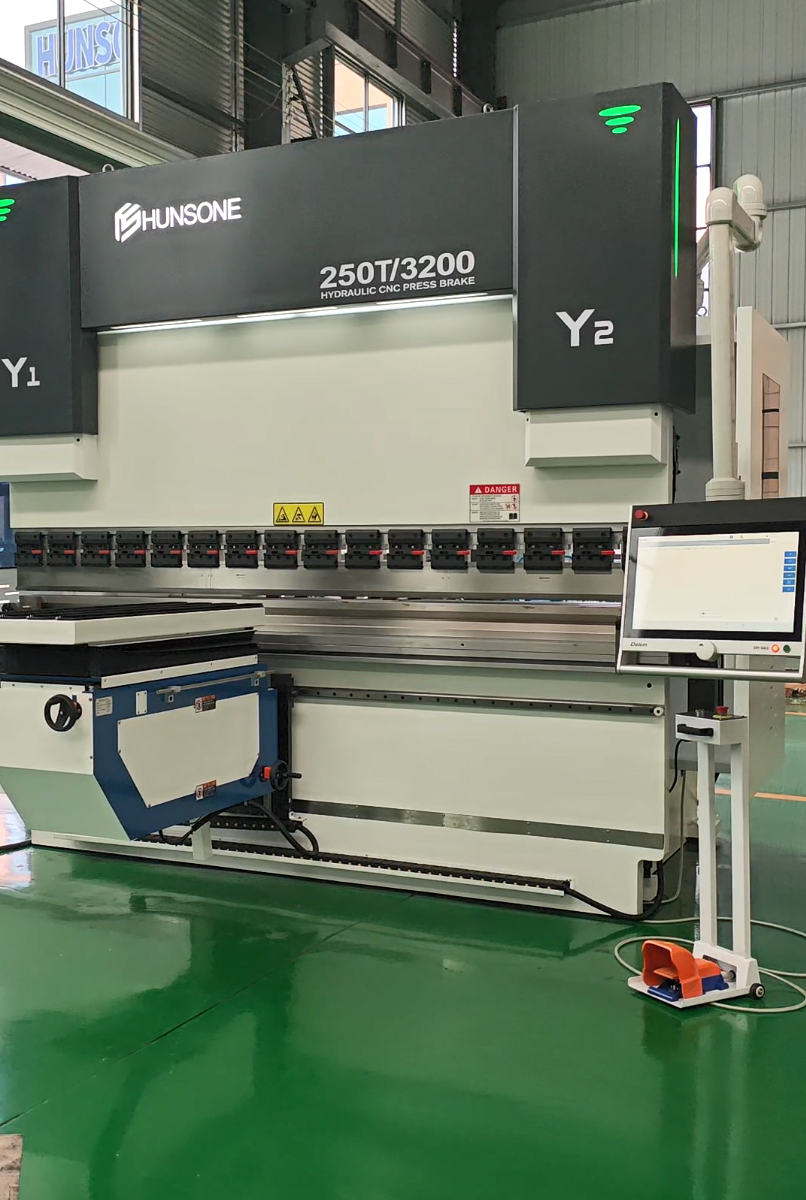
Most bending libraries still hand you a sequence that assumes every part behaves like a flat, straight profile. Real parts rarely do. A bracket with one deep return flange and a short opposite lip will fold differently depending on which side gets struck first, and if that choice is lifted from a generic table, you end up either colliding the punch into a finished edge or losing your backgauge reference midway through the run. Instead, the sequence should be read straight off the part's cross-section: identify the tallest wall, the most constrained corner, and the bend that leaves the most stable material for the next hit.
That means treating the CAD model not as a list of bend lines but as a series of clearance checks. Before any bend is fixed, the software has to know whether the formed flange will clear the upper beam, whether the remaining flat will sit solidly on the die, and whether a previously bent edge will crash into the backstop fingers on the next stroke. These answers change with even a two-millimeter shift in flange height or a slight change in relief depth, which is exactly why a static library misses constantly.
When the sequence grows out of the actual geometry, you stop compensating with shims, extra gauge points, or manual flipping that no one writes down. The part comes off the press brake with the same bend order every shift, and the operator doesn't have to override the program just to keep a tool from ramming the workpiece. It feels less like applying a standard routine and more like following the part's own natural folding path.
Factory-Matched Ram and Frame Stiffness That Keeps Angles Repeatable
Precision bending starts with a rigid backbone. Here, the ram and frame are paired at the factory with tolerances tight enough to make deflection a non-issue. Instead of chasing calibration drift, operators can trust that a 90-degree command means a 90-degree bend on the first stroke, not the fifth.
That repeatability is what separates a production workhorse from a constant adjustment headache. When the structural loop stays stiff, every bend angle returns to the same neutral point. No shimming, no compensating for a flexing crown—just consistent geometry from morning warm-up to the final part of the shift.
For shops running high-mix or high-volume work, that kind of predictability is worth more than a handful of extra tons. It means setups hold from job to job, scrap drops because the machine isn't wandering, and operators spend less time measuring corrections and more time racking finished parts.
How Direct OEM Engineering Cuts Trial Bends on Difficult Materials
When forming difficult materials like high-strength steels, titanium alloys, or thick aluminum plate, the traditional approach of running repeated trial bends quickly becomes expensive and time-consuming. Working directly with OEM engineers changes this because they bring the original material specifications and forming limit diagrams to the table. Instead of guessing at springback behavior or cracking thresholds, the engineer can pre-calculate the required overbend angle, punch radius, and die clearance from the alloy's actual tensile data. On a recent project with DP980 steel, we cut the number of test pieces from six to just one by applying the OEM's strain-hardening model before any metal touched the press brake.
Another major lever is the use of simulation tied to the OEM's own die design. Rather than building a prototype tool and then adjusting it after physical test bends, the OEM engineer runs a finite element analysis that mirrors the specific press brake and material condition. This digital process accounts for springback compensation, local thinning, and even grain direction effects that are especially pronounced in materials like titanium or Inconel. The simulation output isn't generic; it's calibrated against the OEM's own production data for that exact alloy and thickness. As a result, the first physical bend often lands within tolerance, eliminating two or three intermediate trial runs that a job shop would otherwise need.
Once production starts, direct OEM support continues to reduce trial bends through real-time data feedback. Sensors on the press brake can detect variations in incoming material thickness, hardness, or temperature, and the OEM's control software adjusts the ram position or dwell time on the fly. For a complex aerospace bracket made from 6Al-4V titanium, this closed-loop approach dropped the average number of trial bends per batch from eight to less than one. The key is that the OEM treats each bend as part of a statistical process, not a one-off setup. Over time, the accumulated data from hundreds of parts refines the bending algorithm, so even new batches of notoriously difficult material start producing good parts almost immediately.
Short-Run Profitability Without Tooling Changeovers Eating the Margin
Short runs often carry hidden costs that never land on a standard job ticket. Every switch from one part number to another burns setup time, test pieces, and operator attention—and if that changeover isn’t tightened up, the margin you thought you had evaporates before the first good piece comes off the machine. The goal isn’t to avoid short runs; it’s to make the transition between them cheap and predictable enough that the quoted price still holds at invoicing.
Look at what actually happens during a changeover: tools get hunted down, fixtures get re-indicated, offsets get tweaked, and sometimes a first article gets scrapped because a previous setup left a surprise. Instead of chasing cycle time alone, pull setup tasks out of the machine while it’s still running, standardize clamping heights and tool touch-off points, and keep a visual board of the next three jobs staged at the cell. That kind of preparation turns a 45-minute swap into a 12-minute one, and the savings show up directly in short-run profit.
Scaling Custom Work with One Control Platform from First Prototype to Batch
Moving from a one-off prototype to a repeatable batch used to mean reworking the control setup almost from scratch. With a single platform, that friction mostly disappears. The same logic, I/O mapping, and safety routines can be carried over, while only the physical layout and a few parameters change. It turns custom work into an exercise in configuration rather than redesign.
For small runs and bespoke machines, the real payoff comes when the platform lets you reuse tested modules without forcing every job into the same mold. A prototype may start with wired sensors and manual tuning, then shift to networked drives and automated sequences as volumes grow. Because the platform already handles both ends, the transition feels less like a migration and more like flipping a switch.
Batch production adds its own demands: version tracking, repeatable calibration, and faster troubleshooting. A control platform that keeps those functions unified means a custom build doesn't have to sacrifice long-term maintainability. The same project file that ran the first prototype can become the baseline for the next ten machines, with changes logged and test routines reused. That's how custom work scales without quietly turning into a support burden.
FAQ
An OEM machine gets built around your shop's actual workflow instead of forcing you to adapt to a fixed design. You can specify the bed length, tonnage, stroke, back gauge travel, and even the control interface to match the types of parts you bend most often. That eliminates wasted capacity and makes every job feel less like a compromise.
The controller stores all your bend sequences, tool layouts, and material-specific correction factors. When a repeat order comes in six months later, the operator recalls the exact program instead of relying on notes or memory. Closed-loop hydraulic systems also monitor ram position in real time, so you get the same angle on the first piece as you do on the fiftieth, even with material variations.
Yes, because the machine can be configured for fast tool changes and multi-axis back gauges. For example, you might choose a segmented top tool clamping system and a six-axis back gauge that positions parts automatically for different flange lengths. That turns a 20-minute setup into a two-minute adjustment, which is exactly what you need when you're switching between brackets, enclosures, and chassis parts all day.
Look at three areas: the back gauge range and finger design, the hydraulic system's speed and energy recovery, and the control software's ability to handle offline programming. Shops that bend large panels need gauge fingers that can move independently and retract below the die. If you bend thin materials, a fast approach speed and controlled bending point are more valuable than extra tonnage.
By integrating features like automatic crowning, tool identification, and preset material libraries. Instead of manually adjusting the ram for deflection or typing in bend allowances for every new sheet gauge, the machine reads the tooling and applies stored parameters. Some builders also offer quick-change die holders that let you swap an entire lower tool set without reaching into the machine.
It can be, as long as you specify standard tool heights and clamping from the start. A good OEM will design the ram and table around common tool styles—American, European, or a mix—so you aren't locked into a proprietary system. That means you can keep using your existing punches and dies, or add new ones from different suppliers without worrying about fit.
The savings usually come from lower scrap rates, reduced setup labor, and less downtime. Because the machine matches your typical work, operators don't waste time fighting the equipment. Energy-efficient hydraulics and durable linear guides also cut maintenance and power bills. Over five to ten years, those differences often outweigh the initial price gap.
You can add laser safety systems that stop the beam if anything enters the danger zone, light curtains that adjust to the bending speed, and two-hand controls for manual jobs. Some OEMs also integrate automatic ram tilting and slow-down points when working with large or awkward parts, which reduces the chance of pinching or material kickback.
Conclusion
Many custom fabricators find that standard press brakes become limiting far sooner than expected because the job mix changes constantly and the machine's bending library assumes a generic part family. With an OEM CNC press brake, the bending sequence can be built around actual part geometry—flange lengths, grain direction, material springback—instead of forcing the operator to adapt a canned routine. Factory-matched ram and frame stiffness is not a marketing phrase; it keeps the angle consistent across the full bend length even when material thickness varies within a batch, so the second part comes out like the first without shimming or compensating. Direct OEM engineering also shortens the trial bend phase on difficult materials like high-strength steel or perforated sheet, because the control parameters and mechanical limits are tuned from the factory rather than guessed on the shop floor.
Short-run profitability usually disappears when setup and tooling changeovers consume half the shift. An OEM press brake reduces that overhead because the control platform remembers part programs, bend allowances, and tooling setups from the first prototype, and the same data carries into production batches without re-teaching. That means a fabricator can quote a five-piece order without padding the price for changeover time, and still hold margin on repeat work. Scaling from prototype to batch with one control platform also removes the need to reprogram when moving from a small job to a repeated order, so operators spend less time at the screen and more time on value-added bending.
Contact Us
Contact Person: James Chen
Email: [email protected]
Tel/WhatsApp: 86 13770803946
Website: https://www.hunsone.com/