

OEM Vertical Check Valve Selection Guide for Reliable Flow Control
2026-11-03
Choosing the right OEM vertical check valve often comes down to more than just size and pressure rating—it’s about ensuring flow control that won’t let you down when it matters most. At UPTAI, we’ve seen how a poorly matched valve can turn a straightforward system into a maintenance nightmare. This guide cuts through the noise to give you practical selection criteria, real-world performance insights, and the hidden factors that most spec sheets overlook. Whether you’re replacing a troublesome unit or designing a new line, you’ll discover why vertical orientation changes everything—and how to avoid the mistakes that quietly erode efficiency.
Why Most Vertical Check Valves Fail Early (And How to Avoid It)
Vertical check valves often get blamed for premature failure when the real culprit is a mismatch between the valve design and the actual flow conditions. Many installations assume that any vertical lift check will work as long as it’s mounted in the right orientation, but that overlooks how sensitive these valves are to flow velocity, backpressure spikes, and even slight seat contamination. Without a soft-seated or spring-assisted closing mechanism, the disc can slam shut during low-flow periods, hammering the seat until it leaks or cracks — a failure that has nothing to do with material quality and everything to do with misapplied engineering.
A frequent early killer is installation in a dead-end branch or a line with highly intermittent flow. The disc hovers in an unstable position, wearing the guide ribs unevenly and allowing cocking that prevents a tight seal later on. Another overlooked factor is debris: vertical designs with a bottom-guided stem tend to collect sediment around the stem bore, turning a simple check into a jammed plug after just a few cycles. Avoiding these failures starts with selecting a valve sized for the actual minimum and maximum velocities, not just the pipe diameter. If low-flow operation is unavoidable, a spring-assisted vertical check or a different internals layout will dramatically extend the service life.
Preventive measures also include reviewing the piping arrangement before installation. Placing a strainer upstream eliminates the sediment problem, while locating the valve at least ten pipe diameters downstream of any elbow or pump discharge lets the flow profile stabilize. For systems prone to water hammer, a damped check or an external cushion cylinder stops the disc from crashing into the seat. Regular inspection of the guide area and seat contact pattern during scheduled shutdowns catches early scoring before it turns into a full leak path. By addressing the root causes — unstable flow, debris, and mechanical shock — most vertical check valves can run for years instead of failing within months.
Matching Materials to Media Without Overbuilding
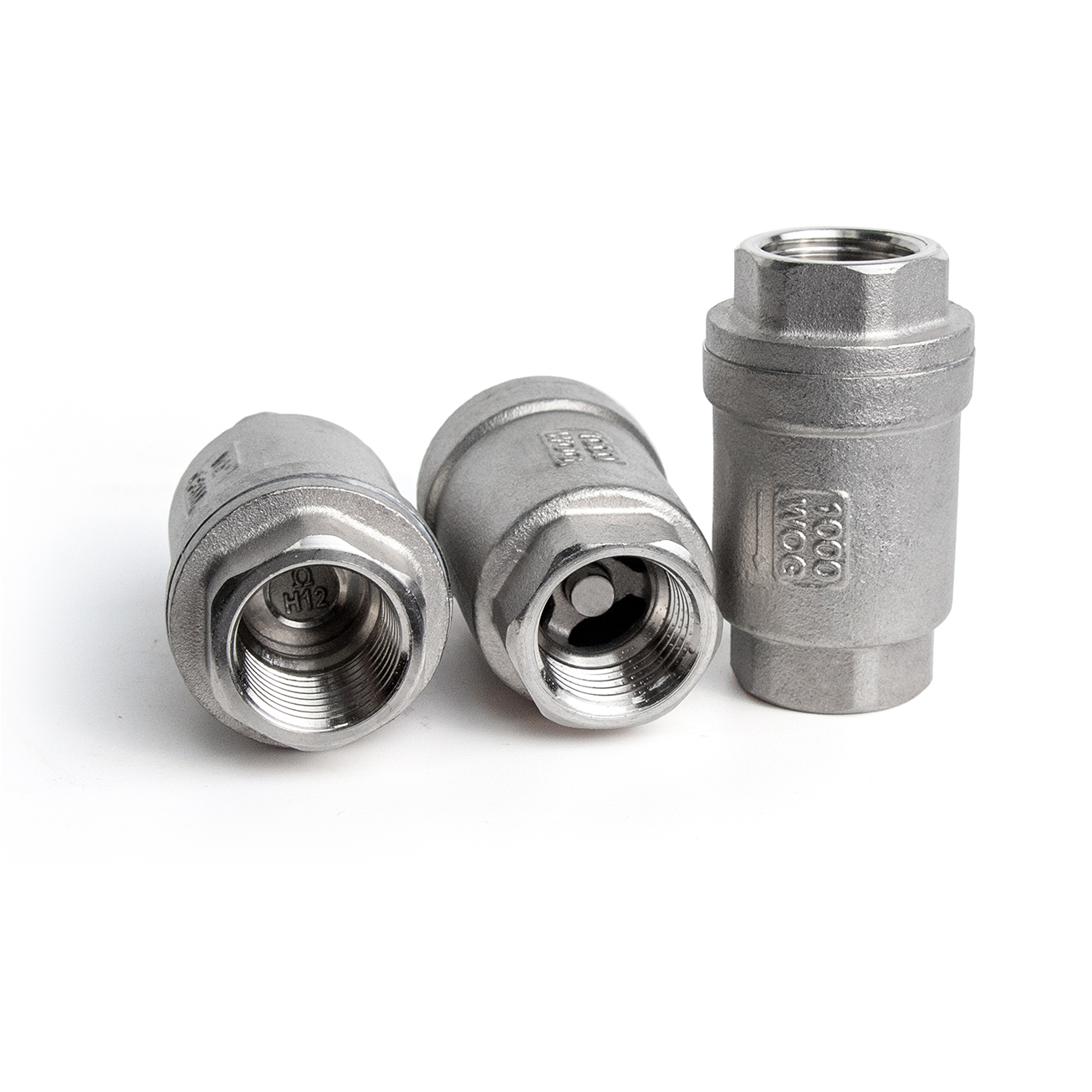
Overbuilding usually starts with good intentions. A team wants the product to survive anything the medium throws at it, so they spec the thickest gauge, the most chemical-resistant coating, or the highest temperature rating available. But the medium rarely demands that much. Matching materials to media means reading the environment honestly—what temperature swings actually occur, what moisture levels are typical, what mechanical stress is real—and then choosing the lowest-cost material that handles those conditions with a sane margin. The savings aren't just in the material itself; they show up in easier handling, faster production, and less weight.
A practical way to avoid overbuilding is to create a one-page media profile for each project. List the specific conditions the material will face: UV exposure, abrasion, chemical contact, load cycles, expected lifespan. Next to each condition, note the minimum spec required. If a condition is 'occasional indirect sunlight,' don't select a material rated for permanent outdoor UV. That gap between 'occasional' and 'permanent' is where budgets quietly leak. When someone suggests an upgrade, ask which profile line it actually improves. If the answer is none, skip it.
The payoff goes beyond cost. A material that's properly matched to its medium is easier to replace, simpler to source, and less likely to fail in unexpected ways because its behavior is well understood within the real operating envelope. Over-specified materials often introduce new problems—extra stiffness where flexibility helps, or a coating that interferes with adhesion. Keeping the material close to the actual need reduces those surprises and keeps the project moving.
The Sizing Mistake That Causes Chatter and Water Hammer
Many engineers assume that oversizing a control valve is a safe way to leave room for future flow increases. In practice, this creates a valve that operates constantly near its seat, where small movements translate into large flow changes. The result is hunting: the positioner overcorrects, the plug bounces against the seat, and you hear that rattling chatter that echoes down the pipe. The same oversized trim also produces high-velocity jets that collapse vapor bubbles downstream, triggering the sharp hammering sound of cavitation.
The issue rarely shows up during commissioning because the process is often run at maximum load, masking the low-lift instability. It becomes obvious weeks later when production throttles back and the valve starts fighting to maintain a setpoint it can no longer resolve. Replacing the trim with a correctly sized multi-stage or characterized option usually removes the noise immediately, but only after the root cause is accepted: the valve was never too small for the job, it was simply too big for the operating range that actually mattered.
Vertical vs. Horizontal: Why Orientation Changes Everything
The moment you flip a design from vertical to horizontal, you're not just adjusting dimensions—you're rewriting how a viewer's eye travels across the space. Vertical orientation pulls attention upward and downward, creating a sense of height, formality, or aspiration. Think of a portrait hanging in a gallery or a skyscraper piercing the skyline. Horizontal orientation, on the other hand, encourages a sweeping, side-to-side scan, often evoking calm, stability, or expansiveness. A landscape photograph or a wide-format website hero banner works precisely because it mirrors how we naturally take in a panoramic view.
This shift isn't just aesthetic; it changes the hierarchy of information. In a vertical layout, content stacks naturally, forcing a top-to-bottom narrative that suits storytelling, timelines, or mobile feeds. Horizontal layouts demand a different discipline—you must guide the eye left to right, often using strong focal points or asymmetrical balance to prevent the composition from feeling empty or aimless. What works beautifully in one orientation can feel cramped or disjointed in the other, which is why responsive design rarely means simply rotating the same elements.
Beyond screens and print, orientation also influences physical interaction. A vertical poster on a narrow wall invites a close, intimate read. A horizontal banner above a storefront commands a glance from a moving car. Even in product design, a vertically oriented phone feels natural for one-handed scrolling, while a horizontally held tablet suggests a more immersive, two-handed engagement. Orientation, in other words, isn't a neutral container—it's an active participant in how we perceive, navigate, and remember what we see.
Spring or No Spring? The Pressure Drop Trade-Off
Most check valves rely on a spring to push the disc or poppet back onto the seat the instant flow reverses. That spring, though, isn't free: it sets a minimum upstream pressure before the valve even begins to open, and every psi spent cracking the spring is a psi lost downstream. Remove the spring and you get a swing check or a simple gravity-operated disc that offers almost no resistance in the forward direction—great for low-head drains or gravity-fed lines—but it reacts to reverse flow much slower, often letting a slug of fluid reverse direction before it slams shut.
The pressure drop numbers tell the story in the field. A typical spring-loaded axial check valve might need 0.5 to 2 psi just to open, and even at moderate flow it adds another 1 to 3 psi of friction loss. A swing check without a spring, by contrast, can have a forward pressure drop under 0.5 psi at the same flow rate. If you're moving viscous fluids, running a pump near its NPSH limit, or dealing with a system where every foot of head counts, that difference isn't academic—it shows up as higher energy bills, reduced flow, or a pump struggling to prime.
But chasing the lowest pressure drop can backfire. A springless check in a vertical line or a line with pulsating flow may chatter, wear the seat unevenly, or allow enough reverse flow to cause water hammer that damages pipe and fittings. Some engineers solve it by using a spring check only where backflow prevention is critical and accepting the extra loss, or by oversizing a swing check so its forward velocity is low enough that the disc closes gently without a spring. The right answer isn't "spring or no spring" in the abstract—it's matching the valve's closing speed, cracking pressure, and pressure drop to the actual flow profile and piping layout.
Proactive Wear Checks That Keep Flow Moving One Way
Wear in one-way flow components rarely announces itself with a loud failure. Instead, it shows up as a subtle shift in cracking pressure, a faint chatter during closure, or a gradual drop in system efficiency. By the time these symptoms become obvious, the damage has often spread beyond the valve seat or poppet. A better approach is to schedule small, targeted inspections around known stress points—seat contact areas, hinge pins, and spring coils—before the wear pattern has a chance to compromise reverse-flow protection.
The most useful checks are not the ones that require a full teardown. Start with a visual scan of the sealing surface under a bright light, looking for uneven polishing or pitting that suggests particles have been trapped during closure. Then test the spring’s free length against its original spec; a loss of just a few percent can change the valve’s reseating speed and allow brief backflow spikes. For hinge-style designs, wiggle the disc gently to feel for side play that indicates bushing wear. These are ten-minute routines that can be done during planned downtime, and they catch problems while the component is still serviceable.
The payoff comes in the form of predictable flow behavior. When checks are performed before visible leakage develops, the valve maintains its one-way promise without the emergency replacement, the contaminated downstream equipment, or the pressure transients that follow a sudden failure. It is a small habit that keeps the entire system honest, and it costs far less than the alternative of waiting for a drip to turn into a direction reversal.
FAQ
Vertical check valves rely on gravity plus a spring to seat the disc when flow stops, which makes them well suited for upward flow lines. Horizontal types depend mainly on reverse flow pressure, so they can be slower to react in low-pressure circuits.
Match the body material to the fluid chemistry and temperature range. Brass works for many water and mild chemical lines, stainless steel handles corrosive media at higher temperatures, and PVC or CPVC is a good fit for acids, caustics, and salt solutions.
Cracking pressure is the minimum upstream pressure needed to lift the disc off the seat. Getting this right stops the valve from fluttering during low-flow operation, which cuts down on wear and keeps the pressure drop predictable.
Spring-loaded vertical check valves close faster and allow mounting in any orientation, but they add a small pressure drop. Springless models are simpler and cost less, though they generally need truly vertical upward flow to seal reliably.
Threaded connections are easy to swap out during service, flanged ends handle larger diameters and higher pressures, and barbed or compression fittings suit flexible tubing. Pick whatever matches your existing piping layout and maintenance workflow.
Choose a valve with a fast-closing spring or a damped disc, and install it close to the pump. An accumulator or air chamber downstream can also absorb the pressure spike that causes water hammer.
Check the seat and disc for wear, debris, or mineral buildup every few months. If backflow leakage appears, replace the soft seal or clean the seating surface, and verify that the spring has not lost tension.
These valves show up in condensate return lines, boiler feed systems, chemical dosing skids, water treatment units, and fuel transfer systems—any compact equipment where backflow prevention matters.
Conclusion
Reliable flow control in OEM vertical check valves rarely comes down to a single spec sheet line. Many early failures trace back to ignored installation dynamics: a valve that tests perfectly on a bench can hammer, chatter, or leak once gravity, backpressure, and piping geometry enter the picture. Vertical orientation changes the closing force entirely—gravity helps the disc seat, but it also accelerates reverse flow slam if the valve is oversized or the spring is too weak. Matching materials to the actual media beats overbuilding with exotic alloys that drive cost without adding service life. A ductile iron body with a nitrile seat often outperforms stainless in mild chemical service, simply because it was selected for the real fluid, temperature, and particle load rather than a worst-case fantasy.
The spring decision is a pressure drop trade-off: no spring means less resistance and lower pumping cost, but the disc relies solely on gravity and backflow to close, which can allow reverse leakage before sealing. A light spring improves response and reduces water hammer, yet adds a small but permanent restriction. Smart OEMs size the valve so the disc actually travels full stroke at normal flow—partial opening is a common cause of chatter and accelerated seat wear. Finally, proactive checks should focus on sealing surfaces, spring fatigue, and any buildup that prevents full disc travel. A vertical check valve only stays reliable when its selection, installation, and inspection routine all respect the fact that one-way flow is a mechanical promise, not a guarantee.
Contact Us
Contact Person: Adonis
Email: [email protected]
Tel/WhatsApp: 8615858822657
Website: https://www.uptaivalve.com