

Paper Bag Machine Service: Expert Care for Reliable Production
2026-11-16
When a paper bag machine stutters, it doesn't just slow down one line—it ripples through your entire delivery schedule. That's where true service goes beyond a manual and a wrench. At ROKIN, we treat every maintenance call as a chance to restore not just the equipment, but the rhythm of your production floor. From worn-out rollers to misaligned cutters, our technicians dig into the details others overlook. This blog walks you through what expert care really looks like, and why reliable output starts long before a breakdown ever happens.
Precision Tune-Ups That Keep Every Roll Running Smoothly
A roll that hesitates or drags can throw off an entire run, no matter how well the rest of the line is set up. Precision tune-ups focus on the small mechanical details that most operators overlook: bearing alignment, shaft runout, and tension balance across the roll face. Instead of waiting for a visible wobble or a torn edge, checking these points at regular intervals keeps the roll tracking true. Even a fraction of a millimeter of misalignment can cause uneven wear and subtle speed fluctuations that build into bigger problems downstream.
The best tune-ups treat each roll as part of a system rather than an isolated component. For example, a nip roll that feels tight at the ends but soft in the middle might not need more pressure—it might need a crown correction or a different cover hardness. Matching the roll's surface finish and diameter to the actual web material, not just the spec sheet, makes a noticeable difference. When every roll in the stack shares the same level of attention, the whole machine quiets down and the sheet runs straight without constant manual corrections.
Keeping a log of small adjustments helps turn tune-ups from guesswork into a repeatable routine. Write down what changed, how much, and what happened in the next few hours of production. Over time, patterns emerge: a particular roll may drift after a certain number of cycles, or a bearing may run warm only at high speed. Those notes let you catch a problem before it becomes a jam or a quality defect. That kind of foresight is what separates a line that runs smoothly from one that always needs emergency attention.
Field-Tested Fixes for Common Paper Bag Line Hiccups
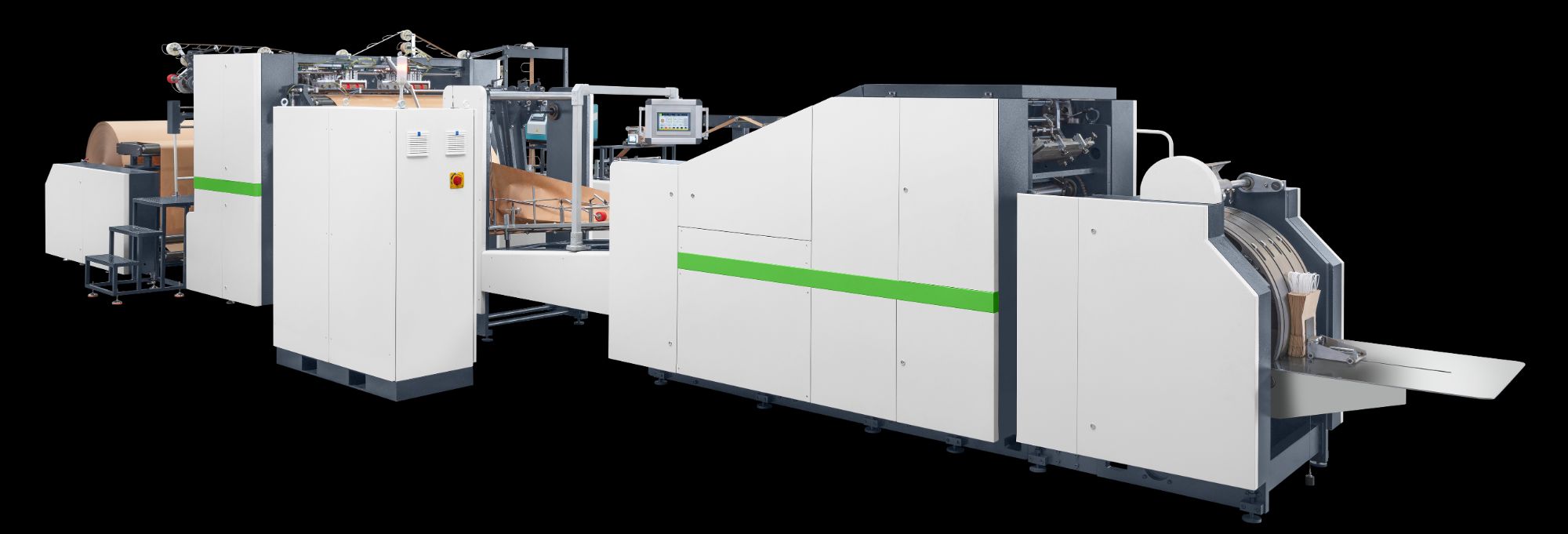
When the web starts drifting sideways or the tension spikes for no obvious reason, the first thing to check isn't the fancy control panel—it's the idler rollers. A thin film of paper dust and adhesive residue builds up on the roller faces after just a few shifts, and that's enough to pull the sheet off-center. Wipe them down with a dry rag, then run a strip of scrap paper through at low speed to see if the wander disappears. If it doesn't, loosen the adjustment bolt on the steering roller by a quarter turn and let the web settle for ten seconds before tightening it back down. More often than not, that's the whole fix—no sensor recalibration needed.
Glue smears and weak seams usually come from the same root cause: a starved or flooded applicator nozzle. Instead of reaching for the speed dial, pop the nozzle guard off and check the last three glue patterns on a reject bag. If you see thin, skippy lines near the fold edge, the orifice is partially blocked with dried starch adhesive. Soak the nozzle tip in warm water for three minutes, then backflush it with a syringe. If the pattern is heavy on one side, the nozzle-to-wheel gap has drifted—set it to the thickness of two business cards and snug the locking collar by hand, not with a wrench. Run twenty bags and compare the seam burst strength; it should hold without cracking when you flex the bottom fold.
Ragged cuts and uneven bottom folds often get blamed on dull knives, but the real culprit is usually a worn creasing bar or a misaligned folder plate. Before you call maintenance for a blade change, run your thumbnail along the creasing edge—if it feels rounded or has a flat spot at the center, that's why the paper is tearing instead of folding cleanly. Swap the bar end-for-end to use the unused edge, and re-square the folder plate against the frame rail with a machinist's square. For intermittent fold jams, check the timing belt tension: if you can deflect it more than half an inch with your finger, tighten the idler pulley a half turn. These little adjustments take five minutes and keep the line moving without waiting for a parts delivery.
Preventive Maintenance Plans Built Around Your Shift Schedule
Most maintenance schedules are built for an ideal world where every shift runs the same way. That assumption breaks down fast on a real production floor. Our approach starts with your actual shift patterns—when each line starts, stops, and changes over—and then lays maintenance tasks into the natural gaps. This means inspections happen during handoffs or planned slowdowns instead of interrupting peak output.
Shift-based planning also accounts for how equipment wears differently across day, swing, and night operations. A machine running consistently at 3 a.m. faces different thermal and load cycles than one used intermittently during the day. By reading those patterns, we can schedule lubrication, filter changes, and component checks at moments when they’ll do the most good and cause the least disruption.
The result is a maintenance calendar that fits the way your facility actually operates, not the other way around. Teams get clear, realistic windows for preventive work, and unexpected breakdowns become less frequent because problems are caught before they escalate. It’s a practical way to extend equipment life without asking more from your people or shutting down production unnecessarily.
Upgrade Paths That Push Older Machines Past Their Original Limits
Older machines rarely die because their silicon gives out; they die because manufacturers stop validating new parts for them. But a surprising number of boards from the Core 2 and first-gen Core i eras can run CPUs far beyond their official support lists after a small socket adapter or a pin-mod. A $15 Xeon pulled from decommissioned servers often slots into a 2008-era desktop board, adding four extra threads and dropping power draw at the same clock. It is the sort of upgrade that makes a fourteen-year-old tower feel less like a relic and more like a deliberately quirky workstation.
Memory and storage ceilings are just as soft if you are willing to edit a few BIOS strings. Plenty of DDR2 and DDR3 laptops were capped at 8 GB in the manual, yet the chipset can address 16 GB once the SPD data is recognized. The same goes for storage: a PCIe-to-M.2 adapter lets boards without native NVMe support boot from a modern SSD using a modified option ROM or a small bootloader on a USB stick. Even at PCIe 2.0 speeds, the switch from a spinning disk to NVMe removes the single biggest bottleneck that made old machines feel slow.
Graphics and expansion follow a similar pattern. Removing a BIOS whitelist can open an old ThinkPad to newer Wi-Fi cards, while an ExpressCard or mini-PCIe slot becomes a route to a desktop GPU through an external dock. Some workstation cards can be cross-flashed or soft-modded to enable features that were locked in firmware. None of these paths are official, and a few require a steady hand with a programmer clip. But that friction is exactly why they stay under the radar - and why the machines that take them end up running far past the spec sheet.
Rapid Response Support When a Single Spindle Threatens the Whole Order
A spindle failure doesn't announce itself politely. It usually starts with a vibration that gets written off as tool wear, then a whine that grows into a metallic shriek, and suddenly the entire line is dead. For a shop running a hot job with a tight delivery window, that one bearing or tapered seat can put thousands of parts in limbo. The real problem isn't just the broken component—it's the ripple: idle operators, blocked downstream processes, and a customer who needs answers now. This is where rapid response support has to be more than a phone number on a sticker. It means someone picks up, understands the exact machine model and failure mode, and starts moving parts before the spindle has even cooled down.
The first hour makes or breaks the recovery. A support team that treats every spindle emergency as a supply-chain interruption, not just a repair ticket, will already have regional stock locations mapped against your plant. They ask for the serial number, the crash history, and a photo of the damaged taper—then they dispatch a technician with the right puller, not a generic tool bag. If the spindle can be rebuilt in place, they walk your maintenance crew through the disassembly over video, flagging the hidden snap rings and preload nuts that eat hours. If it needs to go out, a loaner or exchange unit is already on a truck, because waiting for a standard rebuild quote is how a two-day stoppage becomes a two-week one.
What separates a true rapid response partner from a parts vendor is follow-through on the order itself. They don't just fix the spindle; they sequence the repair around your production schedule. Maybe the crashed spindle gets a temporary regrind to finish the remaining 200 pieces while the replacement is in transit. Maybe the rebuild happens on night shift so the machine is back making chips before first break. The goal is never the perfect repair report—it's that the customer never has to call their buyer and ask for a revised delivery date. One spindle should never hold an entire order hostage, and with the right support behind it, it doesn't have to.
Operator Training That Turns Daily Checks Into Real Cost Savings
Most daily equipment checks fail because operators only record readings without understanding what those numbers mean for the machine's wallet. A targeted training program changes that by linking each gauge, sound, or vibration check to a concrete cost consequence. For instance, a 5 PSI drop in hydraulic pressure caught on a morning walkaround might prevent a seal failure that would idle a production line for six hours. When operators learn to spot these early signals, routine inspections stop being paperwork and start acting like cheap insurance.
The savings don't come from heroic fixes but from dozens of small decisions made before problems escalate. Training that uses real failure examples from the plant floor teaches operators which deviations matter and which are normal. They learn to tighten a fitting before a leak becomes a spill, to report a worn belt before it snaps during peak demand, and to adjust lubrication intervals based on actual duty cycles rather than a fixed calendar. These habits extend component life, reduce emergency call-outs, and keep energy consumption from creeping upward.
Perhaps the biggest shift is in accountability. Operators who understand the financial ripple effects of their observations are more likely to take ownership of the equipment they run. Instead of waiting for a maintenance ticket to be assigned, they flag potential issues with enough lead time to schedule repairs during planned downtime. That planned work is typically 30–50% cheaper than unplanned, after-hours maintenance. The result is a maintenance budget that stops leaking money through overlooked minor faults.
FAQ
A proper service starts with checking the unwind tension, draw roller alignment, and cutting blade clearance. We also inspect glue application rollers for buildup, look for worn forming plates, and test the bag length accuracy under different speeds. The goal is to catch small misalignments before they become jams or crooked seals.
If you notice the bag width drifting more than a couple millimeters across shifts, hear a new rhythmic knock from the gearbox, or see glue streaks appearing on bags even after cleaning, that's a sign of deeper wear. In-house fixes often mask the symptom, but a trained technician can trace it to a bent shaft or failing bearing.
Sudden tension loss usually comes from a worn dancer arm pivot, a clogged air cylinder, or a slipping brake pad on the unwind shaft. Temperature changes in the workshop can also affect pneumatic components. A service visit will measure the actual tension at the web and adjust the feedback loop, not just increase the air pressure.
Yes, machines that get serviced every 800 to 1000 running hours typically hold a 3 to 5 percent higher average output because stops become shorter and fewer bags are rejected for seal defects. We log the baseline speed, alignment values, and wear measurements each visit, so you can see the trend over time.
The first visit is more diagnostic than routine. We run the machine at three speed ranges, record vibration readings on the main drive, check the squareness of the forming shoulder, and measure the cutting drum gap. You'll get a plain-language report with photos of worn parts and a priority list, not a sales pitch for unnecessary replacements.
Not always, but critical components like the draw roller bearings, sealing bars, and perforation blades should match the OEM specifications. Cheap aftermarket blades often lose their edge twice as fast and can chip, which leads to torn bag mouths. For non-critical parts like guide wheels or covers, high-quality generic options work fine if the dimensions are exact.
We first rule out paper roll quality by checking the moisture profile across the web. Then we inspect the former plate edge for burrs, the side seam folder for parallel alignment, and the delivery belts for uneven wear. Often the cause is a slight tilt in the frame after a roll change or a loose idler roller, which is corrected with a dial indicator rather than guesswork.
Hands-on training that focuses on daily cleaning points, proper roll loading, and recognizing early warning sounds works best. We teach operators to check the glue temperature with an infrared gun, listen for changes in the vacuum pump pitch, and record the bag length every two hours. This turns them into the first line of defense instead of waiting for a breakdown.
Conclusion
Paper bag production depends on dozens of small adjustments staying in harmony. When a line drifts—bag length varying, bottom fold opening unevenly, glue lines smearing—our precision tune-ups focus on the actual mechanics: realigning formers, sharpening or replacing cutoff knives, and recalibrating tension controls so every roll feeds smoothly. For common hiccups like erratic perforations or jammed delivery belts, we rely on field-tested fixes rather than trial and error. Preventive maintenance is then scheduled around your shift patterns, not a generic calendar, so critical checks happen during planned pauses instead of interrupting a live order.
Machines that have run for a decade often leave performance on the table. We map upgrade paths that push past original speed and size limits—installing servo-driven feeders, updating PLC logic, or reinforcing worn frames—so an older line can match current demand without a full replacement. If a single spindle or bearing starts to fail mid-run, our rapid response support can often diagnose the issue remotely and dispatch a technician with the right part the same day. Operator training closes the loop: we teach your crew to read wear patterns, check adhesive temperature, and log repeat faults, turning daily inspections into real savings by catching problems before they become downtime.
Contact Us
Contact Person: CARA
Email: [email protected]
Tel/WhatsApp: +8619519778302
Website: https://www.rokinmachinery.com