

Plastic Protective Case Service That Keeps Your Equipment Safe and Secure
2026-11-02
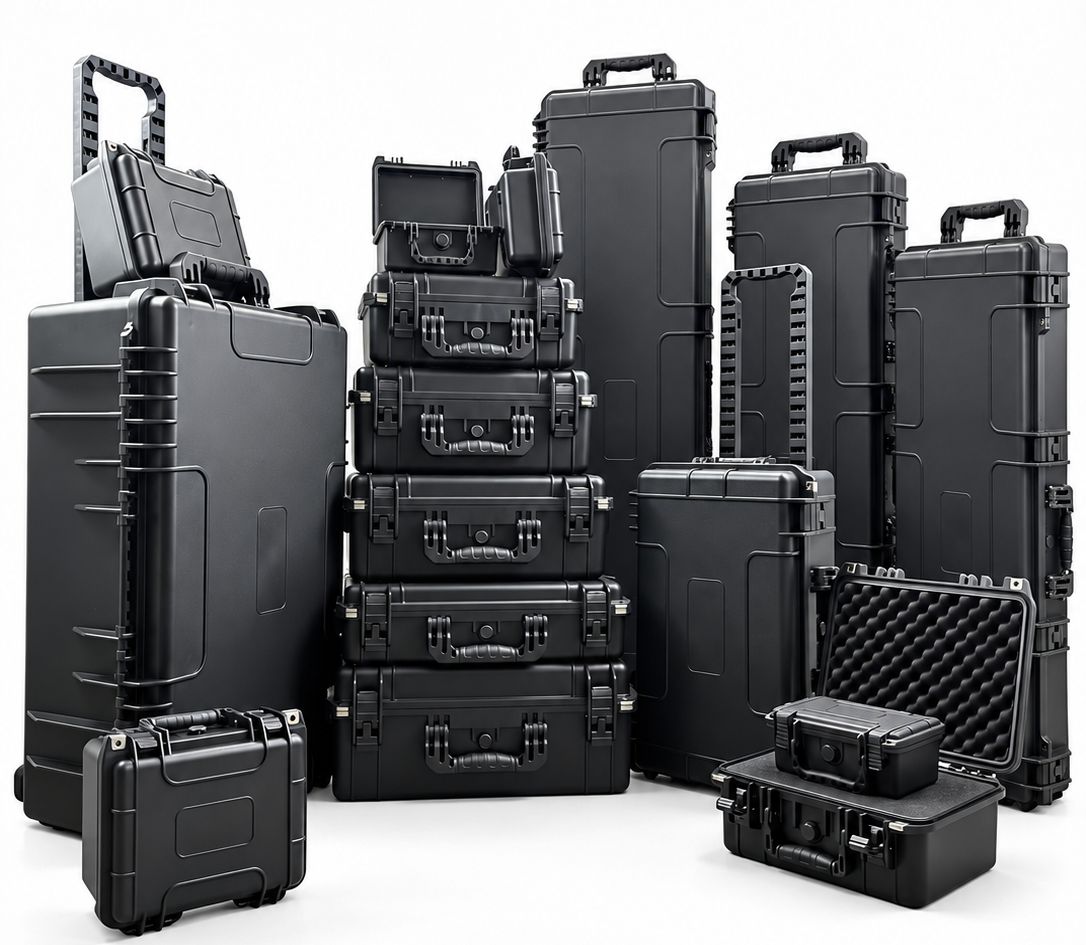
When it comes to protecting your valuable equipment, generic cases simply don't cut it. At WEISHUO, we understand that every scratch, dent, or drop can cost you time and money. That's why our plastic protective case service is built around one goal: keeping your gear safe and secure, no matter where the job takes you. From rugged custom foam inserts to impact-resistant shells, we tailor each solution to your exact needs. Curious how a case can work as hard as you do? Let's take a closer look.
A Case Built Around Your Equipment, Not the Other Way Around
Most protective cases force your gear into a generic mold—same shell, same cutouts, same compromises. We decided to flip that script. Our design process starts by mapping the exact dimensions, button placements, port clearances, and even the weight distribution of your specific equipment. Whether it's a field recorder with an oddly placed XLR jack or a drone controller with extra-long antennas, every curve and crevice is accounted for. No more “almost fits” or awkward workarounds.
The result is a case that feels less like an accessory and more like an extension of the tool itself. Instead of padding out empty space with foam blocks, we sculpt the interior around your gear’s natural shape. That means better shock absorption where it matters, easier access to frequently used controls, and a lower overall profile because there’s no wasted bulk. You don’t adapt to the case—the case adapts to you, right down to the way you actually hold and carry it in the field.
Plastic That Punches Above Its Weight
Walk into an injection molding shop and you'll probably overhear someone call plastic a "cheap substitute." That person hasn't met the right grade of nylon. Add a little glass fiber, tweak the polymer backbone, and suddenly a part that weighs a third as much as steel shrugs off impact, oil, and constant flexing without a whimper. It doesn't just replace metal; it makes the assembly quieter and easier to assemble.
The trick lies in how the molecules are arranged. During molding, the polymer chains can be oriented to carry loads along specific paths, much like the grain in a well-made baseball bat. Fillers such as carbon or aramid fibers boost stiffness without turning the material brittle. The result is a plastic that behaves more like a spring than a slab, returning energy instead of absorbing it.
Look under the hood of a modern car and you'll see this in the timing chain guides. They sit in hot oil, take a beating from the chain, and never get a drop of separate lubricant. A carefully chosen nylon formulation can survive that for hundreds of thousands of miles. That's not a compromise; it's a material punching far above the weight anyone gave it credit for.
Quick Turnaround Without Cutting Corners
In practice, a quick turnaround often gets a bad reputation because people assume speed means skipping steps. But that doesn’t have to be the case. It’s entirely possible to move fast while still paying attention to every detail that matters. The key is having a clear process in place before the work even begins, so no time is wasted on figuring things out mid-project.
One way to keep momentum without sacrificing quality is to focus on what actually drives the result. Instead of rushing through everything, you prioritize the parts that have the biggest impact and give them the time they deserve. Meanwhile, smaller tasks get streamlined, not skipped. This balance means the final output still meets a high standard, even when the clock is tight.
Another factor is communication. When everyone involved knows exactly what’s needed from the start, there are fewer back-and-forth delays and fewer chances for errors to slip in. Quick turnaround works best when expectations are set early and progress is checked at key points, not just at the end. That way, you deliver fast without cutting corners — because every corner was already accounted for.
Protection That Adapts as Your Gear Evolves
Your first setup was a compact mirrorless with a single prime lens. Six months later, you added a speedlight, a shotgun mic, and a second body. The padding that once fit perfectly shouldn't become the reason you hesitate before upgrading. That's why the dividers inside are reconfigurable at the fold, not just at the edges—so the protection moves with you, not against you.
Instead of forcing new gear to conform to old compartments, the interior lining uses a loop-and-hook system that lets you reshape zones in seconds. Extra glass, a gimbal, or an audio recorder can all earn a snug, rattle-free place without buying a new case. The shell stays slim, but the inside never stays static.
We also left the exterior fabric slightly stretch-resistant to avoid the ballooning that happens when side pockets get overloaded. So when your kit grows from weekend hobby to paid work, the same bag simply adapts—quietly, without calling attention to itself.
Trusted by Teams Who Can't Afford Downtime
Operations leads rarely adopt infrastructure because a demo went smoothly. They adopt it because it holds up through the worst deployment window of the quarter and doesn't end up as a line item in the next post-incident review. Teams running billing pipelines, logistics tracking, or patient-facing services aren't swayed by uptime guarantees in a contract. They care whether a bad release can be rolled back before the first user notices and opens a ticket.
The groups that stay are the ones who have already lived through a database connection dropping mid-write, a config push landing at 4:55 p.m. on a Friday, or a traffic spike that arrives without warning. For them, downtime is not a metric on a status page. It's a shift that turns into war rooms, apologies to customers, and a written explanation for leadership about what changed.
Reliability, in that world, comes from boring choices: small release surfaces, runbooks built on the assumption that something will fail, and an architecture that treats partial failure as normal rather than exceptional. The strongest signal isn't a logo wall. It's an on-call engineer who no longer dreads the next deploy because the platform has already shown it can take a hit and keep the queue moving.
FAQ
We handle a broad range, from delicate medical instruments and handheld electronics to larger industrial tools and testing gear. If you can describe the dimensions and fragility, we can suggest a case style that makes sense.
We use high-strength polymers like polycarbonate or ABS depending on the application, and the designs include reinforced corners, shock-absorbing foam inserts, and tight-sealing latches. Each case goes through drop tests based on the weight and sensitivity of your equipment.
Yes, custom foam cutting is one of the most requested options. You send us the dimensions or a 3D model, and we create precision-cut foam that keeps the item from shifting. It’s a great way to avoid damage during transit.
Most orders are completed within two to three weeks after design approval. If you need something faster, we do offer a rush service for an additional fee, but it depends on current production volume.
Many of our cases meet IP67 or IP68 ratings, meaning they can handle temporary immersion and keep out fine particles. We’ll help you decide if a fully waterproof seal is necessary or if a basic splash-resistant design is enough.
Absolutely. You can choose from a range of standard colors, or we can match your brand’s Pantone colors. Logo printing or embossing on the lid is also available, which is useful if you’re shipping equipment to clients.
That’s where modular foam or adjustable dividers come in handy. Instead of a permanent cutout, we can install padded dividers with hook-and-loop strips that you can rearrange as needed. It keeps the case versatile without sacrificing protection.
Just reach out with a few photos of your equipment and rough measurements. We’ll put together a design mockup and a quote, then after you approve it, we move into production. No complicated forms or upfront design fees.
Conclusion
Instead of forcing your gear into an off-the-shelf shell, the service starts with your equipment's actual dimensions, mounting points, and daily handling. Each protective case is formed around those specifics, so cables, ports, heat vents, and operator controls stay accessible while the shell absorbs impacts. The plastic isn't the brittle stuff you remember from cheap toolboxes—modern blends shrug off drops, vibration, dust, and rough transit, keeping weight low without giving up strength. And because the design and prototyping loop moves quickly, you're not waiting weeks for a sample that might miss the mark. That quick turnaround doesn't mean rushed choices; fit, tolerance, and latch placement are still checked against real use.
What sets this apart is how the case evolves alongside your gear. When equipment changes—a new battery pack, a revised connector layout, an added antenna—the case can be reworked without starting from zero. This matters for broadcast crews, field technicians, and medical support teams, where a damaged unit means lost time, blown deadlines, and unhappy clients. A case that adapts saves you from buying new protection every year. The result is less duct tape, fewer foam scraps, and a cleaner fit that looks deliberate. It's protection that doesn't just sit there; it works the way your crew actually works, and it keeps downtime where it belongs—out of the conversation.
Contact Us
Contact Person: Logious
Email: [email protected]
Tel/WhatsApp: +86 15867373883
Website: https://www.vso-case.com