

Professional Distillery Equipment: Essential Guide to Top-Tier Gear
2026-08-06
Stepping into the world of professional distillery equipment can feel like navigating a maze of copper, steel, and technical jargon. Whether you're dreaming of launching a craft spirits brand or scaling up an existing operation, the gear you choose isn't just a purchase—it's the backbone of your entire production. That's where DYE comes in. We’ve cut through the noise to bring you a no-nonsense guide to top-tier gear that actually delivers on flavor, efficiency, and longevity. From boilers to fermenters, every piece here is picked for its real-world performance, not just fancy specs. Ready to build a setup that makes your best batch yet? Let’s dive in.
From Pot Stills to Column Stills: Matching Equipment to Your Spirits
Choosing a still isn’t just a technical decision—it’s a flavor philosophy. Pot stills, with their bulbous copper bodies and swan necks, work like traditional storytellers, preserving the rich, oily character of the wash. They produce a spirit that’s heavy with esters and congeners, perfect for whiskies, rums, and brandies that demand depth and complexity. Every batch feels like a conversation between heat, time, and metal, leaving room for the unexpected.
Column stills, on the other hand, are the efficient modernists of the distilling world. They strip and rectify in a continuous stream, offering a clean, high-proof spirit that can reach neutrality. This makes them the go-to for vodka, gin, and light rums, where the raw ingredient takes a backseat to crispness and purity. But don’t mistake efficiency for soullessness—the ability to fine-tune plates and draw off specific fractions lets distillers play with texture in ways a pot still can’t.
The real magic happens when you stop thinking of them as rivals and start considering them as tools in a broader palette. A hybrid approach—running a pot still for the initial low wines and finishing on a column—can give you the best of both worlds: heft and refinement. It all circles back to what you want the final sip to say. Are you crafting a spirit that whispers of its origins, or one that shouts with precision? The still you choose is the first word in that story.
Copper, Stainless, and Beyond: Choosing Materials That Shape Flavor
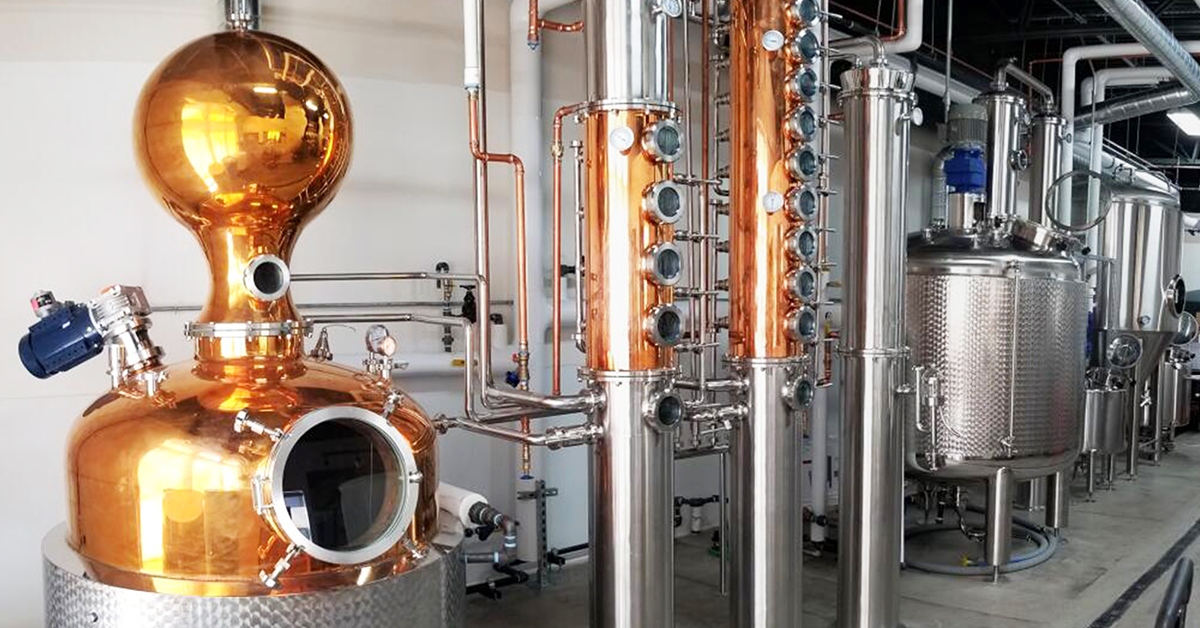
Copper has long been the darling of professional kitchens, celebrated not just for its gleaming beauty but for its exceptional thermal conductivity. It responds almost instantly to changes in heat, giving cooks a level of control that’s hard to replicate. When you’re making a delicate sauce or caramelizing sugar, copper’s ability to heat evenly and cool down quickly can mean the difference between a velvety finish and a grainy disaster. There’s also a quiet chemical interaction at play—copper ions can bond with sulfur compounds in foods like egg whites or acidic mixtures, subtly enhancing texture and stability. Of course, pure copper is reactive and needs a lining, typically stainless steel or tin. Tin is traditional and slightly more forgiving with sticking, but it wears down over time. Stainless steel linings are tougher and more common, though they can mute copper’s responsiveness just a touch. For many cooks, the trade-off is worth it for the sheer joy of working with a metal that feels alive under the heat.
Stainless steel, on the other hand, is the workhorse of the modern kitchen—nonreactive, durable, and relatively affordable. It doesn’t interact with acidic ingredients, so you can simmer a tomato sauce for hours without worrying about metallic off-flavors. The downside? Stainless steel is a poor conductor of heat on its own, which is why good pieces are often clad with an aluminum or copper core. You’ll spot hot spots if the pan is thin or poorly made, leading to uneven browning. But when stainless steel is layered with conductive metals, it becomes incredibly versatile. It sears meat beautifully, deglazes like a dream, and doesn’t demand the careful upkeep that copper or cast iron does. For home cooks who want a single set that can do almost everything, stainless steel is the pragmatic choice—reliable, unfussy, and ready for years of heavy use.
Beyond these two classics, a whole range of materials shapes flavor in subtle ways. Cast iron holds heat like nothing else and can impart a deep, rustic sear that almost tastes elemental, though it does require seasoning and a bit of extra care to prevent rust. Carbon steel walks a line between cast iron and stainless—light enough to toss vegetables but capable of developing a nonstick patina over time. Then there’s aluminum, which competes directly with copper at a lower price; it warps easily and reacts with acids unless anodized, but in many restaurant kitchens you’ll find dented aluminum sauté pans that chefs swear by. Even clay and stoneware have their place, offering gentle, even heat for slow-cooked stews and braises. Each material brings its own personality to the stove, and the choice often comes down to what you’re cooking and the kind of cook you want to become.
Scaling Up Without Sacrificing Quality: The Art of Equipment Sizing
Equipment sizing is often approached as a simple matter of meeting throughput targets, but the reality is far more nuanced. Effective scaling requires a deep understanding of how process dynamics shift with volume. A reactor that works perfectly at the lab scale can develop dead zones or inefficient mixing when simply enlarged without considering fluid dynamics and heat transfer coefficients. The art lies in identifying the governing factors—whether it's residence time distribution, surface-to-volume ratio, or shear stress—and designing around those key parameters rather than blindly applying geometric similarity.
Quality degradation during scale-up usually stems from overlooked interfacial phenomena or thermal non-uniformities. For example, in crystallization processes, a larger vessel might seem cost-effective, but if the cooling profile isn't adjusted, the product may suffer from inconsistent crystal size distribution. Skilled engineers address this by using computational fluid dynamics to model flow patterns and by implementing advanced control strategies that maintain critical process parameters within narrow bands, regardless of scale. They also incorporate flexibility into the design, allowing for adjustments once the equipment is operational.
Ultimately, the true test of equipment sizing isn't just meeting capacity—it's delivering consistent product quality while allowing for future throughput increases. This demands close collaboration between process development teams and equipment manufacturers, often leading to custom-designed internals or hybrid setups. By focusing on the fundamental rate-limiting steps and systematically validating each stage of scaling, companies can avoid the costly rework that comes from prioritizing speed over sound engineering judgment.
Tailor-Made Rigs: When Off-the-Shelf Just Won't Cut It
Standard drilling rigs cover a lot of ground, but there are always jobs where the factory specs fall short. Maybe the site is too cramped for a standard mast, or the ground conditions demand a custom mud system that no off-the-shelf unit provides. These aren't just minor hiccups—they're deal-breakers that can stall a project before it begins. Tailor-made rigs step in simply because the usual options don't fit the reality on the ground.
Going custom means building around the exact demands of the operation. It could be about adding extra horsepower for tough formations, integrating specialised control systems, or re-engineering the mast to handle a weird angle. Engineers work directly with drillers to map out every detail, from the carrier chassis to the top drive, so the machine feels like an extension of the crew's skill set rather than a compromise.
The real payoff shows up when the rig starts turning. Bespoke equipment often handles the unexpected better because it was built with that weird scenario in mind. Uptime climbs, safety gets a boost, and the drilling goes smoother—not because of luck, but because the tool was born from the challenges it faces every day.
Built to Last: Maintenance Secrets for Decades of Distilling
A still isn't just equipment—it's a relationship built on daily attention. The copper that shapes your spirit also holds the memory of every run. After each distillation, a thorough rinse with warm water keeps residue from hardening into stubborn scale. But the real secret lies in the occasional acid wash, where a mild citric solution gently lifts away tarnish without stripping the metal's character. It's not about making it shine like a museum piece; it's about preserving the reactive surface that scrubs sulfur compounds and shapes flavor. Many old-timers swear by a simple vinegar run at the first sign of off notes, trusting their senses more than any manual.
Gaskets, seals, and valves often get overlooked until a leak forces your hand. Rather than waiting for failure, seasoned distillers keep a replacement kit on hand and inspect every joint before they fire up. A thin coat of food-grade lubricant on moving parts keeps seals supple, but overdoing it attracts dust and grit. The real craft lies in the rhythm: every six months, tighten what's loose but never force a union cold. Let the heat do the work; metal expands and finds its own seat. This patient approach has kept family-run distilleries humming for generations, with the same old equipment still turning out award-winning runs.
Energy-Smart Stills: Reducing Costs and Carbon Footprint
Traditional stills can be energy hogs, but smart design flips the script. By integrating advanced insulation, precise temperature controls, and waste-heat recovery, modern systems slash energy use without compromising output quality. The result? Lower utility bills month after month, and a production process that runs leaner and cleaner.
Beyond the obvious cost perks, the environmental upsides are hard to ignore. Every kilowatt saved means less reliance on fossil fuels, directly shrinking your operation's carbon footprint. It's a quiet shift—no grand overhauls needed, just thoughtful engineering that aligns everyday distilling with long-term climate goals.
What really sets this apart is how adaptable it becomes. Whether you're running a small craft setup or a large-scale facility, these energy-smart tweaks pay off in real time. They let you respond to rising energy prices and tightening regulations without missing a beat, turning efficiency into a genuine competitive edge.
FAQ
It comes down to precision, capacity, and material quality. Professional rigs handle larger batches, offer tighter control over temperature and reflux, and use copper or stainless steel that won't degrade or react with the wash.
Copper binds with sulfur compounds, removing harsh, unwanted flavors. It also has excellent heat conductivity. Many high-end setups use copper in the vapor path and stainless for durability in the boiler.
It's critical. The column dictates purity and character. A taller column with structured packing increases reflux and yields a cleaner spirit, while a shorter pot still head retains more congeners for a fuller-bodied product.
It's essentially a reflux condenser mounted above the column. By fine-tuning the coolant flow, you can manage how much vapor condenses and drips back down, giving you mastery over the spirit's proof and flavor profile.
Even heat distribution without scorching is the big win. A steam jacket surrounds the contents gently, preventing burnt sugars that ruin flavor. It's a must for any distillery serious about grain-in mashing.
Go beyond the basics: pressure relief valves, vacuum breakers, flame arrestors for open-flame setups, and reinforced sight glasses. High-quality sensors for temperature and pressure with automated shutdowns are non-negotiable.
Modularity lets you reconfigure your setup for different spirits. Add columns, swap condensers, or expand capacity without replacing the entire system. It's cost-effective and keeps your production flexible.
Conclusion
Mastering professional distillery equipment means understanding how each piece shapes the soul of your spirits. The journey starts with pot stills and column stills—each a world apart in character. Pot stills, the heart of batch distillation, deliver rich, textured spirits through their interactive copper contact, making them ideal for whisky and rum where depth matters. Column stills, with their towering precision, strip and refine continuously, yielding cleaner, higher-proof outputs for vodka or gin. Material choice amplifies this effect: copper binds sulfur compounds, smoothing rough edges, while stainless steel offers neutral resilience and hygiene. Many top rigs marry both, using copper in vapor paths and stainless for durability, tailoring flavor with intention.
Growth demands equipment that scales without diluting quality. Smart sizing preserves the nuances you worked hard to develop, whether you're moving from a 50-liter test still to a 500-liter workhorse or linking multiple columns. Yet even the best off-the-shelf gear can feel like a compromise—custom setups let you angle lyne arms exactly, dial in rectification plates, or integrate grain-in mash handling. Such tailor-made solutions aren't indulgences; they're the guardrails that keep your distillate signature intact. And once the right kit sits in your stillhouse, its longevity hinges on simple rituals: rinsing copper promptly after runs to prevent verdigris buildup, passivating stainless steel to fight corrosion, and inspecting seals and gaskets before they fail. Forward-thinking distillers now embrace energy-smart designs—preheaters, vapor recompression, and closed-loop cooling—that slash both bills and carbon footprint. Ultimately, this isn't just about hardware; it's about weaving together science and craft so your equipment disappears behind the spirit it helps create.
Contact Us
Contact Person: Ada Xu
Email: [email protected]
Tel/WhatsApp: 0577-86806088
Website: https://www.dayuwz.com/