

Stainless Steel Hex Bolts Wholesaler Supplies High-Strength Fasteners in Bulk
2026-11-02
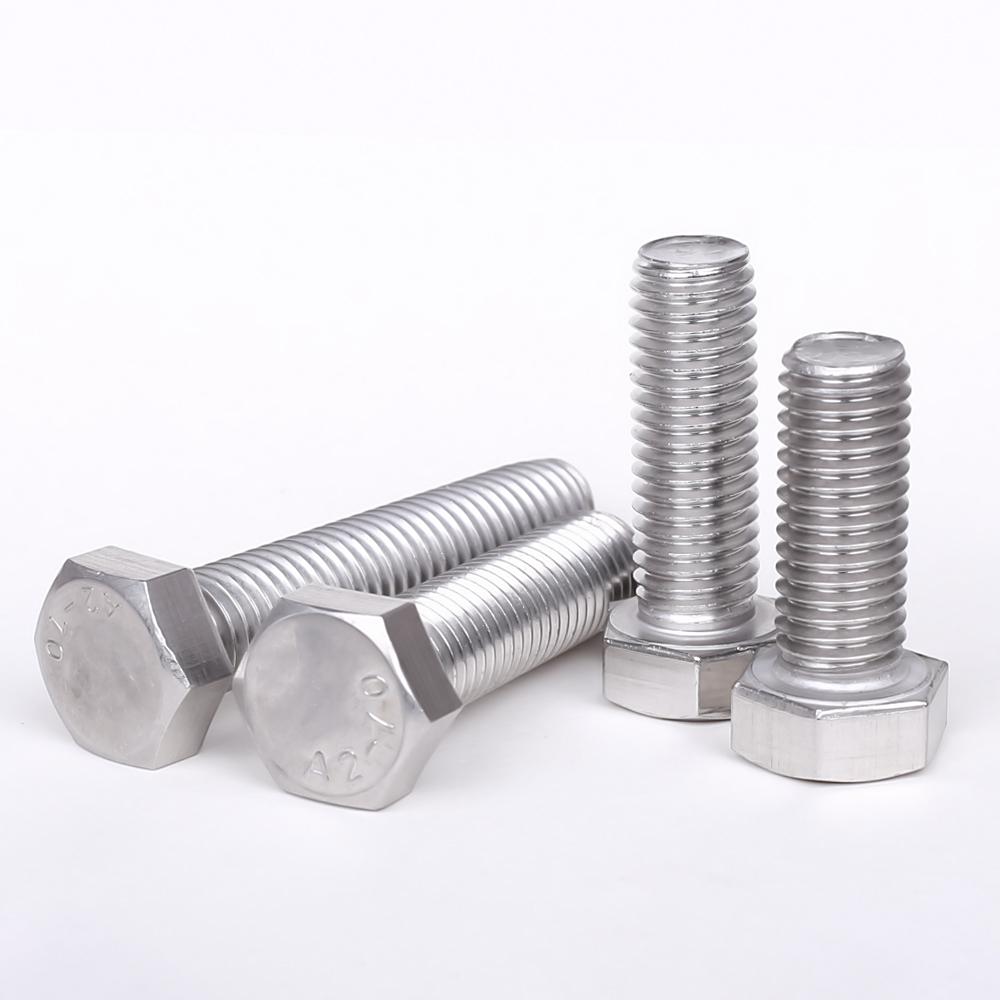
Bulk stainless steel hex bolts should never be a gamble. If your next assembly relies on high-strength fasteners that hold up under pressure, you need a wholesaler who treats every order as a structural decision—not just a transaction. That’s exactly where Wanluo comes in. In this guide, we’ll break down what separates average hex bolts from the ones that keep your projects secure.
The Real Difference Between Cheap Bolts and Bulk Stainless Hex
Most buyers assume a bolt is a bolt, but the gap between generic carbon steel fasteners and bulk stainless hex stock becomes obvious the first time moisture shows up. Cheap zinc-plated bolts rely on a thin coating that scratches during installation, leaving bare steel exposed. Bulk stainless hex bolts carry chromium through the entire alloy, so even if the surface gets scuffed, the material itself resists rust instead of hiding behind a fragile shield.
Strength and fit tell another story. Low-cost bolts often have looser tolerances and softer threads, which can strip under moderate torque or vibrate loose in structural assemblies. Stainless hex bolts bought in bulk from a consistent mill run tend to have cleaner thread rolling and predictable dimensional control, which matters when you're driving dozens or hundreds into the same frame. The upfront price difference is real, but replacement labor and downtime usually erase it within the first corrosion-related failure.
For outdoor, marine, or washdown environments, stainless hex is not an upgrade—it's the baseline. Cheap bolts may survive indoors for years, but once you expose them to rain, salt, or cleaning chemicals, the failure curve gets steep. Buying stainless hex in bulk keeps per-unit cost reasonable and ensures you have matching fasteners on hand instead of mixing random coated bolts that vary in plating thickness.
Torque, Tensile, and the Cost of Cutting Corners
A few years back, a wind turbine gearbox failed three months after installation. The root cause wasn't a flawed design or a bad batch of steel—it was a string of bolts torqued to 80% of spec because a contractor decided to save time by skipping the final pass. That single decision cascaded into a $2 million replacement job and a six-week shutdown. Torque and tensile strength aren't just numbers on a spec sheet; they're the invisible handshake between components that keeps entire assemblies from tearing themselves apart under cyclic loads.
When you cut corners on fastening, you're not saving money—you're borrowing against failure. Under-torqued joints lose preload and invite fatigue cracks around bolt holes. Over-torqued hardware stretches past its elastic limit, leaving a fastener that looks fine but has already lost its clamping force. The margin between tight enough and too tight is often narrower than people think, and it shrinks further when vibration, thermal cycling, or corrosion enters the picture. A few pennies saved on a washer or a skipped calibration check can turn a routine service interval into an emergency teardown.
The real cost shows up in places engineers rarely include in a budget: lost production, warranty claims, reputation damage, and sometimes a safety investigation. That's why the best shops treat torque specs as a floor, not a ceiling, and they verify tensile performance with actual measurements rather than assuming the tool did its job. Because once a joint fails, the cheap shortcut becomes the most expensive line item on the project.
Bulk Buying Without the Guesswork on Grade and Finish
When you're buying in volume, the last thing you need is a surprise when the shipment arrives. We've all been there: a sample looks perfect, but the full run shows inconsistent sheen or a grade that drifts from what you approved. That's why our bulk process starts with a locked specification sheet, not a vague promise.
Each lot is verified against the same reference standard you signed off on. We check surface quality, edge condition, and coating uniformity across random pulls from the middle of the stack, not just the top sheet. If a batch doesn't measure up, it doesn't ship—no back-and-forth, no "close enough" calls.
For buyers who care about repeatability, we also keep a retained sample from your first order. That way, your third or tenth pallet looks exactly like the one that won your trust in the first place.
Stainless Hex Bolts That Ship Fast and Hold Longer
When a project stalls because a fastener is backordered, the cost usually shows up in hours, not dollars. These stainless hex bolts are kept in stock and ready to move, so most orders leave the warehouse the same day they come in. That means less waiting on hardware and more time actually tightening, aligning, and finishing the job.
Beyond the quick turnaround, the hex head design gives you a solid, repeatable grip with a standard wrench or socket, reducing the chance of rounding under torque. The stainless steel itself resists rust and staining in wet or outdoor environments, so the hold you get on day one stays dependable long after installation.
A Wholesaler’s Take on High-Strength Fastener Supply
Running a wholesale operation means you quickly learn which products actually move and which just sit on the shelf. High-strength fasteners are one of those lines where demand never really dips, but the supply side keeps you on your toes. I’ve seen lead times stretch from four weeks to four months depending on the grade and coating, and that volatility forces you to stock deeper than you’d like. It’s not just about having bolts on hand—it’s about knowing which mills are reliable, which heat lots are consistent, and when to lock in pricing before a mill allocation gets cut.
The real challenge isn’t finding high-strength fasteners; it’s finding them with documentation you can trust. A lot of import stock comes with certs that look fine until you get a random pull test back and the numbers don’t match the paperwork. We’ve had to drop three overseas suppliers in the last two years because their Grade 8 and Class 10.9 lots kept failing on hydrogen embrittlement or thread tolerance. That kind of inconsistency costs more than money—it burns relationships with your own customers, the fabricators and maintenance crews who can’t afford a fastener failure on a crane or a press.
For any wholesaler getting serious about this niche, my advice is to build redundancy. Don’t rely on a single mill or a single country of origin for your high-strength line. We split our purchases between domestic forging houses and vetted importers, and we keep a rotating buffer stock of the top fifty sizes—anything from 1/4-20 up to 1-1/2-6 in grades 8, 10.9, and structural A325/A490. It ties up cash, sure, but when your competitor is quoting 12-week lead times and you can ship the same week, that’s how you keep the phone ringing without chasing every bid.
Keeping Job Sites Stocked With Bolts That Don’t Quit
Any crew that has lost an afternoon to a snapped fastener knows the difference between a bolt that holds and one that folds. On a job site, downtime from a failed connection doesn't just eat into the schedule—it forces you to tear apart work you already signed off on. Stocking bolts with a bit more grunt means fewer trips to the supply house and fewer calls to explain why a bracket let go.
The right fasteners handle torque, vibration, and weather without loosening or corroding. Look for bolts with consistent thread depth, a head that doesn't round off under repeated impact, and a coating that survives rain, salt, and concrete splash. When every tray and bucket on site carries bolts you can trust, crews work with more confidence and less guesswork.
It pays to keep a running inventory of the sizes and grades your projects actually burn through, then reorder before the last box rattles empty. A simple restock rhythm—tied to your most common structural and equipment connections—keeps a job moving. Because the best bolt is the one nobody has to think about twice.
FAQ
They're produced from 304 and 316 stainless steel, so they resist corrosion well in damp or outdoor environments.
Yes, the high-strength grades like A2-70 and A4-80 handle serious tension and shear loads without snapping or loosening.
We can supply both standard metric and inch sizes, along with fine or coarse threads, and even match unusual lengths if your project calls for it.
Pricing is tiered based on quantity, and regular buyers often get negotiated rates that make large orders much more cost-effective.
They come in sturdy cartons or pallets, with options for labeled boxes, poly bags, or rust-preventive wrapping depending on your needs.
Marine, construction, food processing, and chemical plants are common, since stainless steel holds up where mild steel would rust quickly.
Yes, mill certificates and third-party inspection reports are available on request to verify chemical composition and mechanical properties.
Most bulk orders ship within 15 to 30 days, though that can shift based on current stock levels and any special finishing you need.
Conclusion
When a bolt snaps under torque or shears off months into service, it usually comes down to what was saved on the front end. Cheap fasteners often carry inconsistent threads, soft heads, and vague grade markings. Bulk stainless hex bolts from a dedicated wholesaler change that equation: you get full traceability on tensile and yield strength, clear finish specs (whether A2 or A4 for corrosion resistance), and a thread geometry that doesn't fight the wrench. The real difference isn't just the alloy; it's the rejection rate you don't see because the supplier already filtered out the junk. Cutting corners on fasteners may trim a line item, but the cost shows up as rework, joint failure, or a torque wrench that never reaches spec before the head rounds off.
Ordering in volume doesn't have to mean settling for mixed lots or hidden backorders. A wholesaler that focuses on stainless hex bolts keeps common diameters and lengths racked, ships on a schedule that matches project timelines, and doesn't leave you guessing whether the batch is 304 or 316. That reliability matters more than a slick catalog. Job sites stay stocked with bolts that hold longer because the material hasn't been stretched past its elastic limit on the first pass, and the finish hasn't flaked off after a season outdoors. High-strength fastener supply, in practice, is about fewer emergency runs, fewer seized assemblies, and fewer callbacks. Bolts that don't quit start with a supplier that doesn't quit on consistency.
Contact Us
Contact Person: Shane
Email: [email protected]
Tel/WhatsApp: 8613357785029
Website: https://www.wanluohardware.com