

Top 10 Corrugated Box Styles That Elevate Your Packaging Performance
2026-11-16
Corrugated boxes often get treated as a last-minute decision, yet their structure shapes everything from freight costs to how customers judge your brand. With so many styles available, choosing the right one can feel like guesswork. This guide breaks down ten designs that genuinely improve packaging performance, whether you need better stacking strength, faster assembly, or a more memorable unboxing. At Imagine Craft Packaging, we focus on turning those structural choices into practical advantages. Here are the styles worth knowing before you commit to your next order.
Regular Slotted Containers Still Earn Their Space on the Dock
Walk a dock at almost any hour and you will still see stacks of regular slotted containers moving from trailer to rack. Their appeal is not complicated: they fold flat when empty, assemble in seconds, and fit standard pallet footprints without a second thought.
What keeps them relevant is the way they tolerate reality. Tape guns, rough handling, mixed pallet builds, and last-minute repacking are all part of dock work, and the RSC does not demand special tooling or careful orientation. A worker can break one down, rebuild it, or adjust the flaps without slowing the line.
Alternatives like die-cut mailers or rigid totes have their place, but they often solve problems the average dock does not have. The regular slotted container remains useful because it is predictable, inexpensive, and already in the workflow. That quiet reliability still earns it a spot on the dock.
Full Overlap Flaps That Keep Heavy Pallets From Crushing Corners
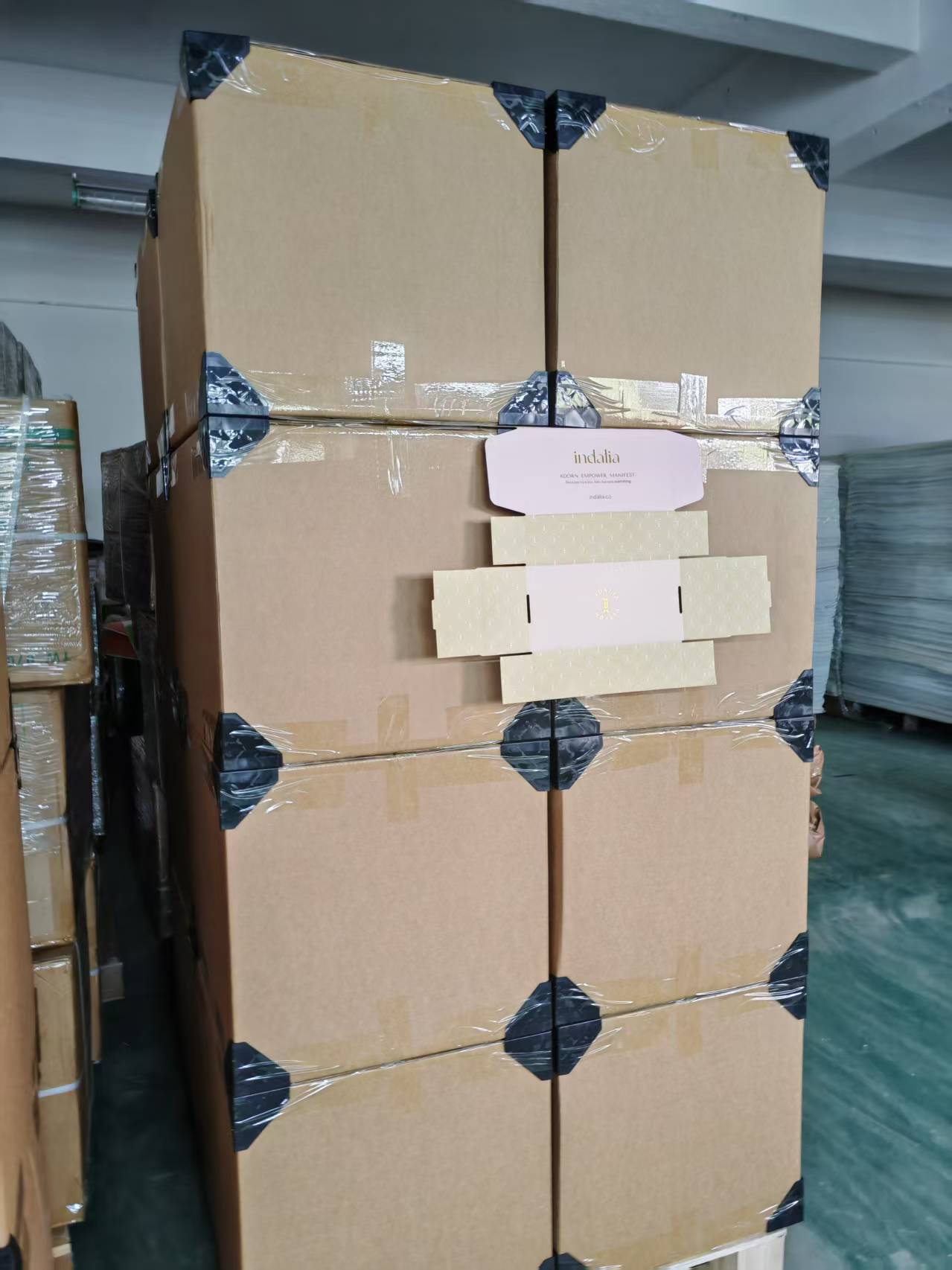
Full overlap flaps solve a very specific stacking problem. On a standard carton, the corners sit over a small gap where the inner flaps stop short, so downward pressure finds those gaps first. With full overlap, the top and bottom panels cover the entire opening, creating a solid deck that transfers the weight through the side walls rather than into the scored corners.
That extra layer makes a real difference when a 1,500-pound pallet sits on top of a lower carton for several days. The corners do not bite into the product, the bottom does not bow as quickly, and the carton survives the repeated forklift nudges that happen during loading. You see fewer crushed edges and less need to re-box before the shipment reaches its destination.
It also helps when stretch wrap is pulled tight around a pallet. The wrap pushes inward on the carton ends, and full overlap flaps give the top and bottom edges more resistance against that inward pressure. Instead of rounding out at the corners, the box keeps its shape and keeps the stack stable from the floor to the top of the load.
Die-Cut Trays Built to Grip the Product, Not Just Hold It
Most trays treat the product like a passenger—cushioned but ultimately free to shift. Die-cut trays work differently. Their recessed contours are cut to mirror the exact shape of the item, so the walls and base actually grip the edges, corners, or curved surfaces. Instead of relying on loose cushioning or friction alone, the material itself wraps around the product. The result is a hold that feels intentional: the part stays where it was placed, even if the tray is tilted, stacked, or jostled during transport.
This grip comes from precision, not pressure. Each cavity is designed with just enough interference to lock the product in without forcing it. A bottle might sit snugly by its neck and base; a circuit board might be caught by its corners; a glass vial might rest between two compressed ribs. Because the fit is custom to the item, there is no one-size-fits-all slack. The product is not merely resting in a pocket—it is being actively held by the shape around it.
What sets this apart from standard blister or foam inserts is how the tray itself becomes the retaining mechanism. There are no extra straps, clips, or adhesive films required. The die-cut form alone does the work of keeping the product stable. For anyone tired of opening a package and finding contents slid to one side, that difference is immediate: the tray grips the product the same way a well-cut socket grips a tool.
Half-Slotted Designs That Move From Packing Line to Retail Shelf Unchanged
A half-slotted box that ships straight from the packing line to the shelf removes a step most stores quietly accept: the unpacking, the rearranging, the search for a display tray. The cutaway front is already there when the case is sealed, so the same unit that protects products in transit becomes the tray customers pull from.
What makes this work is the balance between open access and remaining sidewall height. The back and side panels stay tall enough to keep rows from shifting during transport, while the lowered front keeps the first product visible and easy to grab. It feels less like a repurposed shipping carton and more like a planned shelf fixture.
For store staff it means one less touchpoint on restock day. The case goes where it belongs, the top is removed, and facing never has to be rebuilt by hand. That consistency is the point: the shelf looks the same at eight in the morning as it did when the line packed it.
Self-Locking Boxes Cut Tape and Extra Hands Out of Packing
Packing usually turns into a juggling act: one hand holds the flap down, the other reaches for the tape dispenser, and the box still shifts out of square. Self-locking boxes remove that whole step. The flaps tuck into built-in slots and lock under their own tension, so the carton holds itself closed before you’ve even reached for a label.
The real payoff shows up on busy fulfillment days. A single worker can fold, fill, and close these cartons without stopping to tape every seam or call someone over to hold a side steady. There’s also less to stock—no tape rolls, no dispensers, no refill scramble—and the finished pack looks tidier because there’s no strapping tape running across the top.
For products that need to be opened and inspected on arrival, the design is just as useful. The tabs release cleanly without tearing the cardboard, so returns and repacking stay simple. It’s one of those small packaging shifts that quietly removes friction from the entire dispatch process.
Five-Panel Wraps Soak Up Impact for Long, Flat, and Unusual Shipments
A five-panel wrap earns its keep the moment a shipment is longer than the biggest carton on the shelf. Instead of sliding a flat tabletop or a set of trim boards into a box with a few inches of air around it, the wrap folds over the piece and holds the face, sides, and ends in one continuous sheet. That structure lets the corrugated board flex and give way before the product does, turning a hard edge impact into a spread-out bump.
The same logic applies to strange shapes that never sit still in a standard carton. A tapered lamp base, a curved bumper cover, or a metal bracket with a protruding flange can all be wrapped tight without padding every hollow space. The board is scored to follow the object, so the finished package has fewer voids and fewer places for movement to build up force during transit.
On the receiving end, that usually means less damage, less repacking, and less time spent filing claims over cracked corners. Long flat goods survive the ride better because the wrap spreads shock across the full length instead of concentrating it at the edges, which is exactly where these shipments tend to break first.
FAQ
It keeps four flaps on one side and four on the other, all meeting at the center, so it runs fast on packaging lines and nests flat when not in use. The tradeoff is that the center seam and corner gaps make it less suitable for heavy or moisture-sensitive goods unless extra sealing or liners are added.
Full Overlap Slotted Containers add roughly a full panel of extra corrugated at the top and bottom, which spreads weight across the entire face. That makes them a better match for dense items, tall stacks, and repeated handling where RSC corners would start to crumple.
A Half-Slotted Container has no top flaps, so it can be loaded from above after being assembled or used as a lid-and-tray system. Products that are tall, irregular, or need custom void fill are easier to place without fighting the flaps, and the open top can accept a matching cover or stretch wrap.
Die-cut mailers are cut for a specific product and often include locking tabs or score lines that fold around the item with less void space. They speed up packing, reduce filler, and create a cleaner unboxing feel, but the tooling makes sense mainly for steady, repeat orders rather than one-off runs.
A roll-end tuck top or a folder-style box can be sized closer to the product because the panels fold into place instead of requiring overlapping flaps. That reduces board area and eliminates tape in some designs, while the folded structure still cushions corners and edges if the fluting and grade are chosen correctly.
Telescope boxes use a separate top and bottom that slide over each other, so the height can be adjusted to the load. That reduces empty space and lets the side walls absorb shocks from the outside, which is useful for heavy, odd-shaped products that would fight a one-piece flap box during packing.
Trays and five-panel folders are strong in that role because they can open into a shallow display base or wrap around a product with minimal taping. A tray with a separate lid, for example, lets the base become the shelf-ready unit while the lid lifts away cleanly, cutting setup time at the store.
Conclusion
Regular slotted containers still show up on loading docks because they do the unglamorous work without complaint. The familiar four-flap geometry is easy to erect, stacks flat when empty, and handles a surprising range of box weights once the right board grade is chosen. Where RSC boxes reach their limit, full overlap flaps take over. The extra depth at the corners adds crush resistance when heavy pallets press down or when boxes are double-stacked in a trailer. It is a subtle change from standard slotted construction, but it spares the bottom edges and keeps the load from settling into itself.
Packaging performance, however, is not only about compression. Die-cut trays grip oddly shaped products instead of relying on loose fill, which makes the unboxing cleaner and the product less likely to shift during transit. Half-slotted designs blur the line between shipping container and retail tray, moving from pack station to shelf without repacking. Self-locking boxes go further by removing tape from the process altogether; the flaps fold into a base that holds itself, cutting assembly time and freeing hands on busy lines. For long, flat, or awkward items, five-panel wraps absorb impact across the full face of the product rather than only at the corners. These styles do not simply contain a product—they shape how it arrives, how it is handled, and how much space and labor it demands along the way.
Contact Us
Contact Person: Sunnie
Email: [email protected]
Tel/WhatsApp: +8615818596517
Website: https://www.imagine-craft.com/