

Top 10 First Aid Bag Manufacturers Worth Your Attention
2026-11-27
Not all first aid bags are created equal, and if you've ever fumbled through a flimsy kit during a real emergency, you already know why. From material durability to smart compartment design, the right bag turns panic into fast, confident action. We've filtered through the noise to spotlight ten manufacturers that actually deserve shelf space, including Kebon, whose practical layouts and rugged builds keep winning over professionals. Here's who made the cut and what makes each one worth a closer look.
What Actually Changes When a First Aid Bag Is Built for Daily Rough Use
Most first aid bags fall apart quietly. The zipper snags on the third week, the nylon frays where it rubs against a boot, and the plastic interior trays crack after one hard drop in a parking lot. When a bag is actually built for daily rough use, the changes are not decorative. The base fabric gets swapped from lightweight ripstop to a heavier, coated material that shrugs off gravel and damp concrete. Seams are bar-tacked at high-stress corners instead of single-stitched, so the bottom does not peel open when you drag it out from under a truck seat. Even the zipper changes: wider teeth, a bigger pull, and a storm flap that keeps dust out of the track.
Inside, the layout stops pretending you will treat it gently. Elastic loops are replaced or reinforced because thin loops lose their grip after a few months of grabbing and stuffing. Pockets gain a slight gusset so they do not burst at the sides when loaded with rolled bandages and torn packaging. The dividers that supposedly keep things organized become removable or stiffer, because a soft divider just collapses under the weight of a full water bottle or a pair of work gloves. Small things matter too: hook-and-loop closures get a quieter, stronger grade, and the handle wrap is thicker so carrying a loaded bag for half a mile does not cut into your palm.
Then there is the shape. A soft, unstructured bag slumps and tips over in a moving vehicle or on a cluttered shelf. A bag made for rough daily use holds its footprint, either through a semi-rigid bottom panel, a reinforced back wall, or a low-slung design that keeps the weight close to the ground. That means when you open it in a hurry, the contents are where you left them, not in a heap against one side. The change is not about looking tough. It is about the bag surviving the same daily grind as the person carrying it, without adding that low-grade worry of whether the kit will be intact when you finally need it.
Materials, Zippers, and Stitching Choices That Show Up Later
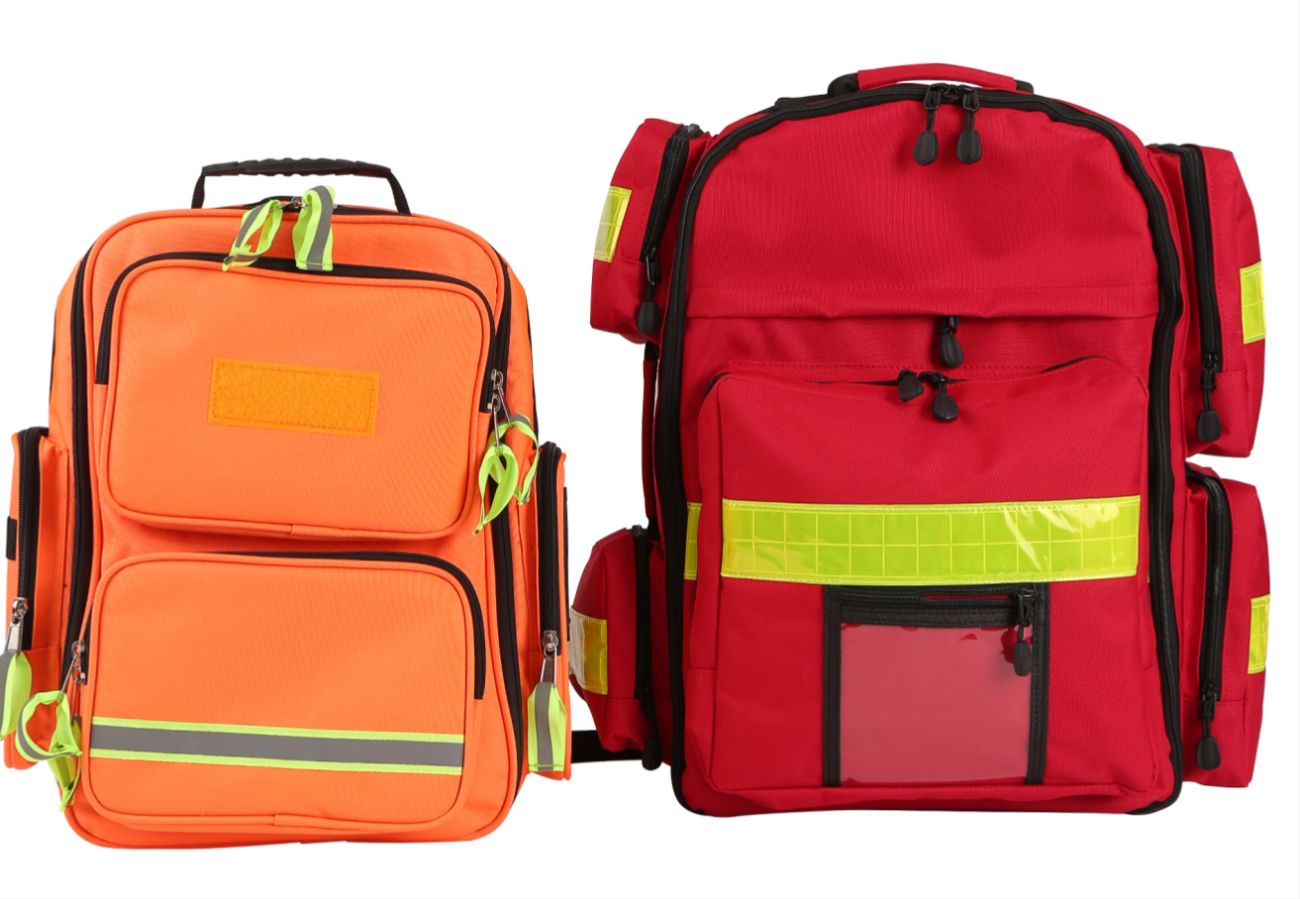
The inner lining is the first place material choices come back around. A stiff canvas or twill looks respectable for the first few weeks, but if the lining is a cheap synthetic blend, you'll start noticing tiny pills forming near the zipper track and the mouth of the bag. Those pills wedge themselves between the teeth, turning what used to be a smooth pull into a jerky, stop-and-start motion. The outer fabric wears visibly and slowly, which you can accept, but the lining tends to fail all at once on some random morning when the zipper suddenly refuses to move.
Zipper tooth shape matters more than brand name. Chunky metal teeth get icy cold in winter and have gaps wide enough to grab the lining edge, but they'll survive losing one tooth without much complaint. Fine nylon coils are lighter and quieter, yet one distorted coil can render the entire strip useless. The slider shape is also part of the story: a flat, squared-off pull catches loose thread from your coat, while a rounded, slightly thick pull rotates easily between your fingers even when you're wearing gloves.
Stitch density and color quietly decide how long an item holds together. Contrast stitching defines the edges at first, but pale thread grays out at friction points while dark thread stretches to reveal its white core. A double-stitch line at the handles and base corners is genuinely useful, but don't pack the stitches too tight—on leather, anything over five stitches per centimeter acts like a perforation line, letting the whole row tear out at once. The smarter move is an extra backstitch at the turning point, not a wall of thread everywhere.
Where Factory Standards Meet Real-World Emergency Needs
Most safety equipment leaves the factory with a checklist signature and a placard promising compliance. It is the moment a worker fumbles for an eyewash station while corrosive mist stings their eyes that the gap between a standard and a need becomes painfully clear.
The real test is not the certificate on the wall, but how fast the water reaches the right temperature, whether the valve opens with one gloved hand, and if the path to the station stays clear when a shift goes sideways. Factory standards set the floor; emergency needs demand something closer to instinct.
Bridging that difference means designing around real motion, real panic, and real seconds. It is where mounting heights, spray patterns, and weekly inspection routines stop being paper requirements and start being the margin between a close call and a recordable injury.
Custom Orders Without the Usual Back-and-Forth Delays
Most shops treat a custom request as the start of a long email chain. You describe what you want, wait for a reply, answer three follow-ups, and still hope the final piece matches what was in your head. Here, the process is built around a detailed order form that captures measurements, material preferences, finish choices, and reference notes in one pass. Instead of trading messages for days, you send everything once and the work begins.
That doesn’t mean questions never come up. If a detail is genuinely unclear or a material combination won’t hold up, you get a single, specific message with options rather than an open-ended request for more information. Most orders move straight from the submitted details into production, which keeps timelines predictable and avoids the slow drift that happens when decisions are made one reply at a time.
For buyers who know exactly what they need, the difference is immediate: fewer check-ins, fewer clarifications, and no need to repeat the same note to multiple people. The record stays in one place, and the maker works from the original instructions instead of a summarized version passed along a chain.
Reading Between the Lines of Compliance Claims and Test Reports
A compliance claim that insists a product 'meets all relevant standards' rarely tells you which standards, which revision, or which configuration was actually assessed. The real information tends to hide in absences: no mention of the tested model, no date of the certificate, no explanation of what 'typical' means. When you place the claim next to the report's sample description, the distance between the two can be more revealing than either document alone.
Test reports reward readers who spend time in the footnotes. A strong headline figure may reflect tightly controlled lab conditions that have little in common with how the product is installed or used. Ambient temperature, mounting position, duty cycle, and sample preparation are not trivia; they are the frame that gives the number its meaning. If those details are missing or hard to find, treat the reported performance as a starting point rather than a guarantee.
Scope and sponsorship also deserve attention. A report can be genuinely third-party and still cover only one hand-picked sample, one production batch, or one narrow clause of a standard. Some certificates quietly expire, reference superseded test methods, or depend on a laboratory that has a long-running relationship with the supplier. Matching the claim to the exact SKU, the exact test criteria, and the exact document version is often where the confidence gets earned.
How the Right Manufacturer Simplifies Reordering and Inventory Planning
A capable manufacturer removes the usual friction from replenishment by giving you dependable lead times and a clear picture of what is moving. Instead of forcing you to build buffers around uncertainty, they help you set reorder points that reflect actual usage patterns, seasonal swings, and upcoming promotions. That shifts inventory planning from a reactive scramble into a simple weekly review.
The real difference shows up in how orders are handled day to day. Some partners offer automated stock alerts or connect directly with your procurement system, so a draft purchase order appears when a SKU hits its threshold. Others keep buffer stock in their warehouse and allow smaller, more frequent deliveries, which means you spend less cash sitting on shelves and more on products that are actually selling.
When demand changes without warning, the right manufacturer adjusts with you. They can pause a scheduled shipment, accelerate a batch, or split an order across locations without treating every change as a disruption. That level of flexibility keeps inventory lean while still protecting you from running out at the worst possible moment.
FAQ
Look beyond basic stitching. Check whether the manufacturer has experience with medical textiles, reinforced zippers, and moisture-resistant linings. Ask for samples loaded with heavy supplies, not just empty bags. A maker that asks about your intended use, storage conditions, and end users is usually more dependable than one that quotes a price within minutes.
It depends on the market. For Europe, REACH compliance for materials often matters more than CE marking on the bag itself, since the medical contents carry the stricter requirements. In the United States, an empty first aid bag usually does not need FDA registration unless it is marketed as part of a medical device kit. You should still request documentation for water resistance, latex-free materials, and preferably ISO 9001 for consistent production.
Many buyers still start in China because of material sourcing and fast production, but Vietnam, India, and Turkey have become realistic alternatives for certain product lines. The real distinction is not country of origin but how a factory handles small-batch customization, colorfastness testing, and lead times. Some Chinese factories have shifted toward higher-end medical-grade textiles, while others remain focused on promotional kits.
Ask for a video tour of the sewing floor, not just a polished product catalog. Request a sample with a custom label or a small design change and observe how the factory communicates. A real manufacturer can usually explain seam allowances, thread types, and minimum order quantities without delaying for days to check with a third party. Trading companies are not always the wrong choice, but pricing transparency and accountability change.
One is ordering based on photos of empty bags. A bag that looks fine empty can bulge awkwardly or tear at the handle when filled with ice packs and bandages. Another mistake is ignoring zipper quality, because small coil zippers fail quickly under frequent opening. Buyers also overlook the interior layout, and loose supplies turn into a mess. Always test a fully packed prototype before confirming bulk production.
There is a visible shift from rigid plastic boxes to soft bags with modular compartments and clear internal panels. Users want one-hand access, especially in workplaces and vehicles. Reflective piping and bright interior linings are becoming standard because they help in low light. Sustainability is also entering the category, with recycled polyester and PVC-free coatings appearing more often.
For fewer than 1,000 units, stock designs usually make more financial sense. Custom tooling pays off when you need a specific shape, strong brand identity, or repeat orders over several years. Keep in mind that custom zipper pulls and printed linings can be done without full tooling, so you can still differentiate a stock bag without major upfront costs.
Inconsistent sample quality, vague answers about material composition, and pressure to approve production before signing off on a pre-production sample are all warning signs. If a factory cannot provide a clear timeline for raw material sourcing or avoids giving references from similar clients, that is a problem. Price is rarely the main issue; poor communication and unreliable lead times cause more damage.
Conclusion
A first aid bag that survives daily rough use rarely earns that reputation from a single feature. It comes from how the fabric is cut, where reinforcement is placed, and whether the zipper still runs smoothly after being pulled with wet or dirty hands. Materials that seem similar on a sample table can behave very differently after weeks in a vehicle or a crowded supply room. Suppliers worth keeping on a shortlist tend to share more than a compliance logo; they provide test reports, explain stitching choices, and admit where a bag is not suited for extreme conditions. That honesty matters more than a long list of certificates because real emergencies do not follow a tidy checklist.
Custom work often reveals how organized a manufacturer really is. Some factories can adjust a pattern, swap hardware, and confirm a revised sample without dragging the process across several email chains. That same operational clarity carries into repeat orders. Stable lead times, consistent component sourcing, and clear SKU management make inventory planning easier for distributors, safety managers, and institutional buyers. When comparing ten manufacturers worth attention, the deciding factor is seldom the lowest unit price. It is whether the bag opens easily under stress, holds its shape after repeated packing, and arrives with the same specifications on the tenth order as it did on the first.
Contact Us
Contact Person: Andy Yu
Email: [email protected]
Tel/WhatsApp: +86 19858933676
Website: https://www.kebonfirstaid.com