

Top Glass Bottle Filling Machine Solutions for High-Speed Packaging
2026-11-16
Running glass bottles at high speed sounds simple until you watch a filler struggle with foam, splashing, or breakage at 300 bottles per minute. The best lines don't just move fast—they hold fill levels within a gram, keep glass intact, and switch between bottle sizes without a full shift of downtime. Wanying Machinery has focused on exactly that challenge, building high-speed glass bottle filling machines that pair servo-driven accuracy with rugged, easy-to-clean construction. Below, we look at the top solutions that consistently deliver speed without sacrificing the quality your product deserves.
Precision Fill Accuracy Without the Drip
Getting the exact amount into the container used to mean accepting a few drops down the side or a slow trickle after the nozzle shuts off. That trade-off disappears here. The valve seals at the point of cutoff, not a beat later, so the flow stops cleanly every time. Whether you're filling a narrow-neck bottle or a shallow tray, the liquid lands where it should and nothing trails behind.
The difference shows up most when you're running back-to-back cycles. There's no wiping between fills, no pause to catch a stray drip, and no adjustment drift halfway through a batch. The mechanism holds its setting, and the cutoff stays crisp even with thinner liquids that tend to cling and run. It's the kind of consistency you notice in the final count, not just in the feel of the handle.
Scaling Up to 1,200 Bottles Per Minute Without Breaking Glass
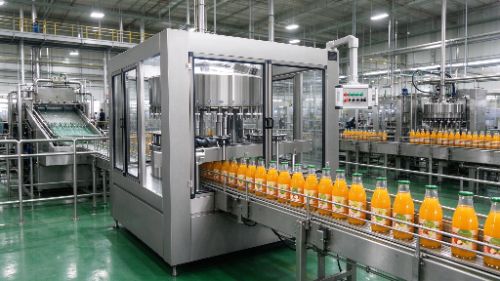
Pushing a glass bottling line to 1,200 containers per minute used to mean accepting a certain percentage of shattered necks and micro-fractured bases. The old playbook was simple: run slower and hope for the best. But modern high-speed filling demands more than brute force—it requires rethinking every point of contact between glass and machine. By replacing rigid guide rails with servo-driven, pressure-sensing grippers and switching from fixed star wheels to independently controlled transfer pockets, plants now hit that pace while keeping breakage below 0.02 percent.
The real breakthrough came from treating each bottle as a fragile payload rather than a unit to be shoved along. Infeed screws with variable pitch gradually stretch the stream into precise spacing, while air-assisted neck guides float bottles through direction changes without side-load stress. Even the filler itself plays a role: synchronized valve opening reduces backpressure spikes that previously caused shoulder cracks at high throughput. Operators who once braced for daily glass cleanup now watch the line run hour after hour with only the hum of motors and the soft clink of bottles settling into crates.
Material handling at this speed also changed the floor layout. Accumulation tables no longer buffer by piling bottles against each other; instead, low-pressure spiral conveyors maintain a constant, gentle forward force. Lubrication moved from soap-and-water baths to dry PTFE rails, eliminating the slip-stick chatter that led to impact fractures. The result isn't just fewer broken bottles—it's less downtime for shard removal, safer work zones, and the ability to finally run lightweight glass that would have shattered under older systems. Scaling up stopped being a gamble and became a matter of precision choreography.
Why Stainless Steel Frames Aren't Enough for Dairy-Based Beverages
Stainless steel frames rarely perform as reliably in dairy-based beverage lines as suppliers claim. Whey proteins and lactic acid form an invisible organic film on metal surfaces, especially in rough areas near frame welds. This film is not only difficult to remove completely with standard CIP systems, but also gradually breaks down the passive layer of stainless steel, leading to microscopic pitting. Once these tiny pits appear, ordinary 304 stainless starts releasing trace metal ions that directly affect product flavor and stability.
Another overlooked issue is the co-deposition of milk fat and calcium salts. Horizontal beams and bolted connections on the frame are the most likely spots for semi-solid milk stone to accumulate, hardening into a tartar-like layer after cooling. Even with high-temperature caustic cleaning, some cross-linked proteins remain, becoming a breeding ground for heat-resistant spores. Many plants only realize the frame design has dead zones after products show acid spoilage or bloating, and simply switching to a different stainless grade cannot fix these geometric flaws.
Frequent thermal cycling also creates micron-level gaps between the stainless frame and plastic gaskets or seals. Casein particles in dairy beverages are drawn into these crevices by capillary action, where normal rinsing cannot reach. Moreover, the thermal expansion coefficient of stainless differs noticeably from adjacent polymer parts, so the frame undergoes slight deformation over time, further widening contamination risks. Only by redesigning the frame structure—reducing horizontal surfaces, increasing corner radii, applying electropolishing, and optimizing drainage slopes—can stainless steel truly work in dairy environments.
Retrofitting Older Lines: Where to Place the New Filler
When retrofitting an older line, the filler's placement should follow the existing product path, not just the nearest open corner. Walk the line from the last holding or mixing step and look for a spot where you can tie in without adding long transfer runs. The best location is usually right after a surge tank or inline mixer, because that lets the filler pull product at a steady head pressure and keeps the new piping short. Check the mezzanine or overhead clearance too—some older plants have low beams that won't accommodate a tall filler bowl.
Another practical approach is to put the filler close to the downstream capper or sealer, especially if the line previously relied on manual filling. Shortening the distance between fill and closure reduces the chance of spills and product exposure. However, older conveyors rarely match the new filler's discharge height. Budget for a small adjustable transfer table or a few inches of conveyor lift rather than forcing the equipment to fit. Also trace the utility drops; existing air and electrical points may be too far or undersized for modern filler controls, so plan new circuits instead of overloading old ones.
Finally, keep operator access and sanitation in mind. A filler tucked behind a column saves floor space but makes daily cleaning and tool-free changeovers awkward. Leave at least enough room to open the guard doors fully and roll a portable CIP cart alongside. On older lines with narrow aisles, rotating the filler 15 or 20 degrees can create the needed clearance without moving other equipment.
The Hidden Cost of Cheap Nozzle Seals in High-Speed Filling
Plant managers often celebrate the upfront savings from budget nozzle seals, but those savings evaporate the moment a filling line hits 400 bottles per minute. A seal that tolerates slight misalignment at low speed begins to shave microseconds off each cycle at high speed, and soon the machine is fighting itself. Operators notice more rejected containers, more micro-leaks, and more unscheduled stops. The real price isn't on the invoice—it's in the overtime hours and the scrap bins.
On a high-speed rotary filler, a nozzle seal isn't just a wear part. It's the interface between precision fluid control and relentless mechanical motion. Cheap compounds harden under CIP temperatures or swell with aggressive sanitizers, changing the seal's compression set within a week. That tiny deformation forces the filling valve to compensate, and every compensation introduces a new drip point. Before long, the line is running at 85% efficiency, and nobody connects it back to the seal because the symptoms appear everywhere else.
The hidden cost also shows up in maintenance logs. A premium seal might last three months of continuous production; a cheap one might fail every three weeks. But the real difference isn't the seal price—it's the 45 minutes of downtime per replacement, the risk of contamination during changeover, and the slow erosion of confidence in the line's repeatability. When a brand ships product with inconsistent fill levels, the cost travels all the way to the consumer's hand.
Can Your CIP System Keep Up With 24/7 Production?
When production lines run around the clock, every minute spent cleaning is a minute lost. Many facilities rely on CIP systems designed for a different era—ones that follow fixed recipes, consume excessive water and chemicals, and require manual verification before the next batch. The real question isn’t whether your system can clean, but whether it can do so fast enough to match throughput without compromising food safety. Delays in changeover or extended rinse cycles silently eat into capacity, and the cost compounds week after week.
A modern CIP system that keeps up with 24/7 schedules is rarely a single upgrade; it’s a combination of smarter controls, real-time conductivity and turbidity sensing, and the ability to recover final rinse water for the next pre-rinse. These adjustments shorten cycle times while actually lowering utility loads. For plants running multiple product lines with allergens or colorants, the ability to validate cleaning in-line—rather than waiting for lab results—turns hours of downtime into minutes. That’s the difference between meeting production targets and constantly explaining shortfalls.
If your current CIP skid can’t log cycle data, adjust chemical dosing automatically, or alert operators when a spray device is clogged, you’re already falling behind. Equipment wear, seasonal water temperature swings, and new product introductions all push a marginal system past its limit. The facilities that thrive under 24/7 pressure treat CIP not as a cost center but as a critical control point that directly affects OEE. Ask your team: when was the last time a cleaning cycle finished ahead of schedule instead of behind?
FAQ
High-speed lines rely on servo-driven filling valves and precision neck handling, not just faster conveyors. You will see dynamic bottle buffering, quick-change format parts, and automated weight or flow calibration. Standard lines often depend on fixed timing and manual adjustments, which creates bottlenecks once speeds exceed roughly 300 bottles per minute.
Isobaric or counter-pressure filling is still the go-to for carbonated drinks. It maintains a consistent CO2 blanket above the product and uses pre-evacuation plus back-pressure to keep foam in check. Getting the product temperature as close to 0°C as practical and controlling fill tube design make a bigger difference than raw line speed.
Breakage usually spikes when bottles collide or change direction too aggressively. Look for servo-controlled feed screws, low-pressure air conveyors, and neck-guided transfers instead of side-belt squeezing. Lightweight glass designs need matched grippers and star wheels, plus regular audits of guide rail alignment. Many plants cut breakage by 30 percent or more after switching to neck-handling throughout the filler and capper area.
Shift from calendar-based fixes to sensor-driven condition monitoring. Watch seal wear on filling valves, calibrate load cells or flow meters weekly, and log CIP cycle pressures rather than relying on time alone. A 15-minute daily inspection of star wheel pockets and guide rails prevents most jams that turn into major downtime.
Yes, combination fillers with exchangeable valve modules can switch between isobaric and gravity or piston filling. The key is designing the manifold and CO2 supply for both modes without cross-contamination. Quick-change format kits should include product contact parts, not just bottle guides, so a changeover takes under an hour for a skilled crew.
For juices, dairy alternatives, or low-acid drinks, ultra-clean or aseptic fillers isolate the filling zone and use sterilized glass, caps, and gas. Even for pasteurized products, look for sloped surfaces, minimized threaded connections, and automatic SIP cycles that reach every product contact point. Laminar flow over open bottles is becoming standard, not optional.
Modern lines generate thousands of data points per minute from fill levels, cap torque, and bottle pressure. Integrating that data into one control platform lets operators spot drift before it causes rejects. Features like automatic weight correction, remote diagnostics, and digital twin simulations of format changes reduce reliance on trial and error.
Start by mapping the actual bottleneck, often the filler or capper, not the conveyor. A modular filler upgrade with new servo valves and a faster cap feeder can lift output 20 to 40 percent. Keep existing bottle washers and labelers if they have reserve capacity, but verify bottle stability at higher speeds before committing.
Conclusion
High-speed glass bottle filling brings a set of challenges that go far beyond simply moving product faster. Precision fill accuracy without the drip comes down to servo-driven valves, vacuum pull-back nozzles, and short, clean cut-offs that prevent foaming and product loss on carbonated or viscous liquids. When lines scale up to 1,200 bottles per minute, the real test is handling glass without micro-fractures or jams, so look for fillers with servo synchronization, neck-guided transports, and controlled bottle-to-bottle spacing. Dairy-based beverages add another layer: a basic stainless steel frame is not enough because product residues and cleaning chemicals attack standard finishes. Electropolished 316L contact parts, sloped surfaces, and fully welded seams become the baseline for safe, repeatable runs.
Retrofitting an older line requires placing the new filler where bottle flow stays linear, usually between the rinser and capper, with enough space for accumulation and maintenance access. At the same time, cheap nozzle seals quietly inflate long-term costs; in high-speed filling, low-grade elastomers wear quickly, leak under pressure, and force unplanned downtime. Spend on FDA-compliant seals and monitor replacement intervals. Finally, a 24/7 CIP system has to do more than circulate hot water. It needs enough flow rate and spray ball coverage to scour every product-contact surface, including valve internals and manifold dead legs, otherwise microbial risk grows with every shift. These integrated choices, not raw speed alone, define a top glass bottle filling solution.
Contact Us
Contact Person: Tyson
Email: [email protected]
Tel/WhatsApp: +8613396971296
Website: https://www.wanyingmachinery.com