

Top Louver Damper Valve Manufacturer for Industrial Flow Control Solutions
2026-07-13
In the world of industrial flow control, finding a reliable louver damper valve manufacturer can make all the difference between efficient operations and costly downtime. These precision-engineered components regulate airflow in demanding environments, from power plants to HVAC systems. At THT, we don't just build valves — we engineer solutions that stand up to the harshest conditions. Whether you're upgrading existing infrastructure or designing a new system, understanding what sets a top-tier manufacturer apart is crucial. Let's explore how the right partner can elevate your flow control strategy.
Understanding the Role of Louver Damper Valves in Flow Regulation
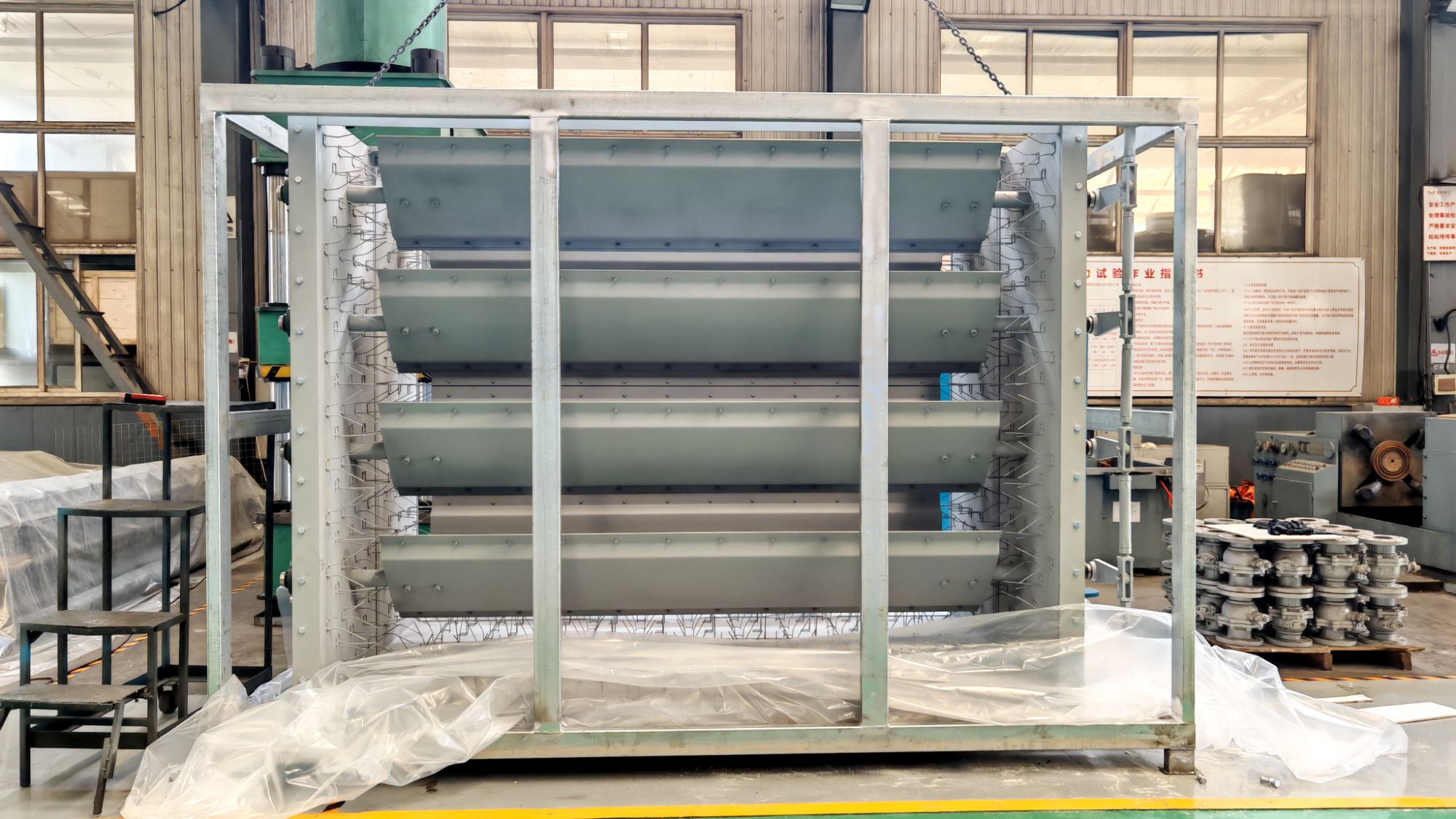
Louver damper valves regulate flow through a series of angled blades that rotate in unison, much like the slats of a window blind. This design allows for precise modulation of the cross-sectional area open to fluid or gas, enabling fine-tuned control over velocity and pressure. Unlike single-blade butterfly valves, the multi-blade configuration disperses the flow stream more evenly, reducing turbulence and localized wear, which is critical in applications demanding stable downstream conditions.
These valves excel in large ductwork and industrial air-handling systems where flow distribution is as important as overall volume. By adjusting the blade angle, operators can manage complex flow patterns, redirecting or balancing air across multiple zones without the abrupt pressure drops typical of simpler throttling devices. The inherent linearity in their control response also simplifies integration with automated process control loops, making them a favorite in power generation, chemical processing, and HVAC environments where consistency is key.
Another often-overlooked advantage is their ability to handle bidirectional flow without significant performance loss. While many flow control valves favor a single direction, louver dampers maintain a symmetric behavior, which is invaluable in reversible systems like ventilation circuits in tunnels or mines. Combined with robust construction that withstands high-temperature and high-particulate streams, their role extends beyond mere regulation to ensuring operational safety and longevity in harsh settings.
Critical Industries That Rely on Precision Air and Gas Control
In semiconductor fabrication, even microscopic fluctuations in air pressure or gas purity can ruin entire batches of chips. The lithography and etching processes demand tightly controlled environments where airborne contaminants are measured in parts per trillion. Precision gas delivery systems maintain exact flow rates for reactive gases, while vibration-free air handling keeps nanoscale alignment stable. Without this level of control, the relentless march toward smaller, faster processors would stall.
Medical device manufacturing and pharmaceutical production present a different kind of challenge. Here, compressed air and specialty gases often come into direct contact with products that enter the human body. A slight deviation in humidity or an unexpected particle spike can force a recall costing millions. Cleanroom protocols rely on precision regulators and filters that perform consistently over years of operation, ensuring sterility without introducing chemical cross-contamination.
Food and beverage packaging also depends on subtle air and gas management. Modified atmosphere packaging uses carefully calibrated injections of nitrogen or carbon dioxide to extend shelf life without preservatives. The margin between a crisp bag of salad and a soggy, spoiled mess can be a fraction of a percent in gas composition. Across dairies, breweries, and snack lines, reliable pneumatic controls keep production humming and waste to a minimum, often under washdown conditions that would destroy ordinary equipment.
Material Selection for Harsh Operating Environments
Choosing the right material for harsh environments goes beyond basic strength and corrosion resistance. It demands a careful balance of mechanical properties, environmental compatibility, and long-term stability. Factors such as temperature extremes, chemical exposure, abrasive wear, and radiation can all degrade materials in unexpected ways. For instance, metals that perform well at room temperature may suffer from embrittlement at cryogenic conditions or creep at elevated temperatures. Similarly, polymers and elastomers can harden, soften, or swell when exposed to certain chemicals, compromising seals and gaskets. A thorough understanding of the operating environment is essential—including not just the primary conditions but also potential upset scenarios that could push materials beyond their limits.
In practice, material selection often starts with identifying the dominant degradation mechanisms. For corrosive settings, stainless steels, nickel alloys, or titanium might be considered, but each has specific weaknesses. Chloride-rich environments, for example, can cause pitting and stress corrosion cracking in many stainless steels, making duplex or super duplex grades more suitable. When abrasion is a concern, hardfacing layers, ceramics, or tungsten carbide coatings can extend service life dramatically. Composite materials and engineered plastics offer lightweight alternatives but require validation for chemical resistance and dimensional stability under thermal cycling. Testing under simulated conditions is critical, as even small impurities in process fluids can accelerate attack beyond what standard corrosion charts predict.
Beyond the technical specs, cost, availability, and manufacturability often drive the final choice. A material that requires exotic welding procedures or has a long lead time may not be practical for a given project, no matter how well it resists the environment. Lifecycle considerations—such as inspection intervals, maintenance access, and replacement complexity—also influence decisions. Smart material selection integrates not just the initial design phase but also feedback from in-service performance. Field experiences, failure analyses, and evolving best practices all contribute to building a knowledge base that helps engineers avoid pitfalls in future applications. When done well, material selection becomes a strategic advantage, ensuring reliability and safety in the most demanding conditions.
Tailored Solutions from Concept to Commissioning
Every project begins with a raw idea, and our role is to refine it into a clear, actionable plan. We don't just listen—we dig deep to uncover the real objectives behind your vision. Whether it's a niche product or a large-scale system, our team crafts a development path that respects your timeline, budget, and technical requirements. The result is a concept that's not only feasible but poised for real-world impact.
From there, we move beyond blueprints and into execution. Our engineers and designers work side by side, iterating rapidly and testing rigorously to catch issues before they become problems. We handle the messy details—supply chain quirks, integration hurdles, compliance checks—so you don't have to. The handover isn't just a deliverable; it's a fully validated system, complete with the documentation and training your team needs to take full ownership from day one.
What sets us apart is the continuity we bring. You're not juggling multiple vendors for design, prototyping, and rollout. One team, one conversation, from the first sketch to the final live run. That eliminates finger-pointing and keeps knowledge intact. We've seen how small miscommunications can snowball, so we've built our entire process around transparency and shared accountability. Your success becomes our success, and that's a promise we don't take lightly.
Ensuring Long-Term Reliability with Proactive Maintenance
True reliability isn't about reacting to failures—it's about anticipating them. Proactive maintenance shifts the focus from firefighting to foresight, catching early signals of wear and tear before they cascade into costly downtime. By integrating condition monitoring tools, we track real-time asset health, using vibration analysis, thermal imaging, and oil diagnostics to pinpoint emerging issues. This approach keeps critical machinery running smoothly, extending its service life while sidestepping the chaos of emergency repairs.
Data is the backbone of proactive strategies. Historical performance trends, coupled with predictive algorithms, allow us to schedule interventions precisely when needed—not too early, not too late. This avoids wasteful calendar-based overhauls and ensures components reach their full life potential. Moreover, it informs smarter spare parts management, reducing inventory bloat and ensuring that what's on hand actually matches the plant's evolving risk profile.
But reliability isn't just about technology; it's a cultural shift. Frontline operators become the first line of defense, trained to spot subtle changes in sound, vibration, or output quality. Regular dialogues between maintenance teams and engineers turn scattered observations into actionable intelligence. Over time, this builds a living maintenance playbook that adapts as equipment ages, turning reliability into a continuous, self-correcting system rather than a periodic scramble.
What Sets a Quality Manufacturer Apart in This Niche
It’s rarely the loudest claims that signal genuine quality—it’s the quiet consistencies. A manufacturer worth their salt will demonstrate an almost stubborn dedication to materials that others might deem ‘good enough.’ You’ll notice it in the heft of a component, the uniformity of a finish, or the way a seemingly minor detail is machined with the same care as a critical joint. They’ve moved beyond the checkbox mentality of quality control and into a realm where every departure from perfection is treated as a personal failure.
Beyond the physical product, look at how they treat their own knowledge. The best in this niche often resemble obsessive archivists, maintaining meticulous records not just for traceability but because they understand that mastery is a cumulative thing. They’ll have a bench of experienced hands who can tell you why a specific radius exists on a third-generation design, and they’ll pair that deep-rooted intuition with modern metrology that validates what they already feel. This blend of instinct and evidence is almost impossible to replicate.
Communication can be a remarkable tell. A truly confident manufacturer doesn’t need to oversimplify or deflect. They’ll walk you through the constraints of a process, explain why a lead time extends, or even suggest a less profitable approach if it genuinely serves your goal better. This transparency isn’t just good service; it’s a byproduct of a culture where expertise isn't hoarded, but shared. That candor is the most valuable long-term asset you’ll find in a partner.
FAQ
A louver damper valve uses a series of parallel blades, or louvers, to regulate airflow or gas flow within duct systems. When the blades rotate, they either open to allow flow or close to restrict it, giving precise control over volume and pressure. It’s a simple but highly effective mechanism used in everything from power plants to HVAC installations.
Specialized manufacturers bring deep engineering expertise, custom fabrication capabilities, and a track record in demanding industrial environments. Instead of a one-size-fits-all approach, they design valves that match specific pressure drops, temperature ranges, and material requirements, which leads to longer service life and fewer operational issues.
Louver dampers offer finer modulation across a wider range of partial openings, making them ideal for applications where you need to frequently adjust flow without causing turbulence or high pressure losses. Butterfly valves can work for isolation but often lack the same linear control, and gate valves are generally for on/off service rather than throttling.
You’ll find them in power generation (boiler air and flue gas systems), petrochemical processing, cement plants, steel mills, and large-scale HVAC systems. Any setting that moves large volumes of air or exhaust at varying temperatures and pressures can benefit from a well-built louver damper.
Look at their material options (carbon steel, stainless, alloys), sealing technologies, and whether they can handle your site’s temperature and pressure extremes. Also check their testing protocols—do they perform leakage and torque tests under simulated conditions? Finally, after-sale support and availability of spare parts matter a lot for long-term reliability.
Yes, when properly specified. Manufacturers use high-grade alloys, specialized seals, and sometimes refractory linings to withstand temperatures exceeding 1000°F and aggressive chemical exposure. The key is to communicate your exact process conditions so the design can incorporate the right clearances and expansion joints.
Regular inspection of blade edges, bearings, and seal integrity is crucial. Lubricating drive mechanisms, checking for distortion due to thermal cycling, and cleaning buildup that can cause sticking all prevent premature wear. A well-maintained damper can last decades, even in harsh service.
Conclusion
In demanding industrial settings, louver damper valves play a quiet but vital role—regulating airflow, balancing pressure, and isolating gas streams with precision. A manufacturer that truly leads in this niche doesn't just produce hardware; it engineers control solutions from the ground up. By understanding the subtle dynamics of flow regulation, they design valves that respond accurately in power plants, cement kilns, steel mills, and chemical refineries—anywhere that consistent air and gas management is non-negotiable. Material expertise becomes a differentiator here: choosing the right alloys, linings, and coatings means the difference between a valve that endures years of corrosive, high-temperature exposure and one that fails prematurely.
What separates a top-tier partner from a commodity supplier is the blend of tailored engineering and lifecycle commitment. Instead of offering off-the-shelf products, they collaborate from concept through commissioning, customizing blade profiles, actuation, and control interfaces to match the exact process demands. Post-installation, proactive maintenance programs—supported by on-site diagnostics and performance trending—transform the valve from a simple component into a managed asset. The result is long-term reliability, fewer unplanned shutdowns, and genuine peace of mind for plant operators. This level of care, backed by deep application knowledge and responsive support, defines a manufacturer worth trusting in an industry where consistency and safety hang on every precision movement.
Contact Us
Contact Person: Su Zhang
Email: [email protected]
Tel/WhatsApp: +86-25219206
Website: https://www.tht-valve.com/