

Top Transcatheter Aortic Valve Options Worth Considering
2026-10-20
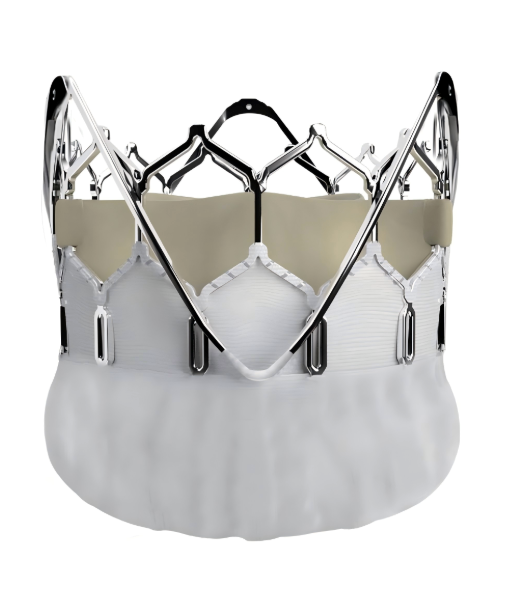
Choosing a transcatheter aortic valve today can feel overwhelming. The top transcatheter aortic valve options worth considering have multiplied, and each brings real differences in delivery profile, annular sealing, pacemaker rates, and long-term durability. For heart teams and patients, the real question is no longer whether TAVR works—it's which option best fits the anatomy and the life ahead. At INT Medical, we believe better decisions start with clearer comparisons. This guide cuts through the noise to highlight what actually matters.
Valve Design Choices That Shape Long-Term Comfort
The internal sealing method largely determines whether a valve still feels smooth after years of daily use. Ceramic disc cartridges typically hold up better than rubber washers, resisting the scoring that leads to drips and a stiff handle. Yet the grease packed between those discs matters just as much—poor lubrication breaks down in hard water or high heat, so the o-ring compound and factory-applied lubricant are quiet contributors to long-term ease.
Handle travel and leverage shape the physical effort behind every turn. A quarter-turn mechanism avoids the repetitive twisting of multi-turn stems, but a short, slippery lever can still frustrate wet hands. Small design touches, like a textured thumb pad or a slightly flared grip, give fingers a natural anchor and reduce strain during frequent adjustments.
Body material interacts with local water chemistry in ways that affect comfort over time. Low-lead brass or stainless steel resists mineral buildup that narrows internal passages and creates noisy flow. Glass-reinforced plastic valves may be lighter, but repeated hot-cold cycles can introduce subtle dimensional shifts that compromise sealing stability after a few seasons.
How Imaging Guides the Final Implant Decision
Precise implant placement rarely starts with the implant itself. It begins with a careful read of the anatomy that will host it. Cross-sectional imaging, particularly cone beam computed tomography, reveals the hidden contours of bone that two-dimensional films simply cannot show. From buccal concavities to the exact path of the inferior alveolar nerve, these images turn a blind surgical guess into a measured plan. The decision to use a shorter implant, angle it slightly, or choose a narrower platform is often made long before the first incision, based on what the scan reveals.
Beyond bone volume, imaging shapes the prosthetic outcome. The relationship between the planned implant position and the intended crown is mapped digitally, allowing for a restorative-driven approach. If the scan shows that a standard implant would emerge too far palatally or crowd the adjacent root, the plan shifts. Sometimes the better choice is a custom abutment, a tilted implant, or even a different tooth replacement altogether. These are not last-minute adjustments; they are anticipated in the quiet analysis of the data.
The final implant decision is rarely a single "yes" or "no." It is a series of small, informed choices about diameter, length, trajectory, and timing. Imaging provides the evidence for each one. When a surgeon chooses to graft first, delay placement, or select a zygomatic fixture, the rationale often traces back to a specific finding on the scan. In that sense, the image is not just a picture—it is the beginning of the surgical logic.
The Real Differences Between Balloon and Self Expanding Frames
Most people assume a balloon-expandable stent and a self-expanding frame are interchangeable, but the mechanics tell a different story. A balloon frame sits passively on the delivery catheter until a high-pressure balloon inflates inside it, forcing the metal to yield and lock into place. It relies on plastic deformation—once you stretch it beyond its elastic limit, it stays there. That means you get precise control over the final diameter, but you also need to be careful not to overexpand and crack the struts. Self-expanding frames, by contrast, are built from nitinol, a shape-memory alloy that wants to spring back to a preset shape. They are compressed into a sheath, and when you pull that sheath back, the frame expands on its own until it meets resistance from the vessel wall.
The real difference shows up in how each one handles irregular anatomy. Balloon-expandable frames are rigid once deployed—if you put one in a curved or tapering vessel, it holds its cylindrical shape and may not hug the wall perfectly. That rigidity can be an advantage in a calcified lesion where you need to punch through plaque, but it can also create edge dissections if the vessel diameter changes abruptly. Self-expanding frames keep a gentle outward force over time, so they adapt to vessel movement and continue to expand if the vessel dilates later. That chronic outward force is why they are preferred in areas like the superficial femoral artery, where bending and compression are constant.
Another underappreciated difference is the deployment feel. With balloon frames, you inflate, deflate, and you are done—there is no second chance to reposition because the metal is already deformed. Self-expanding frames give you a brief window of partial deployment where you can still pull the frame back into the sheath if you misjudged the landing zone. That single feature changes the entire workflow. In tight, tortuous segments, a self-expanding frame can be deployed slowly, allowing the operator to watch how it sits before fully releasing it. Balloon frames demand more upfront planning because the tip of the catheter is exactly where the frame will end up, and once you commit, you cannot take it back.
What Patients Over 80 Often Overlook Before Choosing
At this stage of life, the obvious factors—specialty, location, insurance—tend to dominate the decision. But what gets quietly skipped is how the clinician communicates when there isn’t a clear answer. Many over-80 patients assume a specialist’s confidence equals competence, yet the more telling sign is whether they say “I don’t know, but here’s how we’ll find out” without rushing to a prescription or scan. That candor matters more than a wall of framed diplomas.
Another overlooked piece is the practical rhythm of follow-up care. A brilliant diagnosis means little if the office relies on a patient portal you can’t navigate or a phone tree that buries human contact. Ask directly: who calls with lab results, how long does a callback usually take, and what happens on weekends? These details feel minor in the consultation room but become the whole experience once you’re home managing symptoms.
Finally, consider the doctor’s comfort with deprescribing. Many older adults carry a list of medications that made sense a decade ago but no longer align with current goals. A physician who only adds treatments rarely looks at what can be safely removed. Before choosing, ask whether they routinely review the entire medication list for possible reductions—not to be difficult, but to protect the quality of the years ahead.
When a Second Valve Becomes the Smarter Path
In many fluid systems, a single valve seems sufficient until a closer look reveals hidden risks. A second valve isn't just a spare part—it's a deliberate choice that can prevent catastrophic failures during maintenance, leakage, or unexpected pressure spikes. When downtime costs more than the hardware itself, redundancy stops being a luxury and starts making practical sense.
Consider scenarios where isolation is non-negotiable: double block and bleed arrangements, critical safety loops, or lines carrying hazardous media. One valve might seal well under normal conditions, but what happens when a particle lodges in the seat or thermal cycling causes wear? A second valve buys you a window to operate, inspect, or replace without shutting down the entire process.
The smarter path isn't about adding complexity for its own sake. It's about matching the design to the consequence of failure. If a leak could release toxic gas, contaminate a batch, or violate an environmental permit, the extra valve is cheap insurance. Engineers who think in terms of total lifecycle cost—not just initial purchase price—often find that two well-placed valves outperform one "good enough" solution in the long run.
Why Some Heart Teams Favor One Delivery System Over Another
The preference for one delivery system over another often stems from the specific anatomical challenges a patient presents. A heart team may lean toward a particular transcatheter approach when femoral access is compromised, or when the aortic arch has severe tortuosity that makes one route more predictable than another. In complex cases, the collective experience of the operators with a given platform can sway the decision, as familiarity breeds confidence in handling unexpected turns during deployment.
Institutional habits also play a quiet but significant role. Teams that have invested heavily in training for a certain system tend to stick with what they know works under pressure. Procurement contracts and the availability of multiple valve sizes in the inventory can further tip the balance. When a hospital stocks a wider range of sizes from one manufacturer, teams may default to that option simply because it minimizes the risk of being caught without the right fit during a live procedure.
Finally, clinical evidence and real-world outcomes shape preferences over time. Some delivery systems have shown lower rates of vascular complications in registries, while others are favored for their lower profile in patients with small iliac vessels. Heart teams often weigh these data against their own logged outcomes, and when a particular system consistently delivers smoother recoveries or shorter procedure times, it naturally becomes the default choice for the majority of cases.
FAQ
Current options generally fall into two families: balloon-expandable valves like the Edwards SAPIEN platform and self-expanding valves such as the Medtronic Evolut series or Abbott's Navitor. Some centers also have experience with mechanically expandable designs, though those are less common. Each has its own frame geometry, leaflet material, and delivery profile that influence how it's chosen for a given patient.
Balloon-expandable valves are crimped onto a balloon and pushed outward to anchor in the annulus, giving the operator precise control over placement. Self-expanding valves are constrained in a sheath and gradually deploy as the sheath is withdrawn, which can be more forgiving if repositioning is needed. The choice often depends on annular shape, calcification pattern, and whether the team wants a higher or lower implant depth relative to the coronary ostia.
For smaller aortic annuli, self-expanding platforms with supra-annular leaflet positioning—like the Evolut Pro+ or Navitor—often deliver better hemodynamics because the valve leaflets sit above the native annulus, leaving a larger effective orifice area. Balloon-expandable valves sit more intra-annularly, which can sometimes result in higher residual gradients in very small anatomies, though newer iterations have improved this.
Yes, many current-generation valves incorporate outer skirts or cuffs to seal the annular space. For example, the SAPIEN 3 Ultra uses a taller outer skirt, and the Evolut series added an external pericardial wrap. These features have significantly reduced moderate or severe paravalvular leak compared to earlier generations.
Durability data beyond 5-8 years is still accumulating, but bench testing and early clinical follow-up suggest similar performance across major platforms. Patients with longer life expectancy may prioritize a valve design with proven low gradients and a track record in younger cohorts, while acknowledging that all biological valves can eventually degenerate.
Recent iterations have focused on lower delivery profiles, better annular sealing, and improved hemodynamics. The SAPIEN 3 Ultra Resilia uses a dry-tissue technology, while the Evolut FX added a more flexible delivery system and a stable deployment frame. Abbott's Navitor has redesigned leaflets to reduce gradients. These changes aim to make the procedure safer and expand eligibility to more complex anatomies.
Most modern TAVR valves can be delivered transfemorally if the iliofemoral vessels are large enough. However, some self-expanding systems have a slightly larger introducer profile in certain sizes, which may push the team toward an alternative access like transcaval or transaxillary in patients with small vessels. The valve's delivery mechanism also influences how precisely the team can position it in a horizontal aorta or heavily calcified annulus.
Ask about the expected valve opening area after implantation, the risk of needing a pacemaker, how the valve's design handles their specific aortic anatomy, and what follow-up imaging will look like. It's also worth discussing the durability evidence for the specific valve model your heart team recommends, as well as whether a valve-in-valve procedure later would be feasible.
Conclusion
Choosing among today's transcatheter aortic valve options rarely comes down to a single spec sheet. The most durable satisfaction often starts with valve design: leaflet material, skirt height, and frame geometry all influence how the implant settles against calcified annulus tissue, affecting long-term comfort and paravalvular leak risk. Pre-procedural CT imaging is no longer just about sizing—it maps landing zone calcium, predicts coronary obstruction, and lets the team simulate final implant depth before anyone enters the lab. That planning step often tilts the choice between a balloon-expandable frame, like the SAPIEN platform, which gives precise, controlled deployment and strong radial force, and a self-expanding frame such as Evolut, which offers gradual release, often better conformability in irregular annuli, and easier access to coronary ostia later. Neither is universally superior; the calcification pattern and annular shape make one feel more predictable than the other for a given patient.
Patients over 80 frequently overlook that the valve choice is only part of the picture—access vessel size, frailty, and the need for future procedures matter just as much. A smaller delivery system may be kinder to tortuous iliofemoral arteries, even if the valve itself isn't the newest on the market. When a previously implanted surgical or transcatheter valve fails, a second valve placed inside the old one—valve-in-valve—often becomes the smarter, lower-risk path, and not every transcatheter device handles that scenario equally. Heart teams also develop strong preferences for one delivery system over another based on handle ergonomics, sheath trackability, and how confidently they can reposition or recapture during deployment. Those human factors, rarely discussed in brochures, frequently decide which of the top options ends up on the table for a particular patient.
Contact Us
Contact Person: Jeffrey
Email: [email protected]
Tel/WhatsApp: 86-0633-2230056
Website: https://www.sd-intmedical.com