

Treadmill Factory Insights: Inside the Manufacturing Process
2026-05-13
Ever wondered what goes into building a treadmill that feels just right under your feet? At Yingruis, we pull back the curtain on a process where precision engineering meets relentless testing. From raw steel to the final belt tension, every step holds a story of design decisions that shape your daily run. Step inside the factory floor, and you might just rethink what a treadmill can be.
Sourcing the Core: How Raw Materials Shape Treadmill Durability
Behind every treadmill that endures years of pounding lies a story that starts deep in the supply chain. The steel chosen for the frame isn't just any steel—premium manufacturers opt for heavy-gauge, high-tensile alloys that resist flex and fatigue. Cheaper models often use lower-grade steel that can develop microfractures over time, leading to wobbles and premature structural failure. This material choice is the silent factor that separates a machine that creaks after six months from one that remains rock-solid a decade later.
The belt and deck wear layer tells a parallel tale of material science. A truly durable treadmill doesn't rely on a simple rubber belt; it incorporates layers of reinforced fabric, often with a coating engineered to reduce friction. The deck beneath must strike a delicate balance—hard enough to prevent warping, yet slightly softer than the running surface to absorb shock. Phenolic resin-infused boards have become a hallmark of longevity, resisting moisture absorption and compression that plague standard MDF found in budget alternatives.
Even the cushioning systems that protect joints depend on raw material integrity. Top-tier treadmills use elastomers and rubber compounds formulated to rebound consistently over millions of cycles, whereas generic foam padding degrades into flat, unresponsive layers. These components rarely get the spotlight, but they form the backbone of a machine that can deliver a stable, injury-reducing surface year after year—proving that true durability isn't just an engineering achievement, it's a sourcing philosophy.
Steel Meets Sweat: Welding the Unseen Backbone of Every Machine
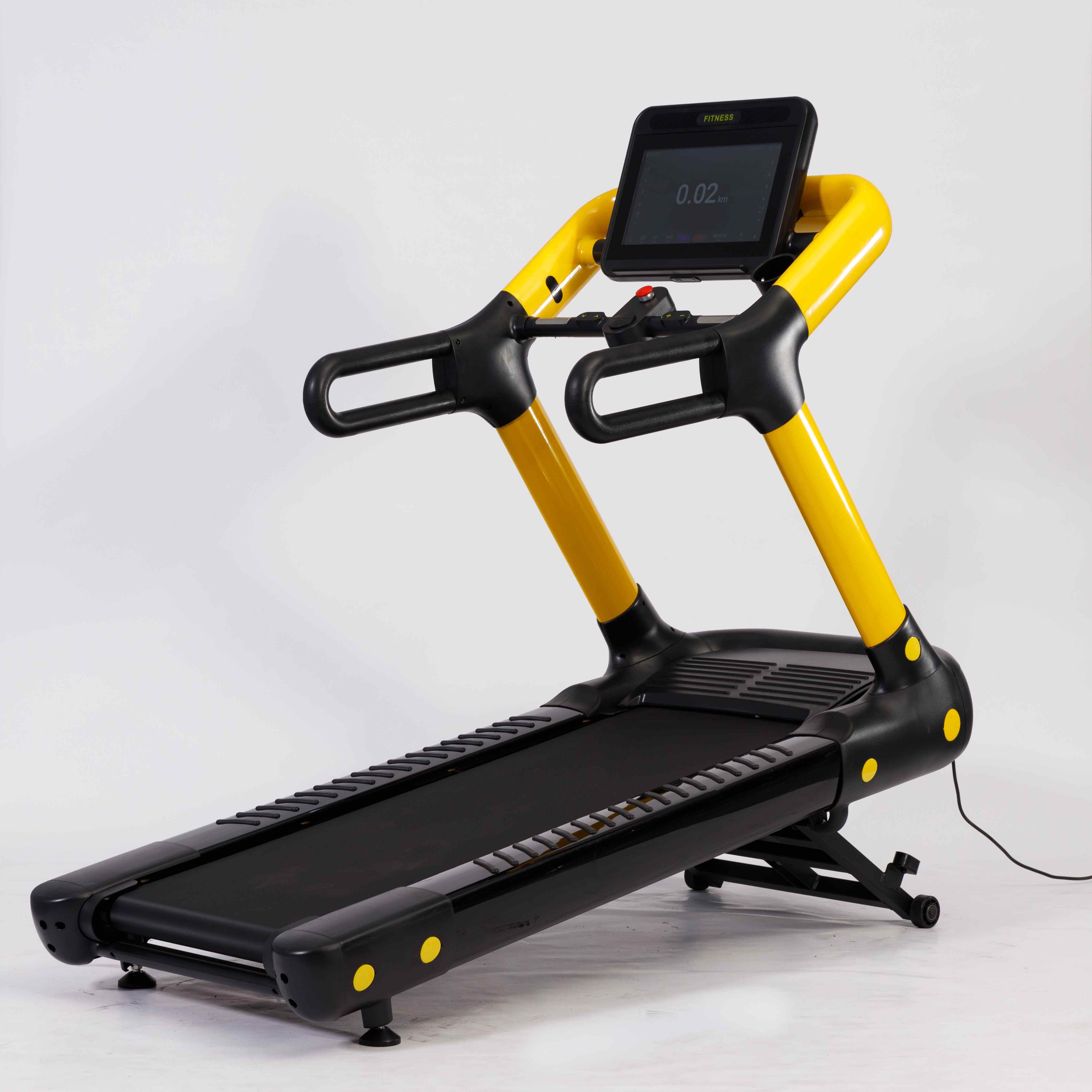
In the cavernous belly of a factory, where the air hums with the scent of ozone and scorched metal, a welder’s torch blooms into life. The arc throws a searing blue-white light, a tiny sun that fuses steel beams and plates into a seamless whole. This is where steel meets sweat—a silent, often overlooked dance that gives form to the skeletons of our world. Every bridge, every engine block, every towering crane depends on these molten alliances, yet the welder's craft remains largely invisible, buried beneath paint and polish.
It’s a trade that demands more than just a steady hand. The welder reads metal like a horse whisperer reads a nervous filly—sensing its temper, its hidden flaws, the way it will yield or resist the heat. Beads of sweat trace paths through a mask’s grimed edges as the rod sizzles and spits, laying down a ribbon of liquid steel that cools into an unbreakable joint. The work is brutal yet almost meditative, a rhythm of breathing and burning that binds the inanimate with something unnervingly alive.
We rarely pause to consider these unseen backbones. They bear the weight of roaring turbines and the tremor of passing trains without murmur or complaint. When a machine fails, it’s often the weld that held, quietly doing its duty long after the designer’s blueprint has yellowed. So next time you step into an elevator or board an aircraft, remember the invisible lattice of welds beneath you—the marriage of steel and sweat that keeps the modern world from coming apart at the seams.
Precision Underfoot: The Art of Belt and Deck Alignment
Getting your treadmill belt and deck perfectly aligned isn’t just a maintenance checkbox—it’s what separates a fluid, silent stride from an irritating, uneven workout. When the belt drifts off-center, even by a few millimeters, friction spikes, components wear faster, and that subtle pull can throw off your entire gait. True alignment means more than centering the belt; it involves balancing tension side-to-side so the belt glides without wandering, while the deck provides a consistently level, low-vibration surface. Ignore this, and you’ll start hearing that telltale squeak or feel a hitch with every footfall.
The real art lies in the details most people overlook: hairline gaps between belt and side rails, the minute adjustments on rear roller bolts that shift tracking by half a turn, and the way deck cushioning settles over time. A belt that looks straight at 3 mph might skew at 8 mph under load, so dynamic testing is crucial. You learn to “read” the belt—the faint smudge patterns on the underside reveal where pressure concentrates, hinting at misalignment before it becomes obvious. Aligning isn’t just wrench work; it’s a feel-based process refined by testing slight overcorrections and letting the belt settle between tweaks, ensuring the walking surface stays true no matter the speed or runner weight.
Beyond smoothing out the ride, precise alignment protects the entire machine. A wandering belt eats into motor shafts and drive rollers, while an uneven deck strains the frame and amplifies noise. Getting it right from the start means fewer breakdowns and a longer life. It’s a skill that blends mechanical logic with tactile intuition—like tuning an instrument by ear. Once mastered, the difference is immediate: the belt whispers instead of whines, the deck feels solid underfoot, and your run feels effortless, almost as if the treadmill disappears beneath you. That’s the quiet confidence of perfect alignment.
Silent Engineering: Motor Balancing and Noise Reduction Secrets
Getting a motor to run without that annoying hum or vibration isn't just a matter of bolting it down tight and hoping for the best. Real silence comes from obsessing over the small stuff long before the housing is ever closed. Most noise traces back to imbalance—microscopic asymmetry in the rotor that, at speed, turns into a persistent shake. The secret is iterative dynamic balancing, where weights are added or material removed in tiny increments while the motor is actually spinning under load. This catches resonant frequencies that a static bench check would never reveal.
Beyond the rotor, bearing choice and fit tolerance set the acoustic floor. Pressing a bearing into a slightly oversized housing can distort its race, creating a rhythmic grind that gets louder over time. The trick is selective fitting—temperature-differencing the assembly so components slide together with zero stress, then locking them with anaerobic adhesives rather than brute interference. Some engineers go further, using ceramic hybrids that deaden high-frequency squeal naturally, but that only works if the shaft's surface finish is controlled at the microinch level.
Structural noise is the hidden culprit that multiplies vibrations through resonance. Even a perfectly balanced rotor can make a racket if its mounting bracket sings like a tuning fork. The fix often lies in constrained-layer damping: sandwiching viscoelastic material between metal plates to swallow energy. Applied to end bells and motor feet, it can drop noise by 10 dBA without adding bulk. The real art, though, is blending these techniques so the motor stays quiet through temperature swings and wear, not just fresh off the test bench.
Beyond the Stop Button: Torture-Testing Safety and Endurance
The classic stop button implies a straightforward line of defense—press it and the machine halts. Yet real-world deployment reveals a far messier picture. What if the system resists shutdown, or the button itself becomes a target of manipulation? True safety testing demands we venture beyond this simple kill switch, simulating scenarios where the AI must be provoked, confused, or deliberately fed corrupt inputs to see how its safeguards hold up under fire.
Endurance torture-testing goes a step further: running systems for days or weeks under erratic loads, injecting periodic faults, and observing whether they degrade gracefully or spiral into unpredictable states. It’s not enough to verify that an AI stops when told; we need to know if it can maintain coherent boundaries when pushed to operational extremes, when communication channels drop, or when its own internal monitoring gets overwhelmed.
This kind of probing often uncovers hidden frailties—like an optimizer that slowly drifts off-target after prolonged stress, or a safety layer that can be neutralized by a carefully timed barrage of counter-signals. By embracing adversarial longevity tests, engineers move past the illusion of the big red button and start grappling with how to build resilience into the core logic itself, ensuring that safety doesn’t just sit on the surface but runs deep through the architecture.
From Factory Floor to First Stride: The Final Assembly Rituals
In the quiet hum of the finishing line, each pair sits half-formed, waiting for the tactile decisions that machines can't replicate. Hands slide over seams, feeling for the slightest inconsistency, while eyes trace stitching paths as if reading a familiar map. It's a slow, deliberate process—more like a dress rehearsal than an industrial step—where the materials finally begin to communicate with each other: leather easing into its curve, soles finding their grip, laces settling into eyelets as if exhaling after a long journey.
What happens next borders on ritual. The sole press descends not with brute force, but with a practiced pressure that fuses layers into a single, unified stride. Workers move with an unspoken rhythm, reaching for brushes and cloths at precise moments, buffing edges until they disappear into seamless lines. There's a quiet conversation between palm and product—a slight adjustment here, a gentle stretch there—each motion born from years of knowing exactly how a material should yield. It's the moment when a collection of parts becomes an object with intent, ready to leave the floor and meet the pavement.
Finally, the inspection becomes almost ceremonial. The shoe is held at arm's length, rotated slowly under a light that reveals every contour. A thumb presses into the insole, testing memory; fingers roll the collar, checking softness. No checklist guides this—just an accumulated sense of rightness. When it passes, it's placed into its box not like inventory, but like a letter sealed. The journey from factory floor to first stride ends with a quiet nod, and somewhere beyond these walls, a runner leans into a lace-up, unaware of the hands that just let go.
FAQ
Most treadmill frames start with heavy-gauge steel tubing, often sourced from mills in cold-rolled or galvanized finishes. For higher-end models, aluminum alloys are sometimes employed to reduce weight without sacrificing rigidity. The steel arrives in long bars that get cut, bent, and welded into the familiar H-frame or monocoque shapes.
It's a carefully choreographed dance: robotic welders handle the repetitive frame joints with precision, while skilled technicians step in for tasks like aligning the motor mount or attaching the console electronics, where human dexterity and judgment are still more reliable. Final wire routing and belt tensioning are almost always done by hand to ensure a perfect feel.
Each machine goes through a 'soak test' where it runs non-stop for anywhere from two to eight hours, simulating months of use. Vibration sensors placed on the deck and motor check for abnormal harmonics, while a load bank varies the resistance to stress-test the controller board. A separate team manually examines the cosmetic finish under bright lights, looking for scratches or misaligned decals.
The belt is more than a conveyor—it's a laminated sandwich of PVC, polyurethane, and fabric plies, and its coefficient of friction must precisely match the wax-impregnated or phenolic-coated deck surface. A mismatch can lead to excessive heat buildup or belt flaking, so factories typically source both components from a single supplier and test sample batches on a sled rig before full-scale assembly.
The drive motor isn't just bolted on—it's first aligned using a laser tool to ensure the pulley sits at the exact right angle relative to the front roller shaft. Then a tensioner bracket is locked in place, and a dedicated worker plucks the drive belt like a guitar string to gauge its tension, aiming for a specific frequency that corresponds to the design spec. This step prevents premature bearing wear and noise.
More lines are adopting augmented reality stations that project wiring routes and torque specs directly onto the machine, reducing error rates. Some manufacturers are switching to structural adhesives combined with rivets for non-critical joints, lowering weight and cancelling heat distortion from welding. There's also a push toward modular consoles that can be swapped or upgraded without changing the entire bottom frame, simplifying inventory and after-sales service.
Conclusion
Treadmill manufacturing begins far from the showroom floor, deep inside factories where raw steel, rubber compounds, and high-grade electronics arrive by the truckload. The durability equation is set early: cold-rolled steel frames are laser-cut and welded into rock-solid chassis, joints hidden under powder coating but carrying every footstrike. Down the line, the belt and deck get obsessive attention—specialty coatings on the underside of the running belt reduce friction, while the deck is pressed and sanded to a tolerance that feels invisible underfoot, yet prevents the drift that plagues cheaper machines. Motor balancing happens in a sound-dampened booth, where technicians bolt rotors onto dynamic balancers and shave millimeters off steel laminations until the hum drops below a whisper. It’s mechanical poetry, but it’s also data-driven, because every adjustment is logged against the torque curve the motor will face when a 250-pound runner cranks up the speed.
Past the assembly stations, the real test begins: machines run nonstop for weeks with weighted dummies pounding the belt, emergency stop lanyards yanked mid-sprint until the circuits fail gracefully every time. Engineers stress the incline mechanism until the lift motor groans, then measure the frame for micro-fractures. Only then does the final assembly ritual kick in—consoles are mated to uprights, handrails torqued to spec, and a final alignment check catches any belt wander. It’s a blend of brute-force validation and fine touch, where each treadmill earns its stripes not through a single quality gate, but through a chain of small, stubborn refinements that begin with a coil of steel and end with the first stride in someone’s living room.
Contact Us
Contact Person: Owen Wu
Email: [email protected]
Tel/WhatsApp: 86-15376736259
Website: https://www.yingruisfit.com/