

Is a Folding Container House the Smartest Way to Build Fast and Flexibly?
2026-02-09
When I first started researching modern modular buildings, I kept running into one solution that appeared again and again in real projects rather than just brochures: the Folding Container House. While comparing suppliers and technical approaches, I gradually became familiar with Weifang Ante Steel Structure Engineering Co., Ltd., not through aggressive marketing, but through consistent references tied to practical deployment, logistics efficiency, and structural reliability. That experience pushed me to look deeper into how a Folding Container House actually solves real construction problems instead of just promising convenience.
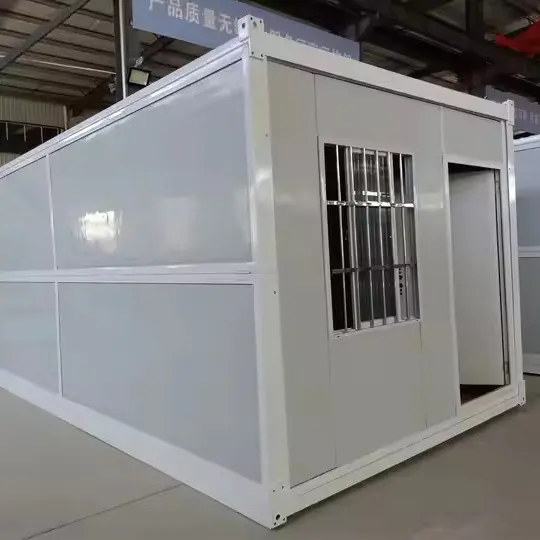
Why Are More Builders Choosing a Folding Container House Over Traditional Structures?
From my perspective, the biggest shift in construction today is speed combined with predictability. A Folding Container House reduces uncertainty because most of the structure is completed in a controlled factory environment. This means fewer weather delays, fewer on-site variables, and clearer timelines. Traditional buildings often suffer from cost overruns caused by labor shortages or unexpected site conditions, while folding container solutions are engineered to arrive ready for deployment.
- Factory-controlled production improves quality consistency
- On-site installation time is drastically reduced
- Labor requirements are lower compared to conventional builds
- Project timelines become easier to forecast
How Does a Folding Container House Solve Transportation and Logistics Challenges?
Transportation is one of the most underestimated costs in construction. What impressed me about the Folding Container House concept is how intelligently it addresses this issue. Because the structure can be folded flat, multiple units can be shipped in the space normally required for a single fixed container. This directly lowers freight costs and simplifies international delivery.
In practical terms, this makes a Folding Container House especially suitable for remote areas, overseas projects, and emergency housing where logistics often dictate feasibility.
| Logistics Factor | Folding Container House Advantage |
|---|---|
| Shipping Volume | Foldable structure allows multiple units per container |
| Handling | Standard lifting points simplify loading and unloading |
| Delivery Time | Reduced shipping cycles due to higher transport efficiency |
| Site Access | Suitable for locations with limited construction access |
Can a Folding Container House Really Meet Long-Term Living or Working Needs?
One common concern I hear is whether a Folding Container House is only suitable for temporary use. Based on technical specifications and real-world applications, that assumption no longer holds true. Modern designs emphasize insulation performance, structural stability, and interior comfort, making these units viable for offices, worker accommodation, classrooms, and even residential use.
With proper material selection and engineering, a Folding Container House can withstand repeated folding cycles without compromising structural integrity. This durability is essential for projects that require relocation or phased expansion.
What Makes a Folding Container House Adaptable to Different Project Scenarios?
Adaptability is where this solution truly stands out. I see the Folding Container House being used across industries because it can be configured in multiple ways. Units can be used independently or combined horizontally and vertically to create larger functional spaces.
- Modular layouts for offices, dormitories, or clinics
- Expandable designs for growing projects
- Interior customization based on climate or usage
- Relocation capability for temporary or mobile sites
This flexibility allows decision-makers to invest in a structure that evolves with their needs rather than locking themselves into a fixed footprint.
How Does a Folding Container House Support Sustainable Construction Goals?
Sustainability is no longer optional in construction planning. A Folding Container House aligns well with sustainable building principles because it minimizes material waste and reduces on-site environmental impact. Factory production ensures precise material usage, while reusability extends the lifecycle of each unit.
In addition, reduced transportation volume directly lowers carbon emissions. For projects aiming to balance speed, cost, and environmental responsibility, this solution offers a practical compromise rather than a theoretical one.
Is a Folding Container House a Cost-Effective Investment for Modern Projects?
From a cost perspective, the value of a Folding Container House goes beyond the initial purchase price. Savings accumulate across logistics, labor, installation time, and future relocation. When I compare total lifecycle costs, folding container solutions often outperform traditional temporary buildings.
This is particularly relevant for contractors and developers who manage multiple sites or frequently changing project locations.
Are You Ready to Explore a Folding Container House for Your Next Project?
If you are looking for a construction solution that balances speed, flexibility, and long-term value, a Folding Container House deserves serious consideration. Working with experienced manufacturers like Weifang Ante Steel Structure Engineering Co., Ltd. can help ensure that design, quality control, and delivery align with real project demands rather than just catalog descriptions.
If you want to discuss specifications, customization options, or project suitability, feel free to contact us and start a conversation about how a folding container solution can support your next build.