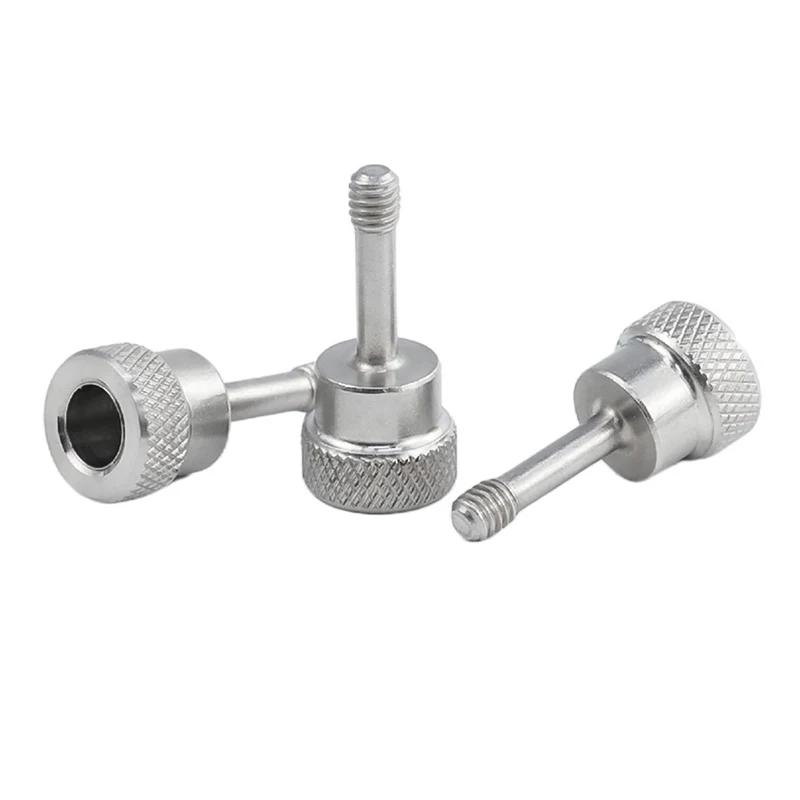

What is the Surface Finish Quality for CNC Precision Metal Parts?
2025-10-22
Surface finish quality is a key performance indicator in CNC precision machining, directly influencing the functionality, durability, and appearance of metal components. In the field of CNC Machining of Non-Standard Fasteners, surface finish accuracy determines how smoothly parts fit and operate within a mechanical system. At Shenzhen Zhihexing Electromechanical Co., LTD., our factory implements advanced equipment, quality materials, and strict production processes to ensure exceptional surface integrity and consistency across every project.
Understanding Surface Finish in CNC Precision Machining
Surface finish refers to the texture and smoothness of a machined surface after processing. It is measured in micrometers (µm) and categorized by parameters such as Ra (average roughness), Rz (mean roughness depth), and Rt (total roughness). The smoother the surface, the better the part performs in terms of wear resistance and sealing capability. Our CNC Machining of Non-Standard Fasteners guarantees dimensional accuracy and a refined surface profile suitable for both industrial and high-precision applications.
How Surface Finish Affects Performance
The surface finish of CNC precision metal parts affects several key aspects, including friction, lubrication, fatigue strength, and corrosion resistance. For instance, in CNC Machining of Non-Standard Fasteners, a poor finish can lead to premature wear and joint failure. Our factory optimizes feed rates, tool paths, and cutting speeds to achieve a balance between cost-efficiency and surface quality. We also use post-machining treatments such as polishing, anodizing, and coating to enhance mechanical and aesthetic properties.
Surface Finish Grades and Applications
Different applications require varying surface finishes. High-precision mechanical components, aerospace parts, and medical instruments often demand mirror-like finishes below Ra 0.2 µm, while general mechanical fasteners may require Ra 1.6 µm to 3.2 µm. At Shenzhen Zhihexing Electromechanical Co., LTD., we tailor surface quality to match functional and aesthetic needs. Our CNC Machining of Non-Standard Fasteners supports a wide range of metals, including stainless steel, aluminum, titanium, and brass, all treated under strict process control.
| Surface Roughness (Ra) | Finish Type | Common Application | Production Method |
| 0.1–0.2 µm | Mirror Finish | Medical, Aerospace | Superfinishing / Polishing |
| 0.4–0.8 µm | Fine Machined Finish | Precision Components | High-speed CNC Machining |
| 1.6–3.2 µm | Standard Machined Finish | Industrial Fasteners | Standard CNC Turning / Milling |
| 6.3–12.5 µm | Rough Machined Finish | Structural Parts | Rough Cutting |
Our Factory’s Surface Quality Control System
Our factory follows ISO-certified inspection standards throughout the production cycle. Every CNC Machining of Non-Standard Fasteners undergoes multiple quality checks, including profilometer testing, visual inspection, and dimensional analysis. Our quality assurance team ensures that the achieved Ra values align precisely with design specifications. Shenzhen Zhihexing Electromechanical Co., LTD. maintains an advanced workshop equipped with 5-axis CNC centers, precision grinders, and polishing machines to achieve consistent results even for complex geometries.
Material Selection and Its Impact on Surface Finish
Surface finish is also influenced by the type of metal used. Softer materials like aluminum and brass typically allow for smoother finishes, while harder alloys like stainless steel require optimized tool parameters. Our experience in CNC Machining of Non-Standard Fasteners allows us to recommend the best material-process combination for each client’s project. This ensures reduced tool wear, improved surface integrity, and extended component lifespan.
Post-Processing Techniques to Improve Surface Quality
Our factory offers various post-processing options to achieve the desired finish and functional characteristics. These include grinding, honing, anodizing, electroplating, and bead blasting. Such processes enhance corrosion resistance and create a professional appearance. In CNC Machining of Non-Standard Fasteners, these finishing methods are essential to ensure that each product meets both mechanical and visual standards required in international markets.
FAQs About What is the Surface Finish Quality for CNC Precision Metal Parts?
Q1: What is the Surface Finish Quality for CNC Precision Metal Parts?
A1: Surface finish quality refers to the smoothness or roughness of the machined surface, measured in micrometers. In our CNC Machining of Non-Standard Fasteners, it determines precision fit, wear resistance, and overall product performance. Our factory ensures every part meets the specified Ra standard through strict inspection.
Q2: How do you ensure consistent surface finish quality during production?
A2: Our factory uses automated measurement systems, real-time monitoring, and controlled machining parameters. Each CNC Machining of Non-Standard Fasteners project is tracked from tool wear to cutting fluid conditions to maintain stable quality and minimize deviations.
Q3: Why is surface finish important in CNC precision metal parts?
A3: A proper surface finish reduces friction, enhances fatigue resistance, and ensures accurate assembly. In our CNC Machining of Non-Standard Fasteners, it directly impacts part longevity and reliability, especially in high-stress mechanical systems.
Conclusion
Surface finish quality defines the precision and performance of CNC machined metal components. At Shenzhen Zhihexing Electromechanical Co., LTD., our factory applies advanced machining technology and comprehensive inspection to deliver high-grade finishes for every project. Whether for aerospace, automotive, or industrial applications, our CNC Machining of Non-Standard Fasteners offers reliable quality and customizable options to meet global manufacturing standards.